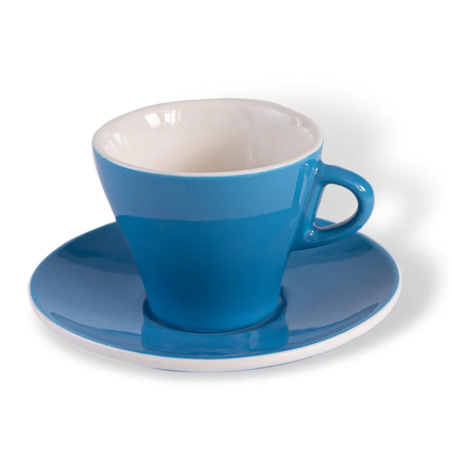
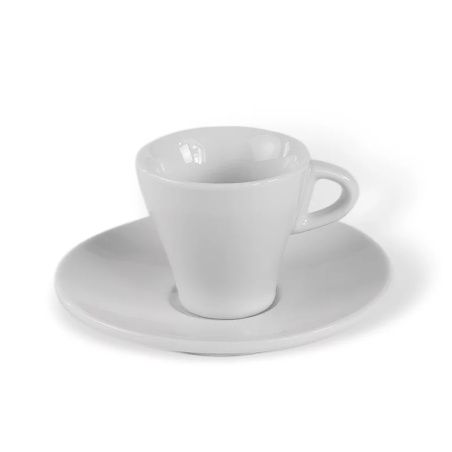
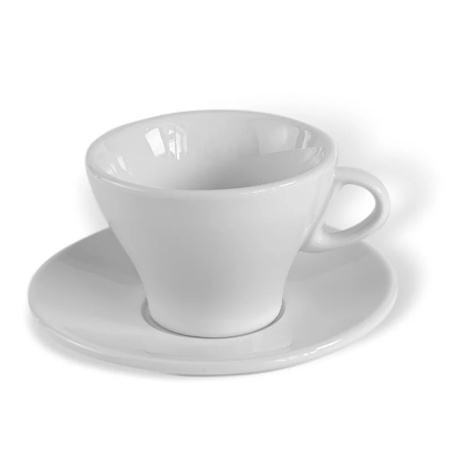
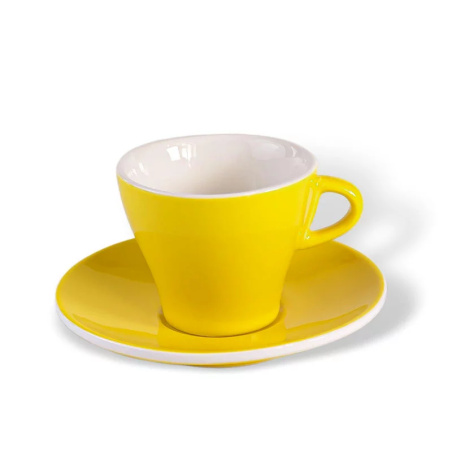
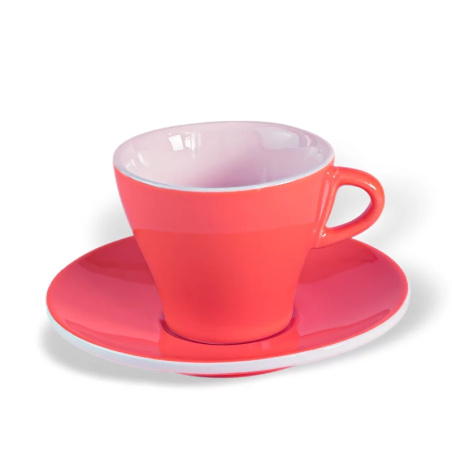
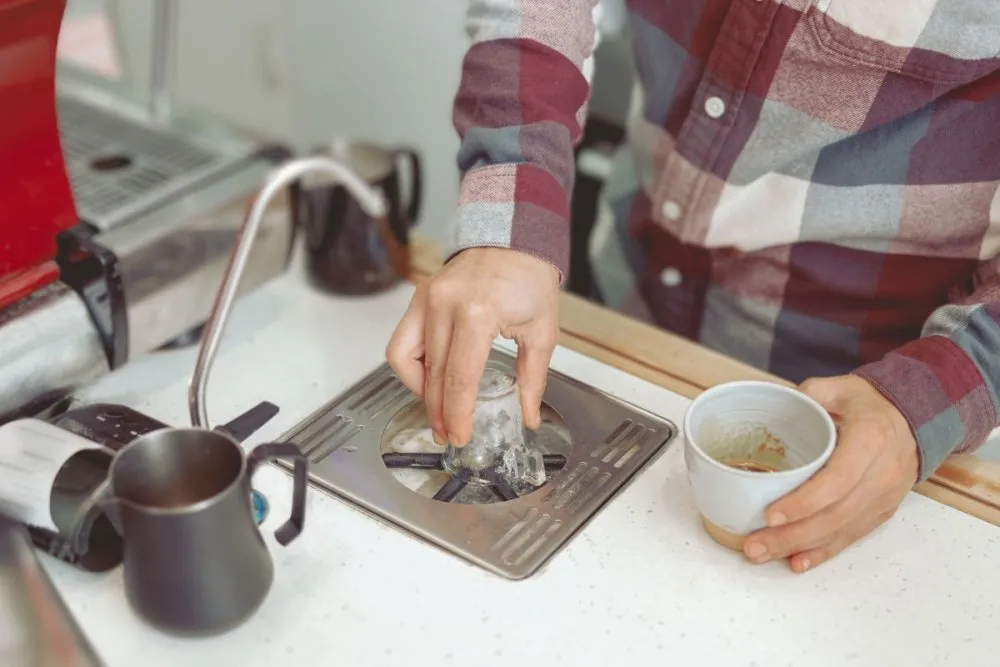
You can figure out the specific number - the number of pieces of coffee china - on your own. Just add a few variables. So let's get started, first by writing down the answers to these questions:
Example of buying china for a coffee shop
A city café with a seating capacity of 20 needed to be equipped with coffee china. We knew that during the summer it would also have a garden with an additional 20 seats in operation. They will be serving the following basic coffee drinks: espresso, espresso lungo, doppio, cappuccino, flat white, caffé latte.
Now let's do the math. With the cafe and garden at full capacity, which we have to count on during busy hours of operation, we have some 40 guests. The assumption is that everyone will order a coffee. At least half of the drinks ordered will go into a cappuccino cup. The rest will be shared between espresso, caffé latte and filter coffee.
Since the target group of filter coffee lovers isn't very numerous right here, we'll be counting mostly espresso and Caffé latte orders. We will share the remaining half of the cafe's capacity between them, i.e. some 8 cups of each size. So we'll need the minimum:
- 20 cappuccino cups.
- 8 latte cups.
- 8 espresso cups
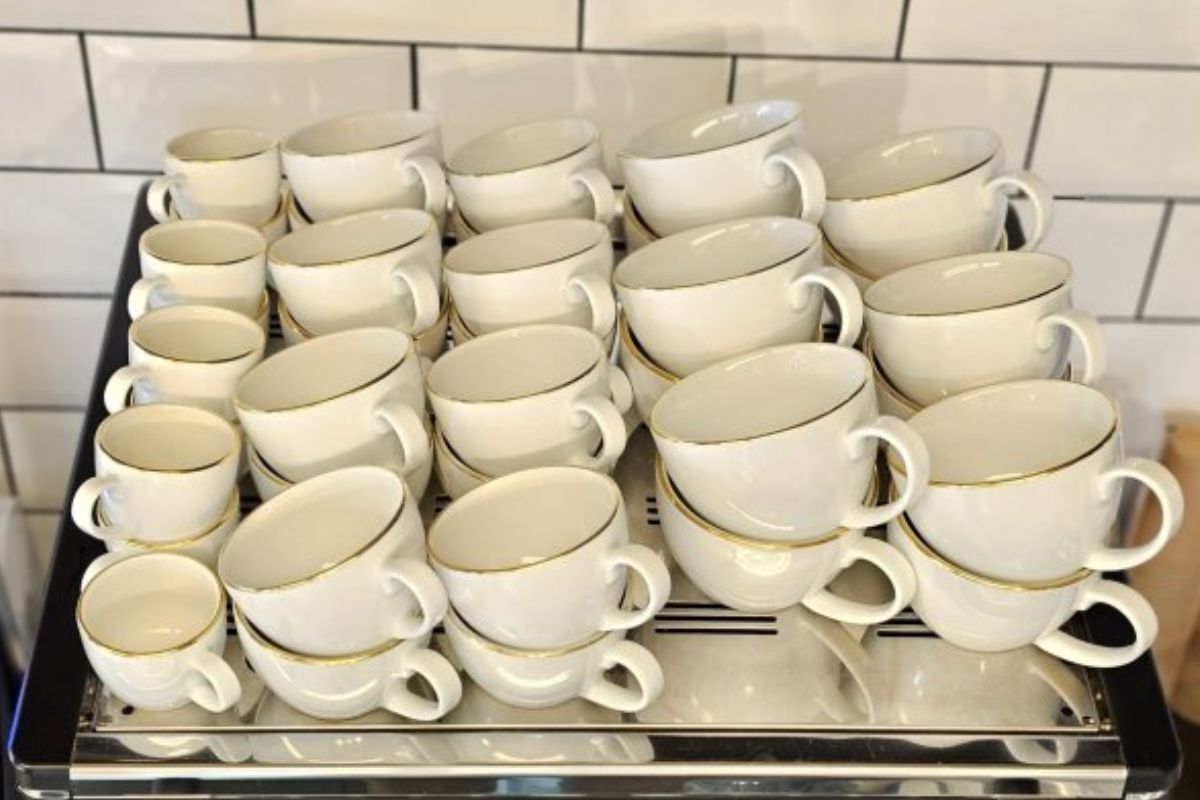
To this base, we added an estimated 4 filter coffee cups. We don't forget about common accidents in coffee shop operations. So we also allow for the possibility of breakage and damage to the cups. Nobody wants to offer coffee in cracked porcelain - it doesn't make a good impression. Anything chipped needs to be thrown away, so we will also adda few cups of each volume as spare stock. The result, after adding up all the variables, will be:
- 26 cappuccino cups.
- 12 latte cups.
- 12 espresso cups
- 6 filter coffee pots
TIP: Do you know how many cups are in one set?
Before you start ordering the exact number of pieces of china, take note of the sales sets as well. Manufacturers traditionally pack their porcelain goods in sets of 6, or 8, 4, 12 or 2.
How much room is there for cups on the coffee maker?
Finally, I have a question for you to ponder. Optimally if you think about it before you buy a coffee maker. Because that's what this question is about. Because the right temperature is important for the right taste, coffee machines have a cup warming function. This is done either passively (only the residual heat of the boiler is used) or actively (the coffee machine has a built-in system for heating the cup surface).
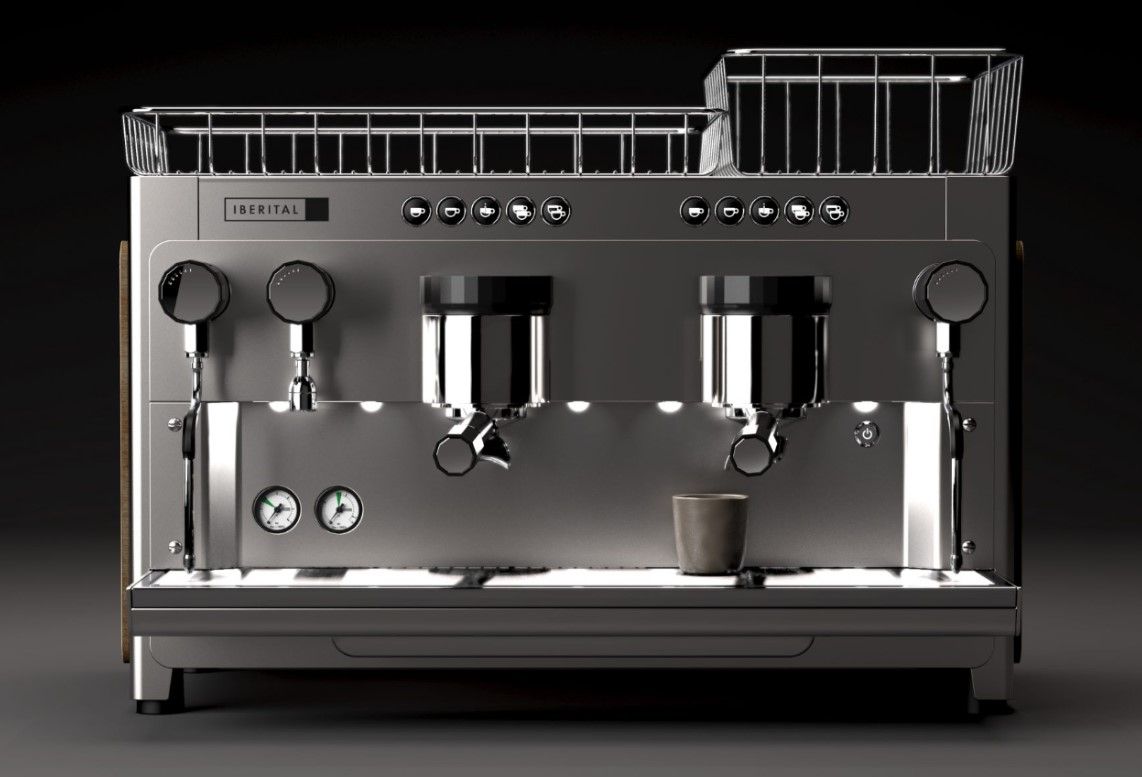
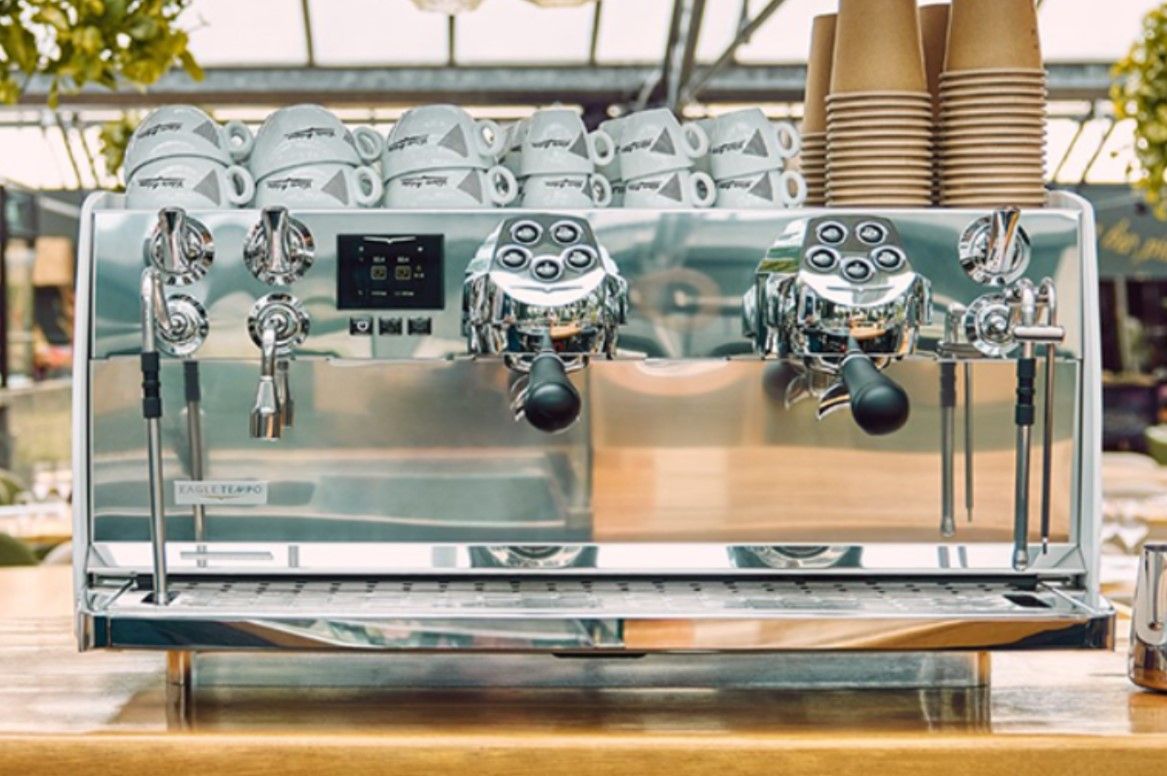
So that you can use the cup without worrying that the taste of the coffee will change due to the temperature of the drink being diverted into the unheated porcelain, you need to heat the coffee cups before use. A functional and practical place to heat the porcelain (whether passive or active) is the cup area on top of the coffee machine. However, the heating space is limited by the dimensions of the coffee machine itself. What do you think of these coffee makers: the Iberital Tandem Standard 2GR Wood or the Victoria Arduino Eagle Tempo 2GR Neo White.
The manufacturer Iberital has given its Tandem coffee machine an unusual solution for the coffee cup storage area. Two baskets for storing and conveniently carrying cups will come in very handy during "rush hour".
Victoria Arduino's new pet Eagle Tempo is cleverly laid out to maximise barista efficiency. This includes a dedicated space for heating cups, which is over 80cm on the two-lever version of the machine.

 Česky (CZK)
 Slovensky (EUR)
 Magyar (HUF)
 Polski (PLN)
 English (EUR)
 Deutsch (EUR)
 Français (EUR)
 Español (EUR)
 Português (EUR)
 Italiano (EUR)
 Svenska (SEK)
 Suomi (EUR)
 Nederlands (EUR)
 Dansk (EUR)
 Lëtzebuergesch (EUR)
 Eesti (EUR)
 Latviešu (EUR)
 Lietuvių (EUR)
 Slovenščina (EUR)
 Română (RON)
 Български (EUR)
 Hrvatski (EUR)
 Ελληνικά (EUR)
 Українська (EUR)
 Norsk (EUR)
 Srpski (EUR)
 Tiếng Việt (EUR)