
 Česky (CZK)
 Slovensky (EUR)
 Magyar (HUF)
 Polski (PLN)
 English (EUR)
 Deutsch (EUR)
 Français (EUR)
 Español (EUR)
 Português (EUR)
 Italiano (EUR)
 Svenska (SEK)
 Suomi (EUR)
 Nederlands (EUR)
 Dansk (EUR)
 Lëtzebuergesch (EUR)
 Eesti (EUR)
 Latviešu (EUR)
 Lietuvių (EUR)
 Slovenščina (EUR)
 Română (RON)
 Български (EUR)
 Hrvatski (EUR)
 Ελληνικά (EUR)
 Українська (EUR)
 Norsk (EUR)
 Srpski (EUR)
 Tiếng Việt (EUR)
How to serve coffee in a café: 8 rules with cup sizes and temperatures
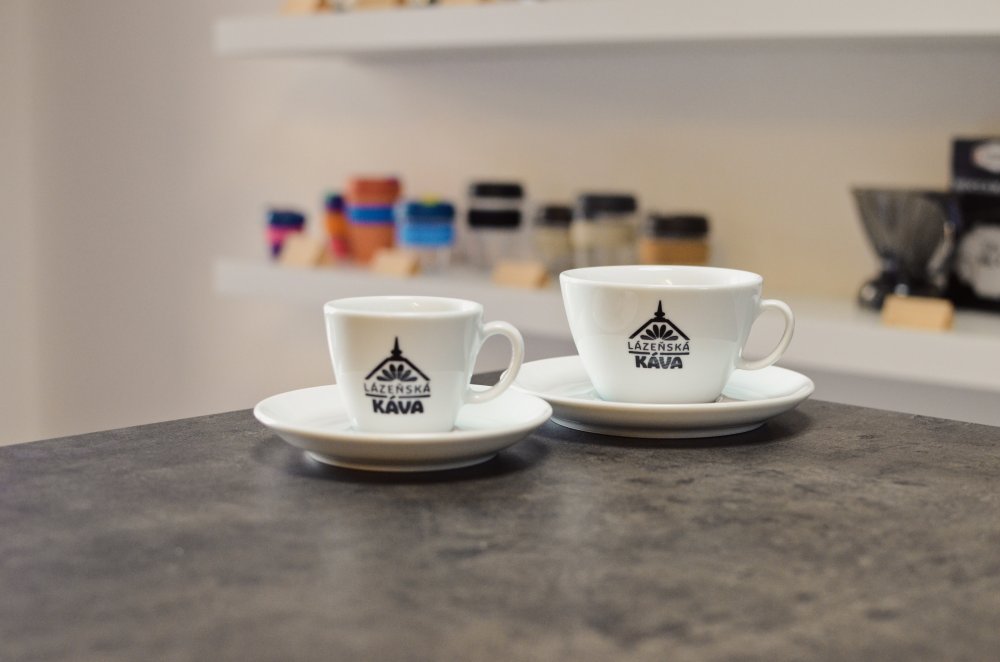
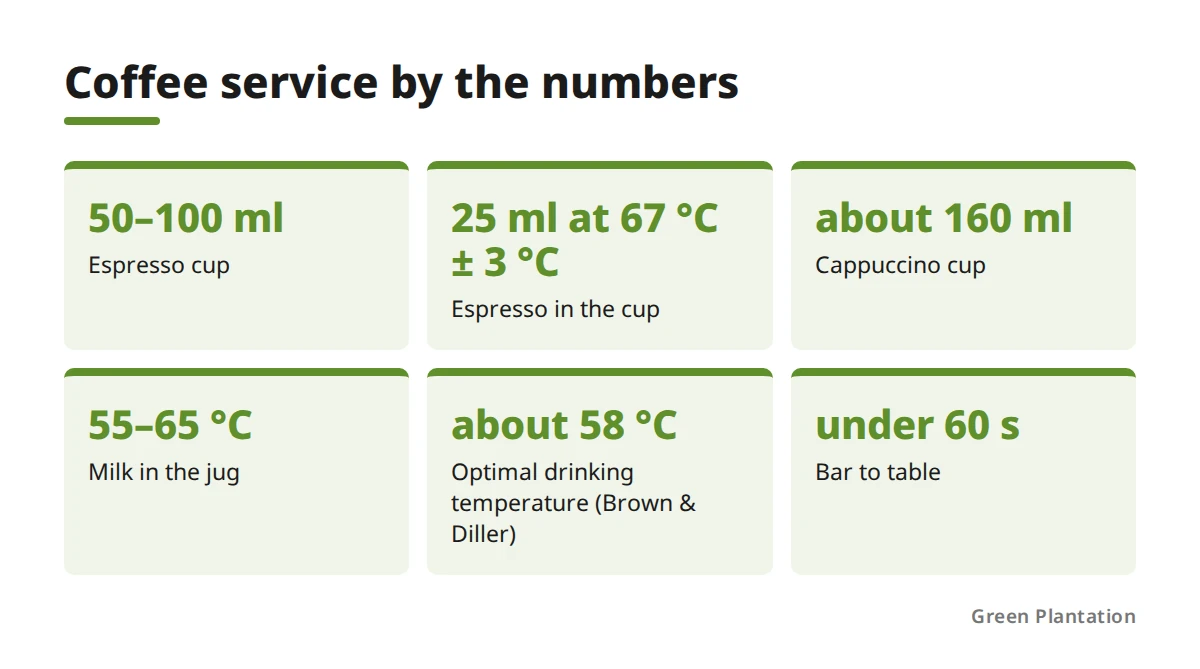
In short: Serve coffee in a clean, preheated cup sized for the drink, handle it only by the handle and saucer, add a spoon and a small glass of water, set the handle at four o'clock for the guest and get it to the table within a minute of pouring.

| Espresso cup | 50–100 ml, white china, thick walls (Italian Espresso National Institute) |
|---|---|
| Espresso in the cup | 25 ml ± 2.5 ml at 67 °C ± 3 °C |
| Cappuccino cup | about 160 ml, filled to the brim |
| Milk temperature | 55–65 °C in the jug |
| Bar to table | under 60 seconds for milk drinks |
| Side water | still, chilled, 60–100 ml |
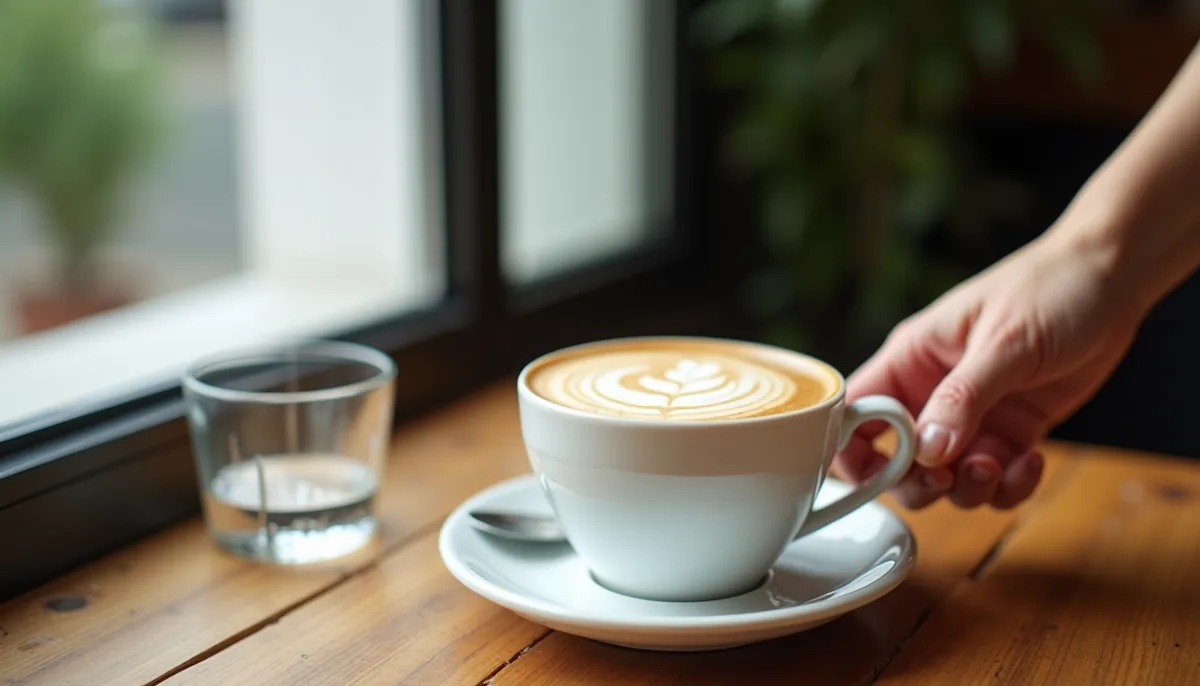
Most guides on how to serve coffee stop at "use good beans". Guests notice much more than that: a cold cup, a thumbprint on the rim, a latte that sat on the pass while the waiter took another order. This guide is written for café owners, baristas and floor staff, and the same rules work if you are serving coffee to guests at home or at an event. It replaces our older "8 rules" article with concrete numbers you can train against.
The serving rules at a glance
Good service is a sequence, not a list of manners. In the order a cup actually travels:
- Check the cup. Clean, dry, no chips, no lipstick marks, no limescale ring inside.
- Preheat it. Straight from the cup warmer, never from the dishwasher rack still wet.
- Match the cup to the drink. A flat white in a 350 ml mug is a weak latte.
- Handle it hygienically. Fingers on the handle, the saucer or the base, never within 2 cm of the rim.
- Build the set. Saucer, spoon, a sugar option and a small glass of water.
- Present it right. Handle and spoon pointing to the guest's right, latte art facing them.
- Move fast. Espresso and milk drinks go out the moment they are finished.
- Follow up. Check back once, clear empty cups, never hover.
Cup sizes for every drink
The cup is part of the recipe. The Italian Espresso National Institute (INEI) specifies a white china espresso cup of 50–100 ml with an elliptical bottom, and a cappuccino cup of about 160 ml that holds 25 ml espresso plus 100 ml of milk which grows to roughly 125 ml when steamed. If the cup is too big, the drink looks short and the milk to coffee ratio drifts; if it is too small, the barista spills on the saucer.
| Drink | Typical cup volume | What goes in | Serving notes |
|---|---|---|---|
| Espresso | 50–90 ml | 25–40 ml espresso | Thick walled porcelain, saucer, spoon, water |
| Doppio / lungo | 90–120 ml | 50–80 ml | Same set as espresso |
| Macchiato / cortado | 90–120 ml | Single or double shot plus a little milk | Glass is common for cortado |
| Flat white | 150–180 ml | Double ristretto or espresso, thin microfoam | Low cup so the art sits near the rim |
| Cappuccino | 150–200 ml | 25 ml espresso, about 100 ml milk before steaming | Filled to the brim, dome visible |
| Caffè latte | 240–350 ml | Single or double shot, steamed milk, thin foam | Bowl cup or tall glass on a saucer with a long spoon |
| Filter / batch brew | 200–300 ml | Brewed coffee only | Optional carafe so the guest pours the second half |
Keep one cup family per drink across the whole menu. Staff stop guessing, the dishwasher racks fill neatly and the drink looks the same on every table. For the history and ratios behind one of the most misserved drinks, see what a flat white really is.
Preheated cups and serving temperature
A 25 ml espresso poured into a cold, thick porcelain cup loses a noticeable part of its heat to the cup within seconds. INEI sets the target temperature of espresso in the cup at 67 °C ± 3 °C, which is only reachable if the cup is already warm. Milk drinks are cooler: a study in the journal Burns (Brown and Diller, 2008) modelled guest preference against scald risk and arrived at an optimal drinking temperature of about 58 °C for hot beverages.
- Cup warmer, not the dishwasher. Cups from the machine are wet and unevenly hot. Dry them and stack them on the cup warmer.
- Right side up. Cups standing upside down on the top of an espresso machine can get hot enough at the rim to burn a lip. Stack them rim up, never cover them.
- Two to three layers maximum. Bottom cups get hot, top cups stay lukewarm. A dedicated cup warmer with heated shelves solves this on a busy bar.
- Quick fix. If the warmer is empty, fill the cup with hot water from the machine, wait 20 seconds and tip it out before brewing.
Milk temperature and texture
INEI describes cold milk at 3–5 °C steamed to about 55 °C for a cappuccino. Most specialty cafés work between 55 and 65 °C in the jug: in this window the lactose tastes sweet and the foam stays glossy. Above roughly 70 °C, milk tastes cooked and the foam turns dry and bubbly. Children's drinks and "warm" requests sit at 40–50 °C.
Use a thermometer or a jug with a heat strip until your baristas hit the range by touch, and always start with fresh cold milk. Reheating milk ruins the texture and wastes stock. Our guide to the perfect milk temperature for cappuccino goes into the chemistry.
Speed and the order of making drinks
Every second on the pass costs quality. Crema fades in about a minute, latte art blurs and milk separates within two. A practical sequence for a mixed order:
- Cold drinks and water first, because they do not degrade.
- Tea and filter coffee next.
- Milk drinks, steaming milk while the shot runs.
- Espresso last, so it leaves the bar the moment it is poured.
Set up the bar so the barista hands drinks across the pass towards the floor, not behind their back, and agree a signal (a bell or a call) so waiters do not let drinks stand. On busy days a second grinder for decaf or a guest coffee saves the time that would otherwise be lost switching beans. More on surviving a rush is in what a barista's job looks like when the café is crowded.
Presentation at the table
Table etiquette is where a good drink becomes a good experience:
- Handle at four o'clock. Seen from the guest, the cup handle points to the right, roughly at four o'clock, so a right-handed guest can lift it without turning the cup.
- Spoon on the saucer. Behind the cup or to the right, handle pointing the same way as the cup handle.
- Latte art facing the guest. Pour so the design is upright from the guest's side, then carry the cup without rotating the saucer.
- Serve from the right, clear from the right where the table layout allows. In a narrow booth, serve from the open side and never reach across a guest.
- Name the drink as you set it down when more than one guest ordered, so nobody swaps cups.
- Filter coffee. Serving half in the cup and the rest in a small carafe keeps it hot and shows that the coffee was brewed to order.
Thick walled porcelain, a matching saucer and a tray (metal, wood or slate) that fits the style of the room carry the concept of the café as much as the interior does. White cups remain the safest choice for showing crema and latte art.
The glass of water and other extras
A small glass of water with espresso is a Central European and Italian habit that guests now expect in specialty cafés across Europe. Its purpose is to clear the palate, so serve it before or together with the coffee, chilled and without ice cubes clinking against the cup. Still water is the standard. Some cafés offer sparkling water on tap, which is fine as long as it is a choice and not a default. A small biscuit, a square of chocolate or a sugar option completes the set; keep it consistent so guests know what to expect.
Hygiene and consistency behind the bar
Guests judge hygiene by what they can see, so the visible routine matters:
- Wipe and purge the steam wand after every jug, not every few drinks.
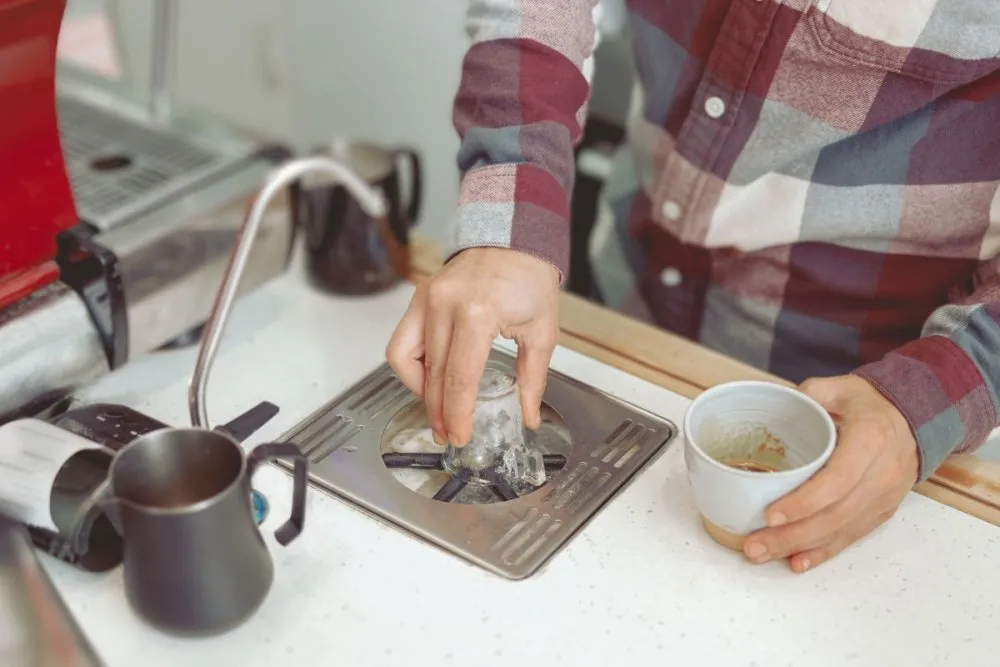
- Rinse milk jugs between uses; a pitcher rinser at the bar does this in two seconds and keeps old milk from mixing with fresh.
- Keep separate cloths for the steam wand, the bar top and the cups, ideally in different colours.
- Backflush group heads and clean portafilters daily, and check cups against the light before they go on the warmer.
- Throw away chipped cups immediately. A chip can cut a lip and harbours bacteria.
Consistency is hygiene's twin. Write a one page service standard with your cup sizes, milk temperatures and the presentation rules above, and use it when training baristas for your café. A full cleaning schedule for the machine is in our complete guide to cleaning and maintaining coffee machines.
Frequently asked questions
How hot should coffee be when served?
Espresso should reach the guest at around 65–70 °C; INEI sets 67 °C ± 3 °C in the cup. Milk drinks are usually served at 55–65 °C, which is close to the 58 °C that Brown and Diller calculated as the best balance of flavour and burn risk.
Which side do you serve coffee from?
From the guest's right, with the cup handle and spoon pointing to the right. If the table layout makes that awkward, serve from the open side rather than reaching across anyone.
Why do cafés serve a glass of water with coffee?
To cleanse the palate before the espresso, so the guest tastes the coffee rather than whatever they ate or drank before. It is still water by default, served in a small glass alongside the cup.
Should coffee cups be preheated?
Yes. A cold porcelain cup pulls heat out of a small espresso quickly. Keep cups dry on a cup warmer, rim up, or rinse them with hot water just before brewing.
How do you serve coffee to guests at home?
The same rules scale down: warm the cups with hot water, offer milk and sugar on the side, put a spoon on each saucer and serve the cup with the handle to the guest's right. Brew in a carafe for a group so everyone gets coffee at the same temperature.
Recommended equipment for coffee service
- Dr.Coffee CH01 Cup Warmer: a standalone heated cabinet for cafés where the cup tray on the machine is too small for a busy service.
- Ascaso Barista T 2G Compact: a two group, PID controlled machine with stable brew temperature and enough steam power to keep milk drinks moving.
- Mahlkönig E65S GbW: a grind by weight café grinder that keeps every dose the same, which is the basis of consistent cups.
- Rhinowares Pitcher Rinser 600 Spinjet: rinses milk jugs at the bar in seconds, so every drink starts with a clean jug.
- Profitec Cappuccino Cup with Saucer, 200 ml and Loveramics Dale Harris 80 ml Espresso Cup: thick walled cups in the right sizes, designed with baristas for heat retention and latte art.
For drawing in the cup, the shape of the jug matters as much as the technique; compare options in latte art and milk jugs.
Sources
- Istituto Nazionale Espresso Italiano: Certified Italian Espresso and Cappuccino (institutional brochure, PDF)
- Istituto Nazionale Espresso Italiano
- Brown F., Diller K. R.: Calculating the optimum temperature for serving hot beverages. Burns, 2008
Updated: November 2026
Author: Petra Novotná, editorial name of the Green Plantation.
You might also like
 An energy-efficient professional coffee machine saves more than €1,000 per year
The energy-intensive coffee machines have already been called off. Pack the old energy guzzler and send it out of the café. In its place, install a shiny… 20. 5. 2025
 How to simplify the washing of milk jugs?
An important part of café equipment or a barista's whim? Glass and milk jug sharpeners can optimise your work at the coffee machine. But if you choose it… 5. 11. 2024
 Preparing decaffeinated coffee in a café
How to prepare decaffeinated coffee for customers? Do you need a special grinder to prepare decaffeinated coffee or is pre-ground coffee enough? 22. 10. 2024