
 Česky (CZK)
 Slovensky (EUR)
 Magyar (HUF)
 Polski (PLN)
 English (EUR)
 Deutsch (EUR)
 Français (EUR)
 Español (EUR)
 Português (EUR)
 Italiano (EUR)
 Svenska (SEK)
 Suomi (EUR)
 Nederlands (EUR)
 Dansk (EUR)
 Lëtzebuergesch (EUR)
 Eesti (EUR)
 Latviešu (EUR)
 Lietuvių (EUR)
 Slovenščina (EUR)
 Română (RON)
 Български (EUR)
 Hrvatski (EUR)
 Ελληνικά (EUR)
 Українська (EUR)
 Norsk (EUR)
 Srpski (EUR)
 Tiếng Việt (EUR)
How Many Cups Does a Café Need? Sizes, Numbers and a Worked Example

In short: Count only your sit-in seats, split them by how your menu sells, add about 30% for cups in the dishwasher loop and 10% for breakage, then round up to the pack size. A 40-seat café ends up with roughly 30 cappuccino, 12 latte, 12 espresso and 6 filter cups.

| Espresso cup | 50–100 ml (INEI), most cafés use 60–90 ml for a 25–40 ml shot |
|---|---|
| Cappuccino cup | 150–160 ml (INEI), specialty cafés often 180–200 ml |
| Latte cup or glass | 250–350 ml (8–12 oz) |
| Filter mug | 250–350 ml |
| Quick rule of thumb | seats ÷ 1.2 of each cup type (Eight Ounce Coffee) |
| Our worked example | 40 seats: 30 + 12 + 12 + 6 cups |
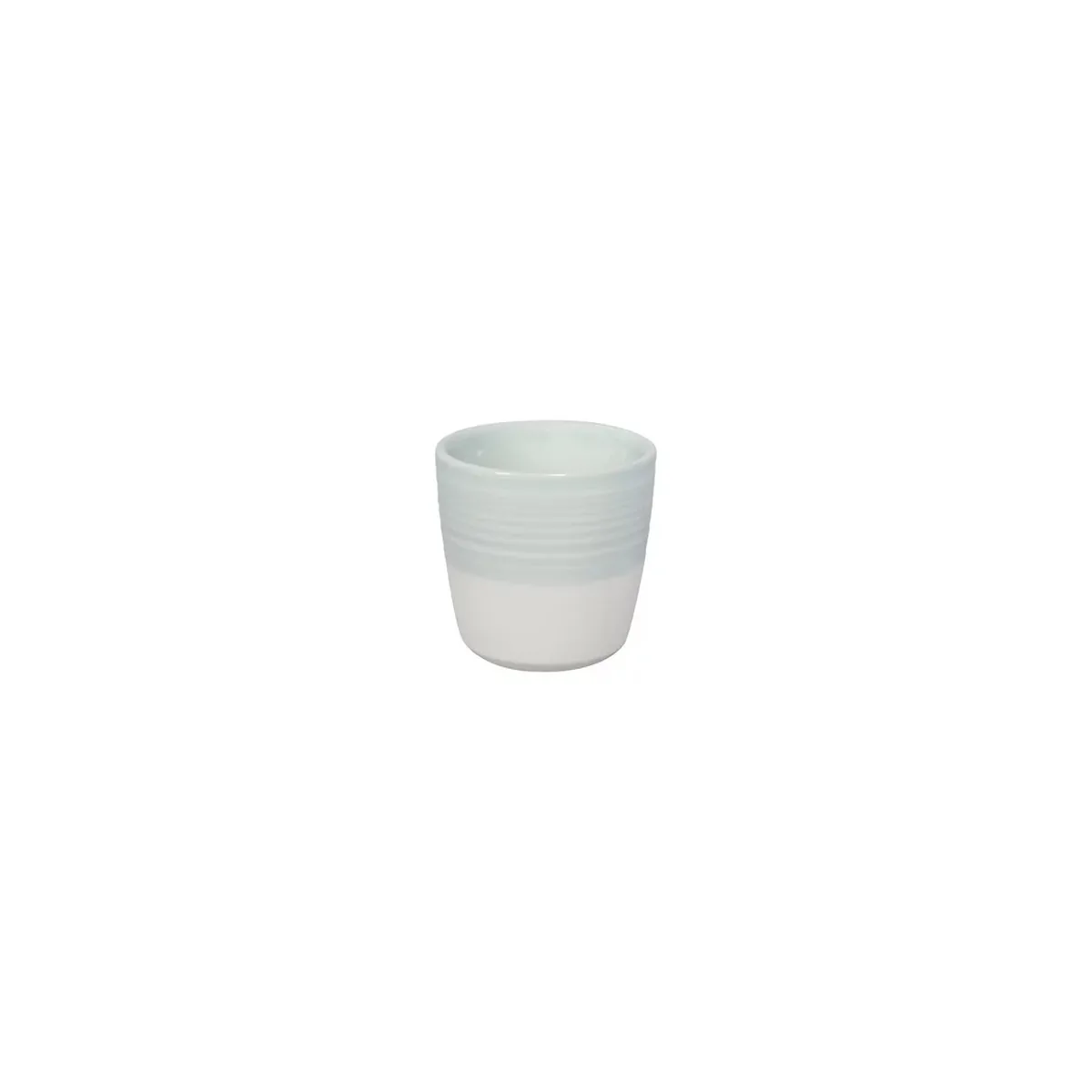
Buying cups looks like the easiest job on the opening checklist, and it is the one owners most often get wrong in both directions. Too few and your barista is rinsing a cappuccino cup by hand at 10 a.m. on Saturday while the queue grows. Too many and you have three boxes of porcelain in the cellar, money tied up and no room on the cup warmer. This guide gives you a method you can run in ten minutes with your own numbers, plus the cup sizes in ml and oz so you order the right shapes in the first place.
If you are still choosing the style and material of the cups themselves, start with our guide to cups and serving for espresso, cappuccino, latte and filter. Here we stay with the operational question: how many.
Cup sizes in ml and oz: what each drink needs
Settle the menu before you count anything. Every drink with its own recipe needs its own cup, and every extra size multiplies your stock. The table below combines the Italian Espresso National Institute (INEI) specification with what specialty cafés commonly use.
| Drink | Liquid in the cup | Cup capacity | In US fl oz |
|---|---|---|---|
| Espresso | 25 ml single (INEI), 35–45 ml double | 50–100 ml, typically 60–90 ml | 2–3 oz |
| Macchiato, cortado | 60–100 ml | 90–120 ml | 3–4 oz |
| Flat white | 130–160 ml | 150–180 ml | 5–6 oz |
| Cappuccino | about 150 ml (25 ml espresso + 100 ml milk, INEI) | 150–160 ml (INEI), 180–200 ml common | 5–7 oz |
| Caffè latte | 220–320 ml | 250–350 ml | 8–12 oz |
| Filter, americano | 200–300 ml | 250–350 ml | 8–12 oz |
Two practical notes. First, ounce sizes on supplier sites are almost always US fluid ounces (29.6 ml), not imperial (28.4 ml), so an "8 oz" cup holds about 237 ml. Second, INEI is precise about the classic Italian cappuccino: 100 ml of cold milk steamed to about 125 ml and 55 °C, poured onto a 25 ml espresso in a cup of 150–160 ml. If your recipe uses a double shot, you need the larger 180–200 ml cup, which is why many specialty bars serve the flat white in a 150 ml cup and the cappuccino in a 200 ml one.
Can you get away with fewer sizes? Yes, and many good cafés do. Owners on barista forums report running only two hot sizes (for example 6 oz for flat white and long black, 8 oz for cappuccino and latte), which keeps recipes consistent and the stock simple. Every size you drop removes a whole column from the calculation below.
How many cups does a café need? The five-step method
A cup is out of action for longer than people think: it sits with the guest for 15–30 minutes, waits in the dirty tray, goes through the dishwasher, then needs to cool and dry before it goes back on the warmer. So the question is not "how many drinks do I sell" but "how many cups are in circulation at my busiest moment".
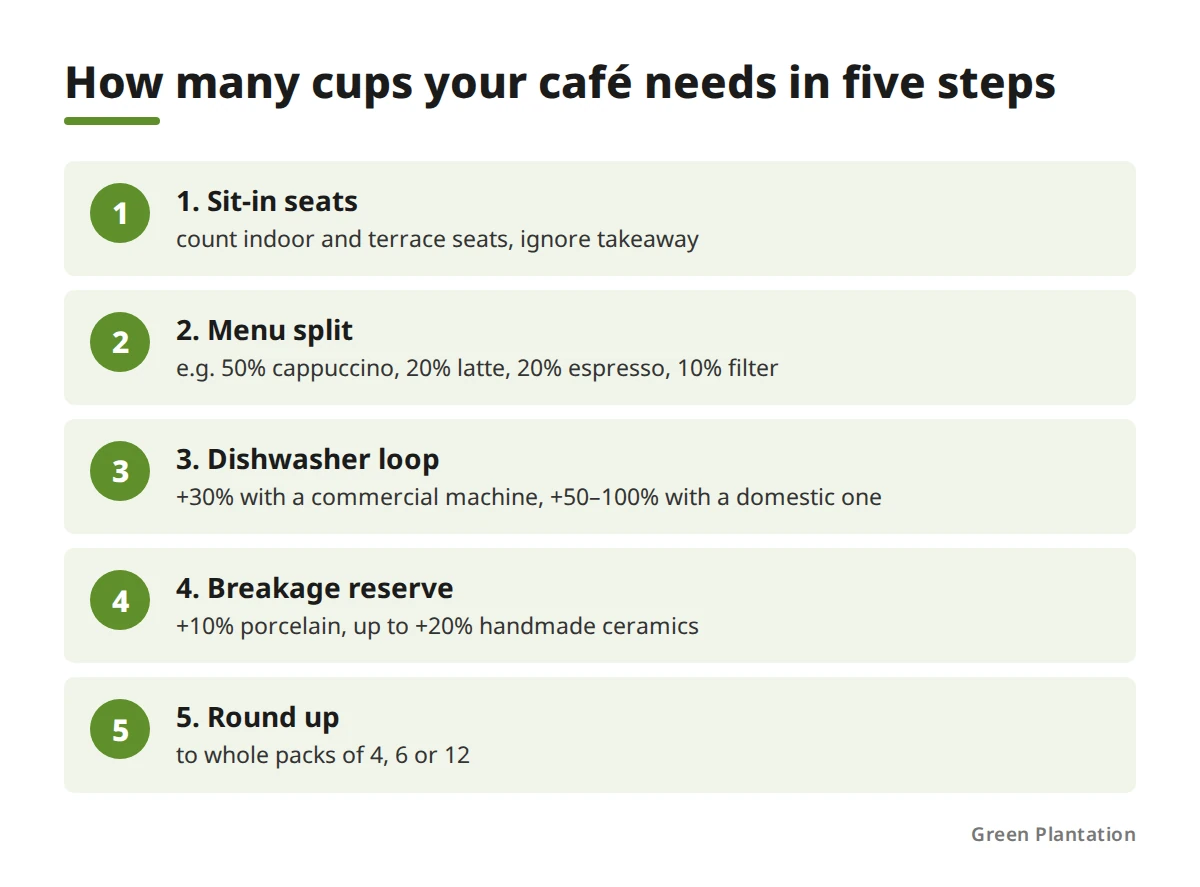
- Count sit-in seats only. Takeaway drinks go into paper or reusable cups, not your porcelain. Include the terrace if it is open in summer.
- Split the seats by drink share. Use your till data if you have it. For a new café, a typical European pattern is about half milk drinks in cappuccino cups, the rest shared between espresso, latte and filter.
- Add the dishwasher loop (about 30%). These are the cups that are dirty, in the machine or cooling while the room is full.
- Add a breakage reserve (about 10%). Chipped porcelain has to go, and it always happens on a busy day.
- Round up to the pack size. Manufacturers usually sell cups in packs of 4, 6 or 12. Order in whole packs so a single colour or batch stays consistent.
The 30% loop figure assumes a commercial undercounter dishwasher. Winterhalter quotes 54–150 seconds per programme for its UC-M model, so a rack is back quickly, but the cups still need a few minutes to cool and dry. With a domestic dishwasher running 1–3 hour cycles, the loop is much longer and you should plan for 50–100% extra instead.
Worked example: a 40-seat café with a terrace
A city café has 20 seats inside and 20 on a summer terrace. The menu: espresso, doppio, lungo, cappuccino, flat white, latte and batch filter. Cappuccino cups also cover the flat white and doppio, which keeps the range to four cup types.
| Cup type | Share of orders | Full house | +30% loop | +10% reserve | Order (packs of 6) |
|---|---|---|---|---|---|
| Cappuccino 180–200 ml | 50% | 20 | 26 | 29 | 30 |
| Latte 300 ml | 20% | 8 | 11 | 12 | 12 |
| Espresso 80 ml | 20% | 8 | 11 | 12 | 12 |
| Filter mug 300 ml | 10% | 4 | 6 | 6 | 6 |
| Total | 100% | 40 | 54 | 59 | 60 |
Compare that with the quick rule from the US supplier Eight Ounce Coffee: divide your seats by 1.2 and buy that many of each cup type. For 40 seats that is about 33 of each, around 130 cups in total. Their rule deliberately covers theft, breakage and very busy days, and it assumes every type sells equally. It is a safe ceiling for a café with a slow dishwasher. Our split method is closer to what you will actually use if you know your menu mix and have a fast commercial machine. Many owners buy at the lower figure and keep one spare pack of the best seller in reserve.
Two adjustments to make after the first month. If the terrace is seasonal, buy for the full 40 seats but expect to store a third of the stock over winter. If your espresso cups sit untouched on the warmer all afternoon, you over-ordered; espresso is drunk in minutes, so those cups turn over much faster than cappuccino cups.
Space on the cup warmer is the real limit
Most cafés discover the true constraint after the cups arrive: there is only so much warm space. A two-group espresso machine typically holds a few dozen small and medium cups on its top tray, and the cups in the top layer of a stack will be cooler than those at the bottom. Baristas on Reddit (one thread, 39 comments) were blunt about stacking: cups should be stored face down, both for hygiene and because inspectors notice.
A practical layout: keep espresso and cappuccino cups on the machine, because they suffer most from a cold cup, and store latte cups and filter mugs on a shelf or in a separate electric cup warmer. INEI puts the espresso at about 67 °C in the cup; a cold 80 ml porcelain cup takes a noticeable bite out of that. Several baristas in the same discussion preheat with hot water for customers who ask for an extra hot drink, which works but costs time at peak.
If you are still choosing the machine, check the size of its passive or active cup warmer against the numbers in your table. It is one of the items on our list of what you need to open a café that owners rarely compare before buying.
Material and durability: what lasts in service
- Thick-walled porcelain holds heat, survives commercial dishwashers and stacks well. It is the default for espresso and cappuccino.
- Tempered glass shows layers in a latte and is light, but it cools faster and some styles do not stack.
- Stoneware and handmade ceramics look great and chip sooner; budget a bigger reserve, closer to 20%.
- Avoid anything labelled decorative or melamine for hot drinks. A widely shared thread on r/barista described a café that bought cheap matte cups online, only to find the box said "cold service only" after the first cup split.
Check that saucers match the cup family. One owner asking for 8 oz and 12 oz sets found that some brands only make saucers for one of the sizes, or the larger saucer was too big for the counter. If you serve with saucers, order one per cup plus the same reserve.
What else to order with the cups
Cups are only part of the serving set. Plan the milk jugs at the same time, because jug size follows cup size: Eight Ounce Coffee suggests a 12 oz (350 ml) jug for 4–8 oz drinks, a 20 oz (600 ml) jug for 8–12 oz drinks and a 32 oz (950 ml) jug for 16 oz and above. Our article on milk jugs for latte art covers spout shapes. Add demitasse spoons for espresso, teaspoons for the rest, and a few spare saucers. The rest of the opening list is in our 30 steps to open a café.
Frequently asked questions
How many cups do I need for a small café with 20 seats?
With a typical menu and a commercial dishwasher, about 15 cappuccino, 6 latte, 6 espresso and 3–6 filter cups, so roughly 30–35 in total. The more cautious seats ÷ 1.2 rule gives about 17 of each type.
What size is a standard espresso cup?
INEI specifies a white porcelain cup of 50–100 ml for a 25 ml espresso. Most cafés use 60–90 ml (2–3 oz), which also fits a double shot.
How many ml is a cappuccino cup?
The classic Italian cappuccino goes into a 150–160 ml cup. Specialty cafés making it with a double shot usually choose 180–200 ml.
Should a café have separate flat white and cappuccino cups?
Only if the recipes differ. If your flat white is a double shot with thinner milk in 150 ml, a separate cup makes the difference visible. Many cafés use the cappuccino cup for both and keep stock simpler.
How many coffees do you get from 1 kg of beans?
At the INEI dose of 7 g, about 140 single espressos. At a typical specialty double of 18 g, about 55 drinks. Allow a little for dialling in each morning.
Recommended cups and equipment for a café
- Loveramics Dale Harris 80 ml espresso cup – thick porcelain designed with 2017 World Barista Champion Dale Harris, the right size for single and double shots.
- Loveramics Dale Harris 200 ml cappuccino cup – the workhorse for a double-shot cappuccino and flat white, matching the espresso cup in style.
- Loveramics Egg 300 ml café latte cup and saucer – wide porcelain bowl that leaves room for latte art.
- Loveramics Bond 300 ml mug – a stackable mug for filter coffee and americano.
- Dr.Coffee CH01 cup warmer – a separate stainless steel warmer that holds cups at around 55 °C according to the manufacturer, ideal when the machine's top tray runs out of space.
- Barista Space 600 ml milk pitcher – a 20 oz jug sized for 8–12 oz milk drinks, the most common size in service.
Sources
- Istituto Nazionale Espresso Italiano – Certified Italian Espresso and Cappuccino
- Eight Ounce Coffee – So You're Opening a New Cafe? (checklist, 2023)
- Winterhalter – UC-M undercounter dishwasher specification sheet
Updated: November 2026
Author: Petra Novotná, editorial name of the Green Plantation.
Recommended products (6)
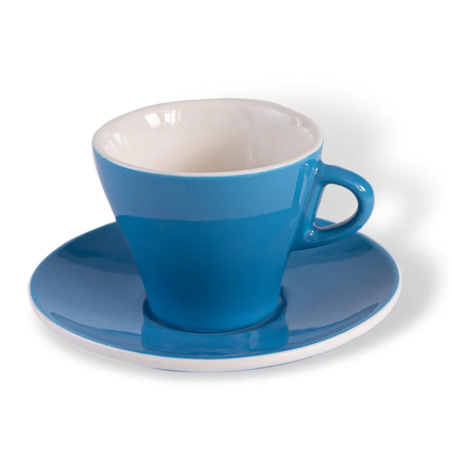
ClubHouse cup and saucer Gardenia, 170 ml, blue
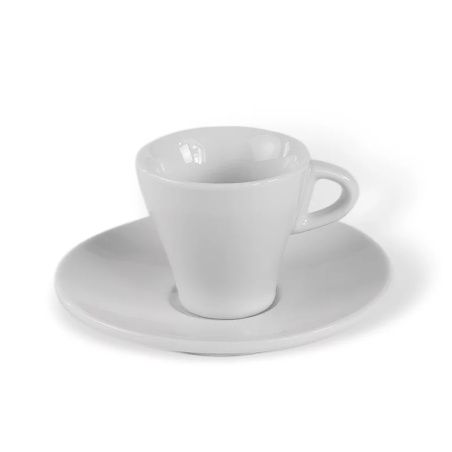
ClubHouse cup and saucer Gardenia, 65 ml, white
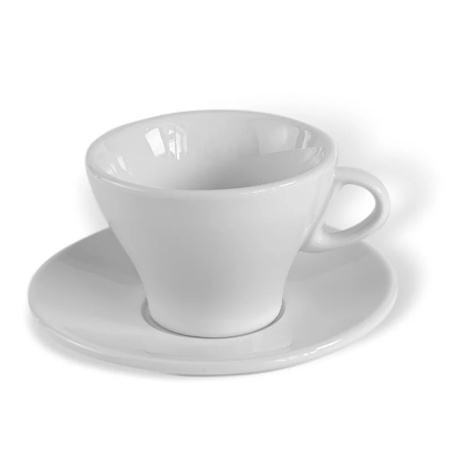
ClubHouse cup and saucer Gardenia, 225 ml, white
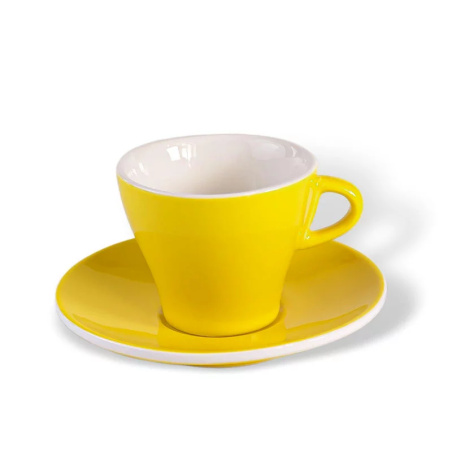
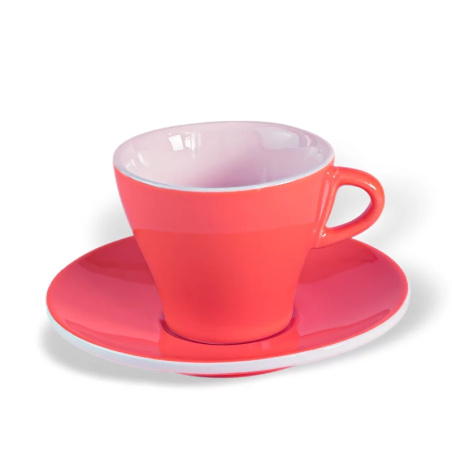
ClubHouse cup and saucer Gardenia, 170 ml, pink

You might also like
 An energy-efficient professional coffee machine saves more than €1,000 per year
The energy-intensive coffee machines have already been called off. Pack the old energy guzzler and send it out of the café. In its place, install a shiny… 20. 5. 2025
 How to simplify the washing of milk jugs?
An important part of café equipment or a barista's whim? Glass and milk jug sharpeners can optimise your work at the coffee machine. But if you choose it… 5. 11. 2024
 Preparing decaffeinated coffee in a café
How to prepare decaffeinated coffee for customers? Do you need a special grinder to prepare decaffeinated coffee or is pre-ground coffee enough? 22. 10. 2024