Česky (CZK)
 Slovensky (EUR)
 Magyar (HUF)
 Polski (PLN)
 English (EUR)
 Deutsch (EUR)
 Français (EUR)
 Español (EUR)
 Português (EUR)
 Italiano (EUR)
 Svenska (SEK)
 Suomi (EUR)
 Nederlands (EUR)
 Dansk (EUR)
 Lëtzebuergesch (EUR)
 Eesti (EUR)
 Latviešu (EUR)
 Lietuvių (EUR)
 Slovenščina (EUR)
 Română (RON)
 Български (EUR)
 Hrvatski (EUR)
 Ελληνικά (EUR)
 Українська (EUR)
 Norsk (EUR)
 Srpski (EUR)
 Tiếng Việt (EUR)



What Are Essential Oils
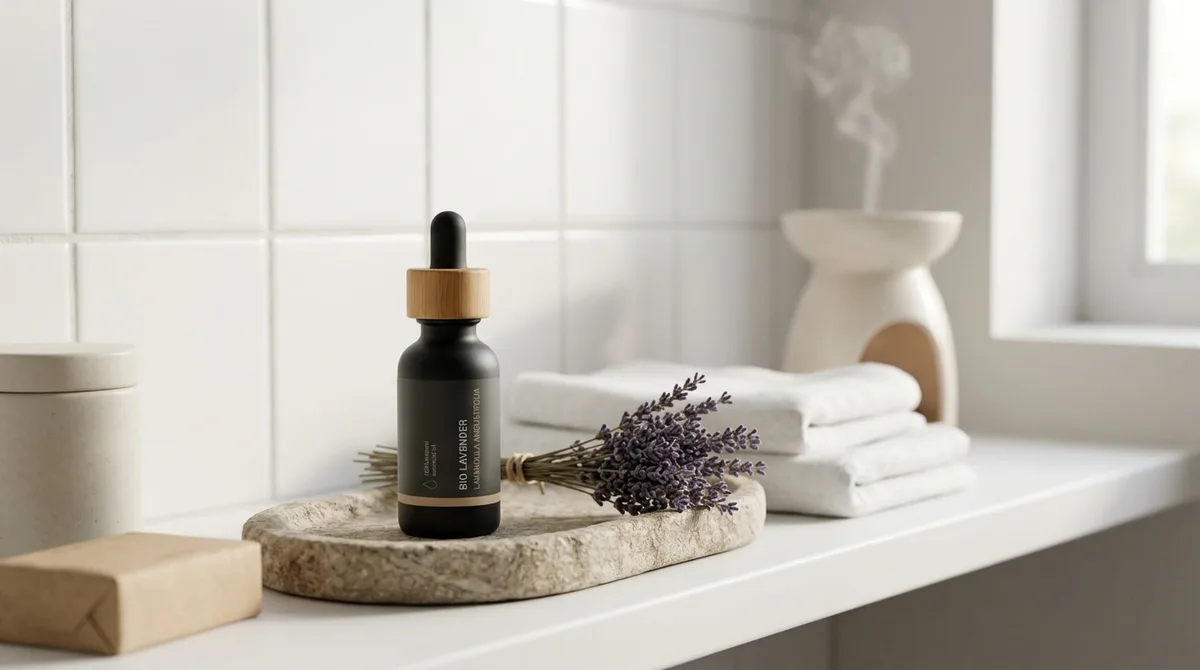
Essential oils are highly concentrated aromatic extracts obtained from various parts of plants – flowers, leaves, bark, roots, fruits, or resins. Their concentration is remarkable: producing 1 ml of rose oil requires approximately 5,000 roses, while the resulting product contains hundreds of active aromatic compounds in a form that ordinary dried herbs never achieve.
This extreme concentration is precisely what makes essential oils effective – and simultaneously requires strict adherence to safe handling principles. They are not applied to skin in pure form, and certain oils have additional specific restrictions.
Browse our full selection of oils and accessories in the sections essential oils, carrier oils, and diffusers.
Extraction Methods
The method used to obtain essential oil from a plant fundamentally affects its chemical composition, aromatic profile, and price. Understanding these differences helps when selecting a quality product.
Steam Distillation
The most widespread method, used for the majority of essential oils – lavender, eucalyptus, peppermint, rosemary, and tea tree.
Principle: Water vapor passes through plant material and releases volatile aromatic compounds. The vapor carrying the oil cools in a condenser, and the oil separates from water. The water saturated with aromatic substances that remains after distillation is called a hydrolat or floral water.
Hydrolat – floral waters – is a gentler and directly usable alternative to essential oils, suitable for skin without further dilution.
Cold Pressing
This method is used exclusively for citrus oils – lemon, orange, grapefruit, bergamot, and mandarin.
Principle: Mechanical pressing of citrus peel without heat or chemical solvents. The result is an oil with a fresh, authentic aroma that faithfully captures the character of fresh fruit.
Important warning: Citrus oils obtained by cold pressing are photosensitive – after application to skin, they increase its sensitivity to UV radiation and may cause burns or permanent pigmentation.
CO2 Extraction (Supercritical)
A modern premium method utilizing carbon dioxide under high pressure.
Principle: CO2 in a supercritical phase acts as a solvent, extracting aromatic compounds from the plant, and after the process is complete, it evaporates without any residue. The result is oils with the most complex aromatic profile – closest to the original fresh plant.
Advantage: Low temperature preserves thermolabile compounds that steam distillation damages. Disadvantage: Higher production costs translate to higher product prices.
Methods Overview
| Method | Temperature | Suitable for | Quality | Price |
|---|---|---|---|---|
| Steam Distillation | High | Most herbal oils | Good | Medium |
| Cold Pressing | None | Citrus oils | Excellent | Low–Medium |
| CO2 Extraction | Low | Premium oils | Highest | High |
Top 10 Essential Oils for Beginners
1. Lavender (Lavandula angustifolia)
- Uses: Relaxation, sleep support, care for minor burns and insect bites
- Aroma: Floral, herbal, calming
- Tip: The most universal essential oil ever – if you acquire just one, let it be lavender. It also ranks among the few oils that most people tolerate reasonably well.
2. Tea Tree (Melaleuca alternifolia)
- Uses: Antimicrobial effects (acne, minor wounds, fungal infections), surface cleaning
- Aroma: Medicinal, camphoraceous, fresh
- Tip: One of the few oils applied directly to a small skin area in low concentration – even so, dilution is preferable.
3. Peppermint (Mentha piperita)
- Uses: Mental stimulation, headache relief, digestive support, refreshment
- Aroma: Intense menthol, cooling
- Tip: Never apply near the face of small children – menthol can trigger a reflex spasm of the airways in infants and toddlers.
4. Eucalyptus (Eucalyptus globulus)
- Uses: Respiratory support, relief of congestion, air disinfection
- Aroma: Fresh, camphoraceous, clean
- Tip: In a diffuser during a cold, it opens breathing – try combining with peppermint or frankincense.
5. Lemon (Citrus limon)
- Uses: Energy boost, mood improvement, cleaning and disinfection
- Aroma: Fresh, distinctly lemony, uplifting
- Tip: A photosensitive oil – after application to skin, avoid sunlight for at least 12 hours.
6. Rosemary (Rosmarinus officinalis)
- Uses: Support for concentration and memory, muscle pain relief, hair and scalp care
- Aroma: Herbal, woody, camphoraceous
- Tip: Unsuitable during pregnancy and for epilepsy – contains camphor and 1,8-cineol, which may stimulate the CNS.
7. Frankincense (Boswellia carterii / sacra)
- Uses: Meditation and deep relaxation, mature skin care, anti-inflammatory effects
- Aroma: Smoky, resinous, warm, earthy
- Tip: One of the oldest aromatherapeutic oils in human history – its use is documented thousands of years across various cultures.
8. Ylang-Ylang (Cananga odorata)
- Uses: Relaxation, sensual atmosphere, hair care, blood pressure support
- Aroma: Intensely floral, sweet, exotic
- Tip: Dose carefully – excessive amounts cause intense aroma that triggers headaches and nausea. One drop in a diffuser usually suffices.
9. Roman Chamomile (Anthemis nobilis)
- Uses: Nervous system calming, sleep support, sensitive skin care (eczema, dermatitis)
- Aroma: Appley, herbal, gently sweet
- Tip: One of the safest oils for children – still requires careful dilution.
10. Sweet Orange (Citrus sinensis)
- Uses: Mood improvement, anxiety relief, home aromatization
- Aroma: Sweet, fruity, warm, pleasant
- Tip: Photosensitive, though less aggressive than bergamot or lemon. Works excellently as a base for diffuser blends.
Explore the full range at essential oils.
Carrier (Base) Oils
Essential oils are never applied directly to skin in pure form – before every topical application, they must be diluted in a carrier oil. Carrier oils are gentle plant oils that transport the essential oil to the skin, slow its evaporation, and simultaneously hydrate and nourish the skin. The right choice of carrier oil can significantly amplify the final effect.
| Carrier Oil | Properties | Best for |
|---|---|---|
| Jojoba | Composition closest to human sebum, non-drying, long shelf life | Face, acne-prone skin |
| Sweet Almond | Light, hydrating, rapid absorption | Massage, normal and combination skin |
| Coconut | Antimicrobial, intensely nourishing | Body, hair, dry skin |
| Argan | Rich in vitamin E and unsaturated fatty acids | Face, hair, mature skin |
| Avocado | Dense, deeply hydrating and nourishing | Very dry, eczematous skin |
| Apricot Kernel | Light, gentle, hypoallergenic | Sensitive skin, children |
| Rose Hip | Regenerative, rich in vitamin A and omega acids | Scars, pigmentation, wrinkles |
Browse the full carrier oil selection at carrier oils.
Types of Diffusers
A diffuser disperses essential oils into the surrounding air in a form you inhale. Each type works on a different principle and suits different situations.
Ultrasonic Diffuser
- Principle: Ultrasonic vibrations disperse a mixture of water and oil into fine cool mist
- Advantages: Quiet operation, simultaneously humidifies air, low oil consumption
- Disadvantages: Less intense aroma than nebulization, requires regular container maintenance
- Best for: Bedrooms, offices, daily use
Nebulizing Diffuser
- Principle: Air pressure disperses pure oil without any water dilution
- Advantages: Most intense and purest aroma, no change to oil's chemical composition
- Disadvantages: Louder operation, higher oil consumption, higher purchase price
- Best for: Larger spaces, therapeutic and professional use
Ceramic / Thermoelectric Diffuser
- Principle: Gentle warming of oil on a porous ceramic surface (electric or candle variant)
- Advantages: Quiet operation, simplicity, aesthetic design
- Disadvantages: Heat can degrade certain aromatic compounds
- Best for: Small spaces, decorative use
Aroma Jewelry / Personal Inhalers
- Principle: Absorbent material (lava stone, felt) saturated with essential oil
- Advantages: Personal, discreet, ideal for travel
- Best for: Individual daytime use, on the go
Explore our diffusers.
Safety – Key Rules
Dilution
Essential oils are 50 to 100 times more concentrated than the plant they come from. Never apply them directly to skin – irritation, chemical reaction, or permanent sensitization may occur.
| Target Group | Concentration | Drops per 10 ml Carrier Oil |
|---|---|---|
| Adults | 2–3 % | 4–6 drops |
| Pregnant Women | 1 % (after consulting doctor) | 2 drops |
| Children 6–12 years | 1 % | 2 drops |
| Children 2–6 years | 0.5 % | 1 drop |
| Infants up to 2 years | Diffusion only or 0.1–0.25 % | Always consult a professional |
Photosensitivity
Cold-pressed citrus oils – lemon, bergamot, grapefruit, orange, mandarin, lime – are photosensitive. After skin application, they increase skin sensitivity to UV radiation and may cause burns or lasting pigmentation when exposed to sun.
Rule: After topical citrus oil use, avoid direct sunlight for at least 12–18 hours. A safe alternative is use exclusively in a diffuser.
Pets
- Cats: Extremely sensitive to essential oils – they lack the liver enzyme needed to metabolize them. Most toxic are tea tree, eucalyptus, peppermint, cinnamon, and citrus oils. Limit diffusion in their presence to short periods and thoroughly ventilate the room.
- Dogs: More sensitive than humans, yet more tolerant than cats. Avoid tea tree, pennyroyal, and anise oil.
- Birds: Extremely sensitive to vapors – never use a diffuser in a room with birds.
Children
- Up to 2 years: diffusion only in a well-ventilated room, using only gentle oils (lavender, Roman chamomile).
- 2–6 years: very low concentration (0.5 %), proven safe oils (lavender, chamomile, sweet orange).
- Never use peppermint or eucalyptus near the faces of small children – menthol and 1,8-cineol can trigger reflex bronchospasm in children under 6.
Pregnancy
First trimester: complete avoidance of essential oils is recommended. In later pregnancy stages, gentle oils (lavender, lemon) can be cautiously used in low concentration. Consult your doctor or midwife before any use.
Internal Use
Internal use of essential oils without supervision of a qualified aromatherapist or doctor is not recommended. Many oils are toxic even in small amounts when ingested.
Ayurvedic Oils
Ayurveda – the traditional Indian medical system with over 3,000 years of history – works with aromatic and medicinal oils differently than modern aromatherapy. Unlike pure essential oils, Ayurvedic herbal oils are typically infused oils, in which herbs soak long-term in a carrier oil – most commonly sesame or coconut. The resulting product is directly applicable to skin without further dilution.
Typical Ayurvedic Oils
- Brahmi oil – traditionally supports memory, concentration, and calming of an overworked mind
- Ashwagandha oil – used for relaxation, sleep quality improvement, and muscle recovery
- Neem oil – strong antimicrobial properties, used in caring for problematic skin and hair
- Sesame oil – fundamental oil for abhyanga, traditional Ayurvedic full-body massage supporting lymphatic circulation and grounding
Explore our Ayurvedic herbal oils and infused oils.
How to Begin with Aromatherapy
Recommended Starter Kit
- Lavender – relaxation, sleep, versatile use
- Tea tree – cleaning, antimicrobial protection
- Peppermint – mental energy, headache relief
- Lemon – mood boost, room disinfection
- Jojoba carrier oil – base for topical application of any essential oil
- Ultrasonic diffuser – daily room aromatization
First Steps
- Diffusion: Add 3–5 drops of essential oil to a diffuser filled with water. Start with 30-minute sessions and monitor your reaction.
- Bath: Mix 5–8 drops with a tablespoon of carrier oil or Epsom salt and add to warm water. Never add pure oil directly to bathwater – it won't dissolve and may irritate skin.
- Massage: Prepare a 2–3 % blend (4–6 drops per 10 ml carrier oil) and apply to pulse points, feet, or tense muscle groups.
- Inhalation: Apply 1–2 drops to a tissue or add to a bowl of hot water and inhale steam covered with a towel – an effective method for colds or migraines.
Frequently Asked Questions (FAQ)
How long does essential oil last?
Shelf life depends on chemical composition: citrus oils last 1–2 years, herbal 2–3 years, woody and resinous oils 3–5 years or longer. Store in dark glass bottles away from direct light and heat – these factors accelerate oxidation and degrade quality.
Can I mix different essential oils?
Yes – creating synergistic blends is one of the fundamental aromatherapy practices. For beginners, simple two-oil combinations work well: lavender + sweet orange (evening relaxation), peppermint + eucalyptus (clear breathing), lemon + rosemary (morning focus).
Is aromatherapy scientifically supported?
Partially. Clinical studies confirm effects of certain oils – for example, lavender for insomnia, peppermint for tension headaches, tea tree for acne. Other claims remain largely based on tradition and anecdotal experience. Aromatherapy is a recognized complementary therapy, not a substitute for conventional medical care.
What's the difference between essential and carrier oil?
Essential oil is a highly concentrated aromatic extract – volatile, with intense aroma, never applied pure to skin. Carrier oil is a gentle plant oil – non-volatile, with faint or no inherent aroma – serving as a medium for safe dilution and application of essential oil.
What is floral water (hydrolat)?
A byproduct of steam distillation – water saturated with aromatic substances from the plant. It's much gentler than essential oil and can be applied directly to skin without dilution, including sensitive and baby skin. See our floral waters.
Are essential oils safe for pets?
Not automatically. Cats are particularly vulnerable, lacking liver enzymes needed to metabolize many aromatic compounds – some oils can be acutely toxic. Consult a veterinarian before any essential oil use in a home with pets.
Sources
- Aromatics International – Dilution Guidelines for Essential Oil Safety
- Aromatics International – Basic Essential Oil Safety
- GyaLabs – Complete Guide to Essential Oil Extraction Methods
- Natural Living Family – Essential Oils Aromatherapy Guide for Beginners