- New
- Unavailable

 Česky (CZK)
 Slovensky (EUR)
 Magyar (HUF)
 Polski (PLN)
 English (EUR)
 Deutsch (EUR)
 Français (EUR)
 Español (EUR)
 Português (EUR)
 Italiano (EUR)
 Svenska (SEK)
 Suomi (EUR)
 Nederlands (EUR)
 Dansk (EUR)
 Lëtzebuergesch (EUR)
 Eesti (EUR)
 Latviešu (EUR)
 Lietuvių (EUR)
 Slovenščina (EUR)
 Română (RON)
 Български (EUR)
 Hrvatski (EUR)
 Ελληνικά (EUR)
 Українська (EUR)
 Norsk (EUR)
 Srpski (EUR)
 Tiếng Việt (EUR)
Price per kg: 54 €/kg (250 g)
 DPDpickup point
from 2,90 €
 Zásilkovna / Packetapickup point
from 3,60 €
 DPDhome delivery
from 4,20 €
 PPLhome delivery
from 4,20 €
For cafés, shops and businesses: Partner with us: wholesale coffee supplier and partner programme
Have a question? Write to us, we are happy to help.
WhatsApp – online 24/7 · +420 576 776 787 · [email protected]
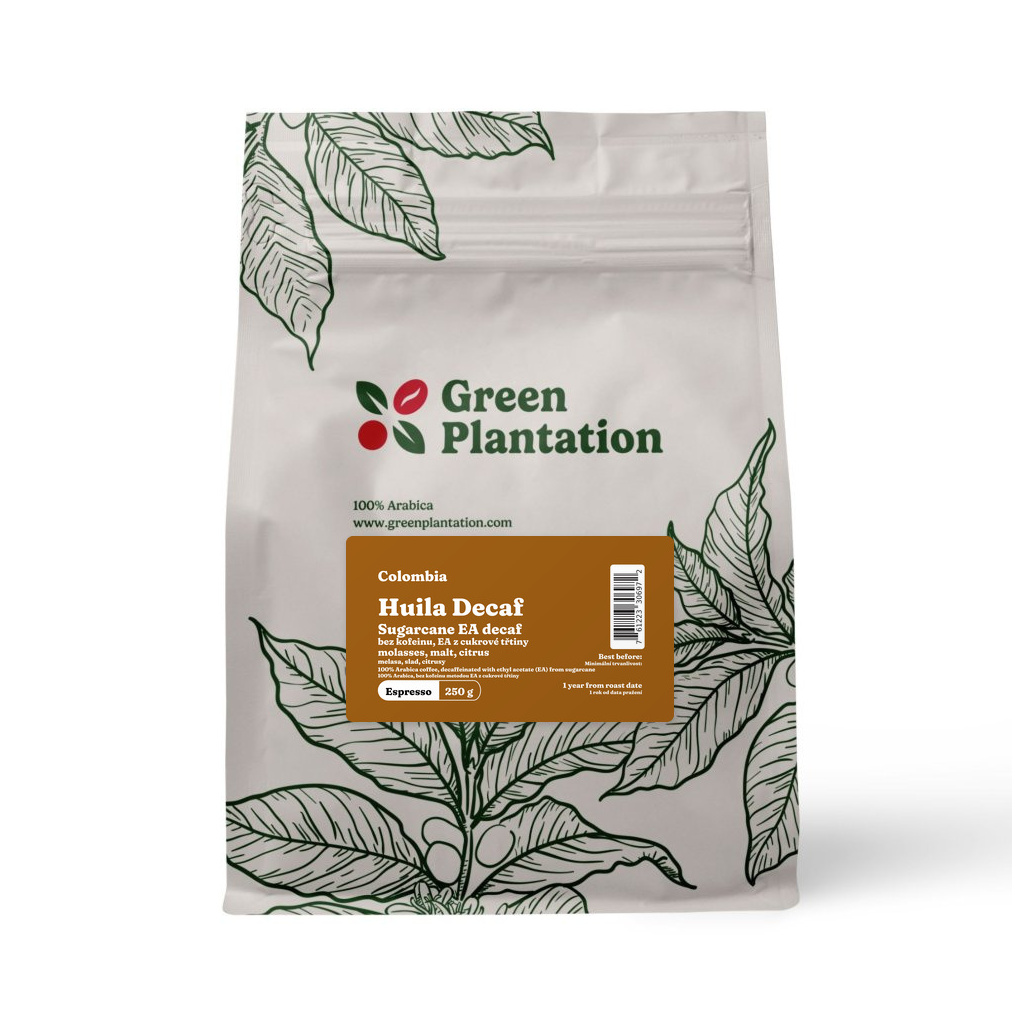
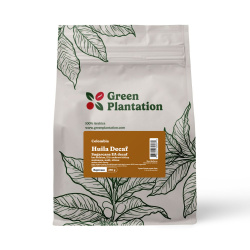
A decaf that tastes like coffee, not like a compromise. Dark molasses sweetness, a malty middle and a short flash of citrus at the finish. Beans from Huila, Colombia, with around 97% of the caffeine removed by the sugarcane EA process, medium roasted for espresso and milk drinks.
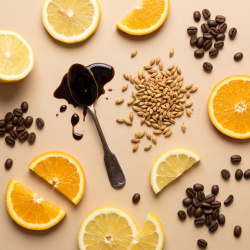
Picture an espresso that opens like a spoonful of cane syrup, moves into malt and toasted bread crust, and finishes with a light orange-like acidity. No papery flatness, no extra bitterness. That is Huila Decaf at a medium roast: sweet, round and bold enough to stand on its own or in a cappuccino.
The department of Huila in south-west Colombia grows more coffee than any other region in the country, around a fifth of the national harvest according to the Colombian Coffee Growers Federation. Farms sit on the slopes of the Andes, largely on volcanic ash soils, and they are small: a typical farm is around 1.5 hectares. Since 2013, Huila has had its own protected designation of origin, Café de Huila.
Our lot blends coffee from many small farms across Huila, grown at 1,250–2,000 m above sea level. The individual varieties are not listed; Typica, Caturra and Castillo dominate in the region. The main harvest runs from September to December, the smaller mitaca from April to May.
Ethyl acetate (EA) sounds like a lab, but in Colombia it is made from sugarcane. Molasses is fermented into ethanol, which combines with acetic acid to form ethyl acetate, a compound that ripe fruit contains naturally too. It pulls caffeine out like a magnet picks up nails, and mostly leaves the sugars and aromatics alone.
The result: the bean keeps most of its flavour compounds and a pronounced natural sweetness.
| drink | caffeine |
|---|---|
| regular filter coffee, 200 ml (EFSA) | about 90 mg |
| decaf coffee, 200 ml (EUFIC) | about 4 mg |
| legal limit for decaffeinated roasted coffee (Czech and German law) | max. 0.1% of dry matter |
| method | dose | water | time |
|---|---|---|---|
| espresso | 18 g in, 36 g out | 91–92 °C | 25–30 s |
| AeroPress | 15 g, medium-fine, 200 g water | 88–90 °C | 1:30 steep, slow press |
| French press | 30 g, coarse, 500 g water | 93 °C | 4 min, skim, 5 min settle |
Moka pot: fill the base with hot water to just below the safety valve, level the basket without tamping and take it off the heat as soon as it starts to sputter.
Tip: decaf beans extract faster than regular ones. If your espresso runs fast and tastes sour, grind finer; if it tastes bitter, drop the water temperature by a degree.
People who drink coffee for the taste and want to sleep at night. Home baristas who want a decaf worth putting in a cappuccino. Anyone limiting caffeine for health reasons, for example during pregnancy, when EFSA considers up to 200 mg of caffeine a day safe.
Reseal the bag after opening and keep it somewhere dry, cool and dark, not in the fridge. It tastes best from about day five to around six weeks after roasting; decaf ages a little faster than regular coffee. Grind just before brewing. Best before: 1 year from the roast date.
| Parameter | Value |
|---|---|
| Country of origin | Colombia |
| Region | Huila |
| Producer | smallholder farmers from Huila, regional lot |
| Altitude | 1,250–2,000 m a.s.l. |
| Variety | various (region: Typica, Caturra, Castillo) |
| Species | Arabica |
| Processing | sugarcane EA decaffeination, approx. 97% of caffeine removed |
| Caffeine | decaffeinated, max. 0.1% of dry matter |
| Harvest in the region | September–December (main), April–May (mitaca) |
| Roast | medium (3 of 5), espresso |
| Best for | espresso, cappuccino and flat white, moka pot, AeroPress, French press |
| Flavour | molasses, malt, citrus |
| Best before | 1 year from roast date |

Green Plantation is a Slovak roastery specialising in "specialty grade" coffee. Specialty coffee makes up the top 5-10% of world coffee production, and its quality is precisely defined by the SCA methodology.
Data sheet
See Partner with us: wholesale coffee supplier and partner programme.
Alternatives of the same type in a similar price range.
250 g · 56 €/kg
250 g · 56 €/kg
250 g · 58 €/kg
250 g · 53 €/kg
250 g · 51 €/kg
A decaf that tastes like coffee, not like a compromise. Dark molasses sweetness, a malty middle and a short flash of citrus at the finish. Beans from Huila, Colombia, with around 97% of the caffeine removed by the sugarcane EA process, medium roasted for espresso and milk drinks.
We need your consent to use individual cookies so that we can, among other things, show you information relating to your interests. Here you have the option to customize cookies in accordance with your own preferences.