Česky (CZK)
 Slovensky (EUR)
 Magyar (HUF)
 Polski (PLN)
 English (EUR)
 Deutsch (EUR)
 Français (EUR)
 Español (EUR)
 Português (EUR)
 Italiano (EUR)
 Svenska (SEK)
 Suomi (EUR)
 Nederlands (EUR)
 Dansk (EUR)
 Lëtzebuergesch (EUR)
 Eesti (EUR)
 Latviešu (EUR)
 Lietuvių (EUR)
 Slovenščina (EUR)
 Română (RON)
 Български (EUR)
 Hrvatski (EUR)
 Ελληνικά (EUR)
 Українська (EUR)
 Norsk (EUR)
 Srpski (EUR)
 Tiếng Việt (EUR)



Two Pillars of the Global Coffee Market
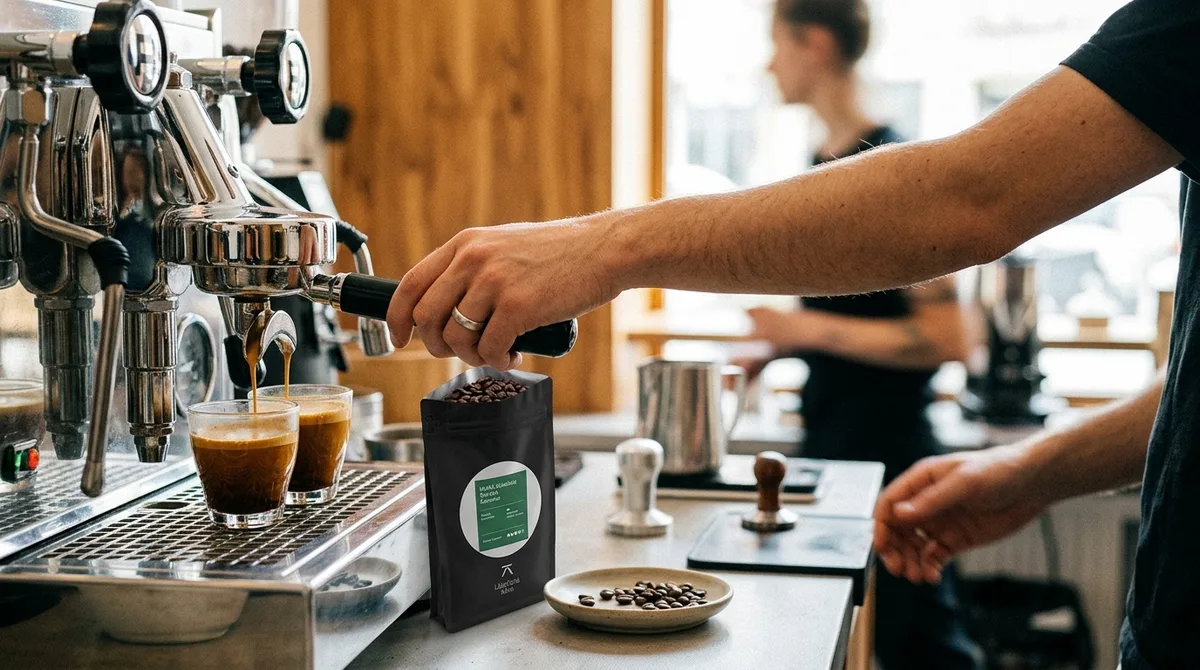
Brazil and Colombia together produce over 45% of the world's coffee. Brazil is unquestionably the largest producer – approximately 60 million bags annually, representing almost one-third of total global production. Colombia ranks third (behind Vietnam) and is simultaneously the world's largest producer of washed arabica.
Despite both countries being located in South America, they offer fundamentally different coffee experiences. Brazil is a country of full body, chocolate and nutty notes, where natural processing dominates. Colombia is a country of vibrant acidity, caramelized sweetness and citric nuances, where the washed process traditionally prevails. This polarity is not coincidental – it reflects differences in altitude, climate, varietal, and processing tradition.
For anyone who truly wants to understand specialty coffee, these two countries are an indispensable and logical starting point.
Colombia – "Land of Juan Valdez"
Why Colombian Coffee is So Renowned
Colombia has nearly ideal conditions for arabica cultivation. Three Andean mountain ranges create countless microclimatic zones with volcanically rich soil, excellent drainage, and stable moisture. Growing altitudes range between 1,200 and 2,300 m a.s.l., with most specialty lots coming from elevations above 1,600 m. An exceptional characteristic is the existence of two harvest seasons annually – the main harvest (October–January) and the secondary mitaca harvest (April–June) – ensuring continuous availability of fresh green coffee throughout the year.
The Colombian Coffee Growers Federation (FNC – Federación Nacional de Cafeteros), founded in 1927, created one of the most successful branding campaigns in food industry history: the character of Juan Valdez – a Colombian farmer with a mule – which became a global symbol of Colombian coffee quality and helped build the country's premium reputation on world markets.
Main Growing Regions
Huila
Altitude: 1,200–2,000 m a.s.l.
Profile: Vibrant acidity, caramel, red fruit, chocolate, medium to full body
Varieties: Caturra, Castillo, Colombia, Typica
Why it matters: Huila is Colombia's largest and most significant specialty coffee region. The vast majority of Colombian micro-lots and Cup of Excellence (CoE) winners come from here. Remarkable microclimatic diversity – caused by rugged terrain and different slope orientations – enables cultivation with extraordinarily varied flavor profiles even within a single region.
Nariño
Altitude: 1,500–2,300 m a.s.l.
Profile: High, complex acidity, citrus, floral notes, tea-like delicacy, lighter body
Varieties: Caturra, Typica, Bourbon
Why it matters: Nariño borders Ecuador and is among Colombia's highest-altitude coffee regions. Extreme elevation slows cherry ripening, extending sugar accumulation and increasing flavor complexity. The resulting coffees resemble washed Ethiopian arabica in their brightness and delicacy – an unusual characteristic for a Colombian region.
Antioquia
Altitude: 1,300–2,000 m a.s.l.
Profile: Balance, chocolate, nuts, caramel, medium body
Varieties: Caturra, Castillo, Colombia
Why it matters: Antioquia, with the capital Medellín, is the historical heart of Colombian coffee culture – an inseparable part of the legendary "eje cafetero" (coffee triangle). The balanced and approachable flavor profile makes Antioquia coffees ideal raw material for espresso blends, where they serve as a stable and predictable foundation.
Other Regions
- Tolima – borders Huila, similar flavor profile, growing share of specialty production
- Cauca – high elevations, pronounced acidity, floral notes, growing interest from specialty roasters
- Santander – lower elevations, full body, chocolate notes, lower acidity suitable for espresso
- Sierra Nevada de Santa Marta – isolated mountain massif on the Caribbean coast, traditional shade-grown cultivation, milder and earthier profile
Colombian Varieties
| Variety | Origin | Profile | Note |
|---|---|---|---|
| Caturra | Bourbon mutation (Brazil) | Bright acidity, citrus, sweetness | Classic Colombian variety |
| Typica | Original arabica | Clean, elegant, delicate | Low yields, less widespread |
| Bourbon | Réunion (historically) | Caramel, chocolate, fruit | Exceptional quality, susceptible to leaf rust |
| Castillo | Colombian hybrid | Balanced, chocolate, nuts | Rust-resistant, controversial in specialty segment |
| Colombia | Colombian hybrid | Similar to Castillo | Predecessor to Castillo, equally rust-resistant |
| Geisha / Gesha | Ethiopia → Panama → Colombia | Jasmine, bergamot, tropical fruit | Rarest and most expensive variety, growing production |
| Pink Bourbon | Exact origin unknown | Floral, fruity, complex | Trendy variety with ongoing genetic research |
Processing in Colombia
Washed (wet) processing remains the traditional dominant method – Colombia is indeed the world's largest producer of washed arabica. Fermentation and thorough rinsing of parchment coffee guarantees a clean, transparent flavor profile that excels especially in filter brewing methods. In recent years, however, the share of alternative methods is growing:
- Honey process – partial retention of mucilage during drying, results in a sweeter flavor and fuller body
- Natural – drying the entire cherry, produces a distinctly fruity and fermented profile
- Anaerobic fermentation – experimental method with controlled oxygen-free environment, produces intense and unusual flavor profiles that achieve record scores at competitions
Brazil – Coffee Superpower
Why Brazil Dominates
Brazil produces more coffee than the next five largest producers combined. This result is a combination of vast areas of suitable soil, favorable climate, highly mechanized harvesting methods, and an unbroken coffee-growing tradition reaching back to the 18th century. Production occurs on large-scale fazendas with thousands of hectares as well as on small family farms – both models coexist and complement each other.
Unlike most coffee countries, Brazil produces significant volumes of robusta (conilon) – primarily in the state of Espírito Santo. For the specialty segment, however, arabica from high-altitude regions is crucial, where lower temperatures and distinct seasonality enable the development of more complex flavor profiles.
Main Growing Regions
Minas Gerais
Sub-regions: Sul de Minas, Cerrado Mineiro, Chapada de Minas, Matas de Minas
Altitude: 800–1,400 m a.s.l.
Profile: Chocolate, nuts, caramel, low acidity, full body
Share of production: approximately 50% of Brazilian arabica
Minas Gerais is Brazil's largest coffee state. Cerrado Mineiro was the first Brazilian region to achieve Designation of Origin (2013) – equivalent to Europe's wine AOC designation. This certification reflects the consistency and identifiability of the region's flavor profile.
São Paulo
Sub-regions: Mogiana, Alta Mogiana
Altitude: 900–1,200 m a.s.l.
Profile: Chocolate, dried fruit, caramel, medium body
Note: Historically Brazil's oldest coffee region, where 19th-century fazenda culture laid the foundation for the entire Brazilian coffee industry.
Bahia
Sub-regions: Chapada Diamantina, Planalto da Bahia
Altitude: 800–1,200 m a.s.l.
Profile: Citrus, chocolate, honey, more refined and vibrant than classic Minas Gerais
Note: Relatively newer coffee region with dynamically growing specialty production share and increasing attention from international roasters.
Espírito Santo
The region produces predominantly robusta (conilon); for the specialty segment it is therefore less relevant. The state's highland areas, however, do produce quality arabica with growing potential.
Brazilian Varieties
| Variety | Profile | Prevalence |
|---|---|---|
| Bourbon | Caramel, chocolate, honey, pronounced sweetness | Smaller farms, specialty segment |
| Catuai | Nuts, chocolate, balanced profile | Most widespread variety in Brazil |
| Mundo Novo | Full body, low acidity, earthy notes | Traditional variety with high yields |
| Acaiá | Chocolate, nuts, medium body | Mundo Novo derivative, stable quality |
| Yellow Bourbon | Caramel, honey, fruity nuances, pronounced sweetness | Popular in specialty, yellow cherries |
| Obatã | Balanced, chocolatey, rust-resistant | Newer hybrid with growing prevalence |
Processing in Brazil
Brazil is home to unique processing methods that directly shape its characteristic flavor profile and have significantly influenced global standards in the coffee industry.
Natural (cherry drying): The dominant method – entire cherries dry on concrete terraces (patios) or raised mesh beds (raised beds). This procedure gives Brazilian coffee its typical chocolate and nutty notes, full body, and mild sweetness. Learn more about individual methods in the article on coffee processing.
Pulped natural (cereja descascada): A Brazilian invention – the husk and flesh are mechanically removed immediately after harvest, but mucilage remains on the parchment bean during the entire drying process. The result is cleaner than natural, sweeter and fuller-bodied than washed. This method is extremely popular in the specialty segment for its predictability and consistency.
Washed: Less common in Brazil, though some specialty farms use it intentionally to achieve a cleaner and more acidic profile that contrasts with the Brazilian norm.
Comparison: Colombia vs Brazil
| Parameter | Colombia | Brazil |
|---|---|---|
| Annual production | ~12 million bags (60 kg) | ~60 million bags (60 kg) |
| Global production ranking | 3rd place | 1st place |
| Dominant species | 100% arabica | ~70% arabica, ~30% robusta |
| Altitude | 1,200–2,300 m a.s.l. | 800–1,400 m a.s.l. |
| Dominant processing | Washed | Natural / Pulped natural |
| Typical flavor profile | Vibrant acidity, citrus, caramel | Chocolate, nuts, low acidity |
| Body | Medium | Full |
| Annual harvest seasons | 2 (main + mitaca) | 1 (May–September) |
| Typical farm size | Small family farms (1–5 ha) | Large fazendas and small farms |
| Ideal for | Filter, light espresso | Espresso, blends, milk beverages |
Recommended Roast Levels
Colombia
- Light–medium roast for filter (pour-over, AeroPress, Chemex) – preserves brightness, citric acidity, and floral nuances
- Medium roast for espresso – develops caramelized sweetness and chocolate notes while maintaining pleasant acidity
- Medium-dark for milk beverages – caramel and chocolate are sufficiently intense to pierce through milk without loss of character
Brazil
- Medium roast for filter (French press, V60) – chocolate, nuts, and soft honey sweetness shine through
- Medium-dark roast for espresso – classic, full profile with minimal acidity and long chocolate aftertaste
- Dark roast for milk beverages and blends – chocolate and nutty notes dominate even after adding milk, ideal for cappuccino and flat white
Find Colombian and Brazilian specialty coffee for espresso and for filter in our range.
Colombia and Brazil in Blends
The combination of Colombian and Brazilian coffee is among the most classic and proven espresso blend concepts. The logic of their complementarity is clear:
- Brazil provides the blend body, chocolate foundation, smooth structure, and low bitterness
- Colombia brings acidity, brightness, and flavor complexity that otherwise would enrich a dense blend
The typical ratio oscillates around 60% Brazil / 40% Colombia, though experienced roasters adjust it to the character of specific lots. Many add a third component – Ethiopian arabica for floral-fruity complexity, or Guatemalan for spicy and cocoa notes.
Coffee blends from various roasters can be found in the specialty coffee section.
Frequently Asked Questions
Is Colombian coffee always better than Brazilian?
No – these are fundamentally different profiles intended for different preferences and brewing methods. If you seek brightness, vibrant acidity, and flavor complexity, reach for Colombia. If you want full, chocolatey body ideal for espresso with milk, Brazil will usually be the better choice. The category "better" simply depends on your tastes, habits, and brewing method.
Why is Brazilian coffee cheaper?
The lower price stems from a combination of several factors: mechanized harvesting reduces labor costs, lower altitude enables higher yields per hectare, and enormous production volume brings economies of scale. Specialty Brazilian coffee from high elevations – for example Yellow Bourbon or Cup of Excellence lots – is, however, fully price-comparable with Colombian.
What is Cup of Excellence?
An international quality competition in which an independent panel evaluates the best lots from a given country. Winning lots are sold at online auction, where prices often reach several times the normal market value. Both Colombia and Brazil organize their own annual CoE competitions, with winning lots from both countries regularly achieving scores above 90 SCA points.
Why do some specialty roasters reject the Castillo variety?
Castillo is a hybrid bred by FNC primarily for resistance to coffee leaf rust (roya), not for flavor potential. Critics in the specialty community argue that Castillo does not achieve the flavor depth of varieties like Caturra or Bourbon. Advocates counter that well-grown and carefully processed Castillo from high elevations can achieve SCA scores of 86 and above. The debate in the professional community continues, and the truth likely lies somewhere in between – it depends on specific farming practices.
Sources
- International Coffee Organization – Trade Statistics, 2024/25
- Federación Nacional de Cafeteros de Colombia – Annual Report 2024
- CONAB (Companhia Nacional de Abastecimento) – Brazilian Coffee Crop Report, 2024
- Cerrado Mineiro – Denomination of Origin Registry
- James Hoffmann – The World Atlas of Coffee, 2nd edition, 2018
- Cup of Excellence – Auction Results 2024 (Colombia, Brazil)