Česky (CZK)
 Slovensky (EUR)
 Magyar (HUF)
 Polski (PLN)
 English (EUR)
 Deutsch (EUR)
 Français (EUR)
 Español (EUR)
 Português (EUR)
 Italiano (EUR)
 Svenska (SEK)
 Suomi (EUR)
 Nederlands (EUR)
 Dansk (EUR)
 Lëtzebuergesch (EUR)
 Eesti (EUR)
 Latviešu (EUR)
 Lietuvių (EUR)
 Slovenščina (EUR)
 Română (RON)
 Български (EUR)
 Hrvatski (EUR)
 Ελληνικά (EUR)
 Українська (EUR)
 Norsk (EUR)
 Srpski (EUR)
 Tiếng Việt (EUR)
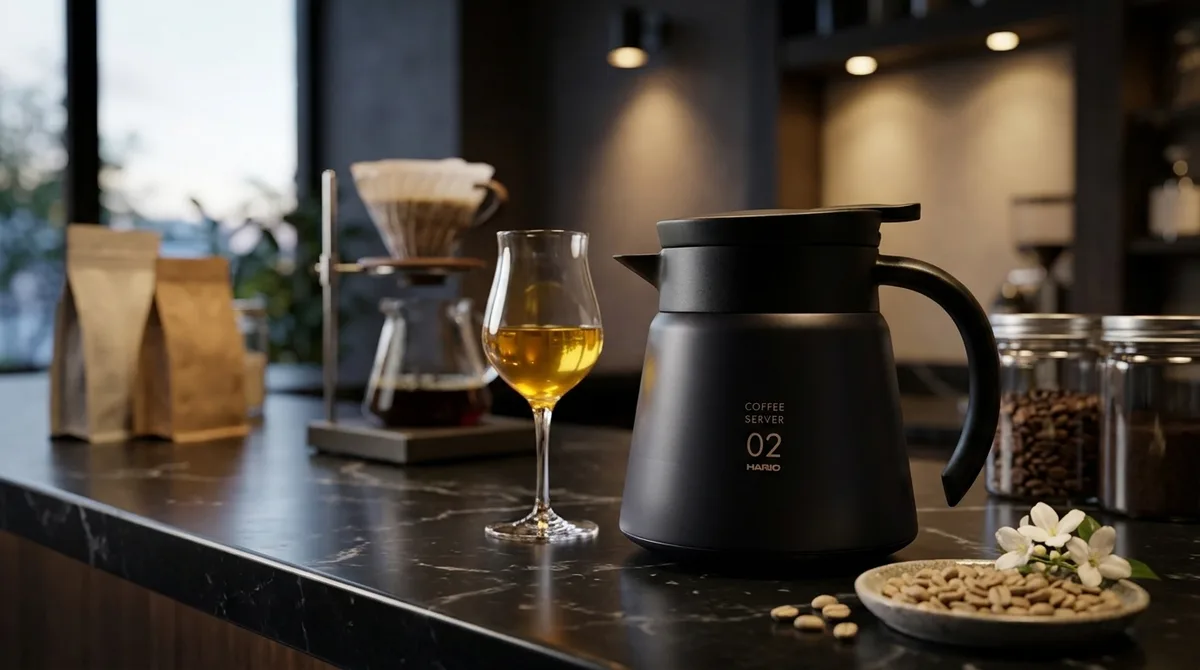



Gesha / Panama – why is it the world's most expensive coffee

The variety that changed the rules of the game
In 2004, an unknown lot appeared at the Best of Panama auction competition from a small farm called Hacienda La Esmeralda. The panel composed of the world's most experienced coffee experts could not believe their own senses – the cup had a flavor profile that none of them had ever experienced before: intense jasmine, bergamot, ripe stone fruit and tea-like delicacy with an endless lingering finish.
This lot, simply labeled "Gesha" after the variety, achieved a record auction price – and since then the world of specialty coffee has been permanently changed.
Today, Gesha (sometimes spelled Geisha) is the most expensive, most sought-after and most discussed coffee variety in the world. Auction prices exceed 1,000 USD per pound, in record years many times more. Yet a legitimate question arises: is Gesha truly the best coffee – or just the most expensive?
Origin: the village of Gesha in Ethiopia
The story of Gesha does not begin in Panama, but in Ethiopia – in the village of Gesha (also Gecha or Geisha) in the Kaffa region in the southwestern part of the country. Kaffa is precisely the place where the word "coffee" itself originates and where arabica grows wild in natural forests thousands of years ago.
In 1931, samples of coffee plants were collected from the Gesha area as part of a genetic diversity survey. These samples traveled through research stations in Kenya and Tanzania, where scientists examined them primarily for resistance to coffee leaf rust. In the 1950s and 1960s, some of them made their way to Costa Rica and Panama – not for flavor potential, but as genetic material for breeding rust-resistant varieties.
For decades, Gesha remained a forgotten variety, growing in the shadow of more commercially profitable coffee plants. Its true potential awaited discovery.
Hacienda La Esmeralda – the discovery of the "holy grail"
The Peterson family
Hacienda La Esmeralda is located in the Boquete region of Panama's Chiriquí province, on the slopes of the Barú volcano. The farm is owned by the Peterson family – a Swedish-American family that moved to Panama in the 1960s.
The farm grew coffee plants of various varieties including Catuai and Caturra, but among them also a small grove of visually distinct trees – taller, with longer leaves and noticeably lower yields. During normal production, no one paid them special attention.
2004 – a moment of revelation
Price Peterson and his son Daniel decided to separate the harvest from these "strange trees" and submit it independently to Best of Panama, Panama's premier auction competition. The results exceeded all expectations:
- SCA score: 94.1 points – a rating with no historical precedent
- Auction price: 21 USD/pound – more than tenfold the price of typical specialty coffee at the time
- Jury reaction: "This cannot be Panama. This must be Ethiopian coffee."
The Petersons had the variety professionally identified – it turned out to be Gesha, an Ethiopian variety that had arrived on the farm from Costa Rica decades earlier. A variety, cultivated for years without interest, had suddenly become the most valuable coffee in the world.
Auction records
Since 2004, Gesha prices at Best of Panama have continuously risen – and each record seems to be broken before we manage to believe the previous one:
| Year | Price (USD/pound) | Farm | Processing |
|---|---|---|---|
| 2004 | 21 | Hacienda La Esmeralda | Washed |
| 2007 | 130 | Hacienda La Esmeralda | Washed |
| 2010 | 170 | Hacienda La Esmeralda | Washed |
| 2013 | 350 | Hacienda La Esmeralda | Natural |
| 2018 | 803 | Hacienda La Esmeralda | Natural |
| 2019 | 1 029 | Hacienda La Esmeralda | Natural |
| 2023 | 2 000+ | Hacienda La Esmeralda | Washed |
| 2024 | 10 000+ | Hacienda La Esmeralda | Natural |
These prices refer to green (unroasted) coffee. After roasting, packaging and commercial margin, a kilogram of roasted Gesha sells in regular retail for 100–500 EUR – and significantly more for auction micro-lots with limited availability.
Why is Gesha so expensive
1. Low yields
Gesha coffee plants are taller and less compact than commercial varieties like Catuai or Caturra. They produce fewer cherries per tree, which moreover ripen slowly and unevenly. The yield per hectare is 30–50% lower than standard varieties, which directly increases the production cost of every gram.
2. Demanding growing conditions
Gesha achieves its iconic flavor profile only in very specific conditions. Outside them, it becomes an average arabica:
- Altitude: 1,600–2,000+ m above sea level
- Temperature: Cool nights slow ripening and build complexity; mild days ensure sufficient sunlight
- Soil: Volcanic, mineral-rich, with good drainage
- Shade: Partial shade protects plants from stress and extends ripening
At lower elevations or unsuitable conditions, Gesha loses its characteristic floral tones and its profile becomes ordinary.
3. Genetically unique flavor profile
No other coffee variety can reproduce the exact aromatic fingerprint of Gesha. The combination of jasmine, bergamot, stone fruit and tea-like delicacy is genetically determined – it is not just a matter of terroir or processing, but of the plant's DNA itself.
4. Auction system and global demand
Best of Panama and similar auctions create a competitive environment where roasters, cafes and collectors drive prices upward. For many Japanese, Korean and Chinese roasters, auction Gesha is above all a matter of prestige – buying a famous lot signals their position in the market.
5. Positioning and marketing value
"Gesha" on the label is for the customer an unambiguous signal: this is something exceptional. Roasters who offer Gesha place themselves at the top of the specialty market – and this status has its price, regardless of what is in the cup.
Gesha flavor profile
Characteristic tones
- Jasmine – the most characteristic tone, present equally in aroma and taste. Intense, unmistakable, lingering long in the finish
- Bergamot – citric, but not sharply acidic. Evokes Earl Grey tea, yet with more fruitiness
- Stone fruit – peach, apricot, nectarine. Juicy and ripe, never green
- Tropical fruit – mango, papaya, passion fruit; dominate especially with natural processing
- Honey and sweetness – pure, crystalline sweetness without heaviness or sugar flatness
- Tea-like delicacy – the body is light and silky, close to quality white-green teas
Washed vs Natural Gesha
| Parameter | Washed Gesha | Natural Gesha |
|---|---|---|
| Acidity | Clear, crystalline, creamy | Juicy, fruity, lively |
| Body | Light, tea-like, airy | Medium, syrupy |
| Dominant tones | Jasmine, bergamot, peach | Strawberry, tropical fruit, fermented tones |
| Complexity | Elegant, delicate, layered | Intense, explosive, straightforward |
| Auction price | High | Usually highest |
| For whom | Purists and clarity lovers | Seekers of intensity and fruitiness |
Washed Gesha excels in clarity – each tone is clearly readable. Natural Gesha is more dramatic, but for some tasters the fermented component may be distracting. Both styles deserve their own preparation and attention.
Gesha beyond Panama
The success of Panamanian Gesha inspired farmers around the world to cultivate this variety. Today you can find Gesha on four continents – with varying results.
Colombia
Colombia is now the second-largest Gesha producer after Panama. The regions of Huila, Nariño and Cauca offer ideal conditions – volcanic soil, high altitudes and experienced farmers accustomed to working with demanding varieties. Colombian Gesha is somewhat more affordable than Panamanian, but the quality of the best lots is fully comparable.
Costa Rica
Farms in the Tarrazú and West Valley regions grow Gesha with consistently excellent results. Tarrazú Gesha typically has a more pronounced citric and tart profile than Panamanian – some tasters find it livelier, others less refined.
Ethiopia
Paradoxically – Gesha is returning home. Ethiopian farmers in the Kaffa region, from where the variety historically originates, are growing Gesha with increasing emphasis on processing quality. Ethiopian Gesha tends to be wilder and less "clean" than Panamanian – the profile is closer to original heirloom varieties. Many experts see greater authenticity precisely in this rawness.
Other countries
Guatemala, Honduras, Peru, Taiwan, China (Yunnan) – Gesha is being experimentally grown in many places around the world. Results are mixed: not every terroir can extract the genetic potential of Gesha into its iconic floral profile. Too low an altitude or unsuitable soil produces cups that, while quality, lack the variety's characteristic signature.
Gesha coffees from different origins and price points can be found in the specialty section of our shop.
How to optimally prepare Gesha
A coffee costing 50–200 EUR per 100 g deserves maximum care at every stage of preparation. A mistake in grinding, water temperature or dosing can devalue what you paid for Gesha.
Best method: Pour-over (V60)
Pour-over / V60 is ideal for Gesha. Paper filters trap oils and fine solids, maximizing clarity and allowing the floral profile to fully shine through without distracting elements.
Recommended recipe:
- Dose: 15 g
- Water: 250 ml, 90–93 °C (slightly lower temperature than with standard filters – Gesha is sensitive to over-heating, which suppresses floral tones)
- Grind: Medium-fine, somewhat coarser than standard pour-over
- Total time: 2:30–3:00 min
- Bloom: 30 g water, 30–45 seconds – let CO2 fully escape before further pouring
- Pouring: Slow, circular, divided into three phases for even extraction
Other suitable methods
- AeroPress – inverted method, low temperature (88 °C), short time (1:30 min): floral tones will come to the fore thanks to gentle pressure and short extraction
- Chemex – thicker paper filter produces a somewhat cleaner cup than V60; ideal for lovers of maximum clarity
- Cupping – standard professional evaluation method; excellent choice for comparing multiple Gesha lots or origins side by side
What to avoid
- French press – metal filter allows oils and colloidal substances to pass through, which dampen fine floral tones. Gesha becomes just a supporting role
- Espresso – technically possible, but most nuances are lost in the concentrated volume and high pressure. If you want Gesha espresso anyway, reach for natural processing – it has more body and intensity that can withstand concentration. Use a higher ratio (1:3) and lower temperature (90 °C)
- Milk drinks – milk completely masks what makes Gesha exceptional. Making a latte from Gesha is like mixing Romanée-Conti with Spritz
Five tips for maximum enjoyment
- Filter your water – optimal mineralization is 70–100 ppm. Hard water suppresses floral tones and reduces acid perception. More in the article on water chemistry for coffee
- Observe the freshness window – ideally 7–21 days from roasting; too fresh coffee is full of CO2, too old loses aromatic intensity
- Grind immediately before preparation – a quality grinder with flat or conical burrs is critically important for Gesha; poor grinding devalues even the best lot
- Drink from thin-walled cups – thick ceramic absorbs aroma and slows delivery of tastes and positive aromas
- Taste at different temperatures – Gesha reveals itself gradually as the cup cools. At 75 °C bergamot and jasmine dominate, at 60 °C fruity tones and sweetness come to the fore
Is Gesha really the best coffee in the world?
Arguments for
- Genetically unique flavor profile – no other variety produces the same combination of jasmine, bergamot and stone fruit
- Consistently highest SCA scores – auction Gesha regularly achieves 90+ points, the best lots exceed 95
- Transformative experience – for many, the first cup of quality Gesha is a breakthrough moment that permanently changes their understanding of what coffee can be
Arguments against
- Price does not reflect quality alone – the auction system, prestige, marketing value and collector mentality inflate prices above the level that the taste alone would justify
- Not for everyone – light body and intense floral tones are not universally appealing. Some prefer full, chocolate-forward Brazilian coffee – and that is an equally legitimate preference
- Diminishing marginal returns – the difference between Gesha at 50 EUR/100 g and Gesha at 200 EUR/100 g is for most people imperceptible in routine tasting
- Other exceptional varieties exist – SL28 from Kenya, heirloom from Ethiopia, Bourbon from Rwanda – all can deliver phenomenal cups for a fraction of the Gesha price
Verdict
Gesha is undoubtedly one of the most exceptional coffee varieties ever created. Anyone seriously interested in coffee should taste it at least once – ideally as a washed pour-over, with good water and in peace. But "best" is necessarily a subjective category. Quality filter coffee beans from other origins and varieties can deliver an equally profound and memorable experience at a significantly more friendly price.
Gesha vs Geisha – what is it actually?
Both spellings are used, but "Gesha" is historically more correct – it refers directly to the village of Gesha in Ethiopia, where the variety originates. "Geisha" is a phonetic adaptation that spread especially in Panama and Japan, where the word has positive cultural connotations and therefore caught on in commercial circles. The Specialty Coffee Association and most of the expert community today prefer the spelling Gesha as geographically and etymologically more accurate.
Frequently asked questions
How much does Gesha cost in regular retail?
The price depends on the origin and specific lot. Colombian or Costa Rican Gesha ranges from 40–80 EUR per 250 g, Panamanian La Esmeralda from 80–200 EUR per 100 g, auction micro-lots with limited availability from 200 EUR/100 g upward. Gesha in our shop we offer from multiple origins and at various price points, so everyone can find their level.
Can Gesha be drunk as espresso?
Yes, but filter is a significantly more suitable preparation for Gesha. If you want espresso, reach for Gesha with natural processing – it has more body and intensity that can withstand concentration. Use a higher ratio (1:2.5–1:3), lower temperature (90 °C) and expect the floral tones to be muted.
Why doesn't my Gesha taste like jasmine?
There could be several reasons: (1) darker roasting suppressed the floral tones and replaced them with caramel or chocolate, (2) water too hot over 95 °C burned the delicate aromatic compounds, (3) the coffee is old – after more than 4 weeks from roasting, light aromatic tones lose intensity, (4) Gesha from a lower altitude simply does not have the same genetic potential as a high-altitude lot.
Does "cheap Gesha" exist?
Gesha grown at lower elevations – for example in some Brazilian or low-altitude Colombian areas – is more affordable, but its profile approaches standard arabica. The floral and tea tones that make Gesha exceptional do not develop without sufficient altitude. If you are looking for a "Gesha experience" at a reasonable price, look for Colombian Gesha from above 1,800 m altitude – there the genetic potential of the variety already begins to fully manifest.
Can Gesha be grown at home?
Technically yes – the Gesha coffee plant can be grown as a houseplant and is truly impressive with its height and leaves. But you will not achieve quality suitable for coffee preparation: it lacks altitude, nighttime temperature fluctuations, mineral-rich volcanic soil and the intensity of natural sunlight. As a decorative and botanically interesting plant, however, the Gesha coffee plant has its charm even indoors.
Sources
- Hacienda La Esmeralda – History of Gesha, official website
- Best of Panama – Auction Results Archive, 2004–2024
- World Coffee Research – Gesha Variety Profile, Arabica Variety Catalog
- Hanna Neuschwander – "Left Coast Roast: A Guide to the Best Coffee and Roasters", 2012
- James Hoffmann – "The World Atlas of Coffee", 2nd edition, 2018
- Specialty Coffee Association – Gesha vs Geisha Naming Convention, Position Paper
- Aaron Davis et al. – "Coffea arabica genetic diversity", Royal Botanic Gardens Kew, 2021