
 Česky (CZK)
 Slovensky (EUR)
 Magyar (HUF)
 Polski (PLN)
 English (EUR)
 Deutsch (EUR)
 Français (EUR)
 Español (EUR)
 Português (EUR)
 Italiano (EUR)
 Svenska (SEK)
 Suomi (EUR)
 Nederlands (EUR)
 Dansk (EUR)
 Lëtzebuergesch (EUR)
 Eesti (EUR)
 Latviešu (EUR)
 Lietuvių (EUR)
 Slovenščina (EUR)
 Română (RON)
 Български (EUR)
 Hrvatski (EUR)
 Ελληνικά (EUR)
 Українська (EUR)
 Norsk (EUR)
 Srpski (EUR)
 Tiếng Việt (EUR)
How much caffeine is in instant coffee?
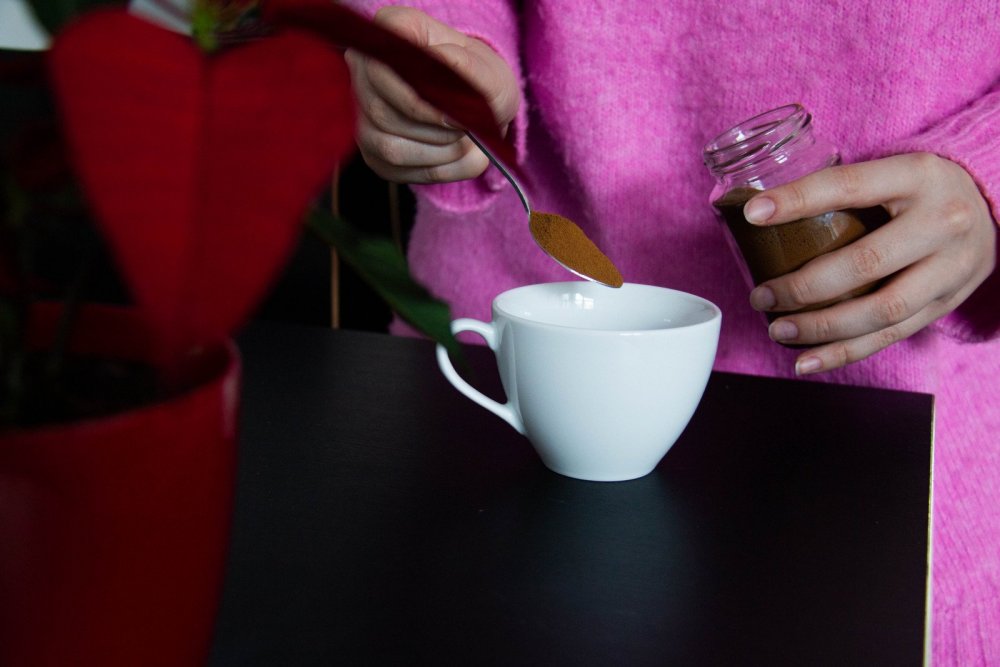
In short: Yes, instant coffee has caffeine, though a bit less than brewed coffee. A level teaspoon of instant coffee powder contains about 28 to 30 mg of caffeine (USDA), a typical cup made with two teaspoons about 57 to 65 mg, while a cup of brewed coffee has around 95 mg. Brands differ, so check the label.


| 1 teaspoon (level) | about 30 mg |
|---|---|
| 1 tablespoon (level, about 3 tsp) | about 85 to 90 mg |
| Cup of instant (2 tsp, 240 ml) | about 60 mg |
| Cup of brewed coffee (240 ml) | about 95 mg |
| Espresso (30 ml) | about 63 mg |
| Decaf instant | about 2 mg per cup |
| Safe daily intake for adults (EFSA) | up to 400 mg |
Instant coffee does contain caffeine. It is made from brewed coffee that is dried into powder or granules, and most of the caffeine survives the process. Per cup it usually ends up with a little less than coffee brewed from ground beans, mainly because people use only one or two teaspoons per cup. Below you will find how much caffeine is in a teaspoon, a tablespoon and a cup, and how instant compares with other coffee.

How much caffeine is in a teaspoon of instant coffee?
The USDA nutrient database lists instant coffee powder at roughly 3.1 g of caffeine per 100 g. A level teaspoon of powder weighs about 0.9 g, which gives about 28 mg of caffeine per teaspoon. Granulated and freeze-dried coffee is denser than fine powder, and a heaped teaspoon can weigh 1.8 to 2 g, so a heaped spoon may carry 50 to 60 mg. Brands also differ, which is why the label is the most reliable source.
| Amount of instant coffee | Caffeine (level spoon) | Caffeine (heaped spoon) |
|---|---|---|
| 1 teaspoon | about 28 mg | up to about 60 mg |
| 2 teaspoons | about 57 mg | up to about 120 mg |
| 3 teaspoons | about 85 mg | up to about 180 mg |
| 1 tablespoon (= 3 teaspoons) | about 85 mg | up to about 180 mg |
| 2 tablespoons | about 170 mg | up to about 350 mg |
The figures are estimates: they assume the USDA value and an average spoon. If the jar states caffeine per 100 g, divide by 100 and multiply by the grams you actually use.
How much caffeine is in a cup of instant coffee?
Most people make instant coffee with one to two teaspoons in 200 to 250 ml of hot water. That gives roughly 30 to 90 mg per cup, with about 60 mg as a typical value. Mayo Clinic lists an 8 oz (240 ml) cup of instant coffee at about 62 mg, compared with about 96 mg for brewed coffee.
Does instant coffee have less caffeine than regular coffee?
Usually yes, per cup. A cup of instant has about two thirds of the caffeine of a cup of filter coffee. The reason is mostly the dose: a cup of brewed coffee uses 12 to 15 g of ground coffee, while a cup of instant uses only 2 g or so of the soluble extract. Add a third teaspoon and the difference disappears.
| Drink | Typical serving | Caffeine |
|---|---|---|
| Instant coffee | 240 ml (2 tsp) | about 60 mg |
| Brewed (filter) coffee | 240 ml | about 95 mg |
| Espresso | 30 ml | about 63 mg |
| Double espresso | 60 ml | about 125 mg |
| Decaf instant | 240 ml | about 2 mg |
| Black tea | 240 ml | about 45 mg |
The type of bean matters too. Many instant coffees contain robusta, which has roughly twice as much caffeine as arabica, so some brands land higher than the average. More on the factors behind these numbers in How much caffeine is in your cup of coffee.
How much instant coffee is safe per day?
The European Food Safety Authority (EFSA) considers up to 400 mg of caffeine a day safe for healthy adults, and up to 200 mg in a single dose. For pregnant and breastfeeding women the limit is 200 mg a day. With about 60 mg per cup, 400 mg corresponds to roughly six cups of instant coffee made with two level teaspoons. Remember to count other sources such as tea, cola, energy drinks or chocolate. People sensitive to caffeine, or with health conditions, should ask their doctor.
How many teaspoons of instant coffee per cup?
The usual recommendation on the jar is 1 to 2 teaspoons (about 2 g) per 200 to 250 ml of water just off the boil. Start with one heaped teaspoon, taste, and adjust. If you want to cut caffeine without giving up the cup, mix regular and decaf instant, or switch to decaf altogether, see Decaffeinated coffee.
Why people choose instant coffee, and what is the alternative
Instant coffee is fast, cheap and needs no equipment, which is why it remains popular despite its flat taste. If you would like more flavour with the same convenience, freshly roasted coffee beans brewed in a simple French press or AeroPress take only a few minutes more, and you control the strength and therefore the caffeine yourself.
Caffeine in instant coffee: FAQ
Does instant coffee have caffeine?
Yes. A cup of instant coffee has about 60 mg of caffeine on average, and a level teaspoon of powder about 28 to 30 mg. Only decaf instant is almost caffeine free, with about 2 mg per cup.
How much caffeine is in a teaspoon of instant coffee?
About 28 mg in a level teaspoon (0.9 g) according to USDA data. A heaped teaspoon of granules can weigh twice as much and contain up to about 60 mg.
How much caffeine is in a tablespoon of instant coffee?
A level tablespoon equals about three teaspoons, so roughly 85 to 90 mg of caffeine. A heaped tablespoon can be close to double that.
Does instant coffee have less caffeine than brewed coffee?
Usually yes: about 60 mg per cup of instant against about 95 mg for brewed coffee. The difference comes mainly from the smaller dose of coffee per cup.
How much instant coffee can I drink a day?
EFSA considers up to 400 mg of caffeine a day safe for healthy adults, which is roughly six cups of instant made with two level teaspoons. Pregnant women should stay under 200 mg a day.
You might also like
 Coffee vs energy drinks: the impact on our health
These caffeinated drinks have their own advantages and disadvantages, and as they continue to proliferate among all age groups, it is important to understand… 20. 11. 2023
 Guide to a slim figure: 3 cups of coffee a day [study]
The Journal of Nutrition comes up with a new study on the effect of right coffee drinking on reducing body fat in women. The research is causing excitement… 8. 11. 2023
 Decaf: Melta, Caro or decaf
It's early evening on a weekday and you're craving coffee. You want to get up early the next morning and you know that if you have it now, you won't get a good… 18. 10. 2023