
 Česky (CZK)
 Slovensky (EUR)
 Magyar (HUF)
 Polski (PLN)
 English (EUR)
 Deutsch (EUR)
 Français (EUR)
 Español (EUR)
 Português (EUR)
 Italiano (EUR)
 Svenska (SEK)
 Suomi (EUR)
 Nederlands (EUR)
 Dansk (EUR)
 Lëtzebuergesch (EUR)
 Eesti (EUR)
 Latviešu (EUR)
 Lietuvių (EUR)
 Slovenščina (EUR)
 Română (RON)
 Български (EUR)
 Hrvatski (EUR)
 Ελληνικά (EUR)
 Українська (EUR)
 Norsk (EUR)
 Srpski (EUR)
 Tiếng Việt (EUR)
Ascaso Dream PID review: volumetric dosing, pre-infusion, adjustable steam and when it beats the Dream ONE
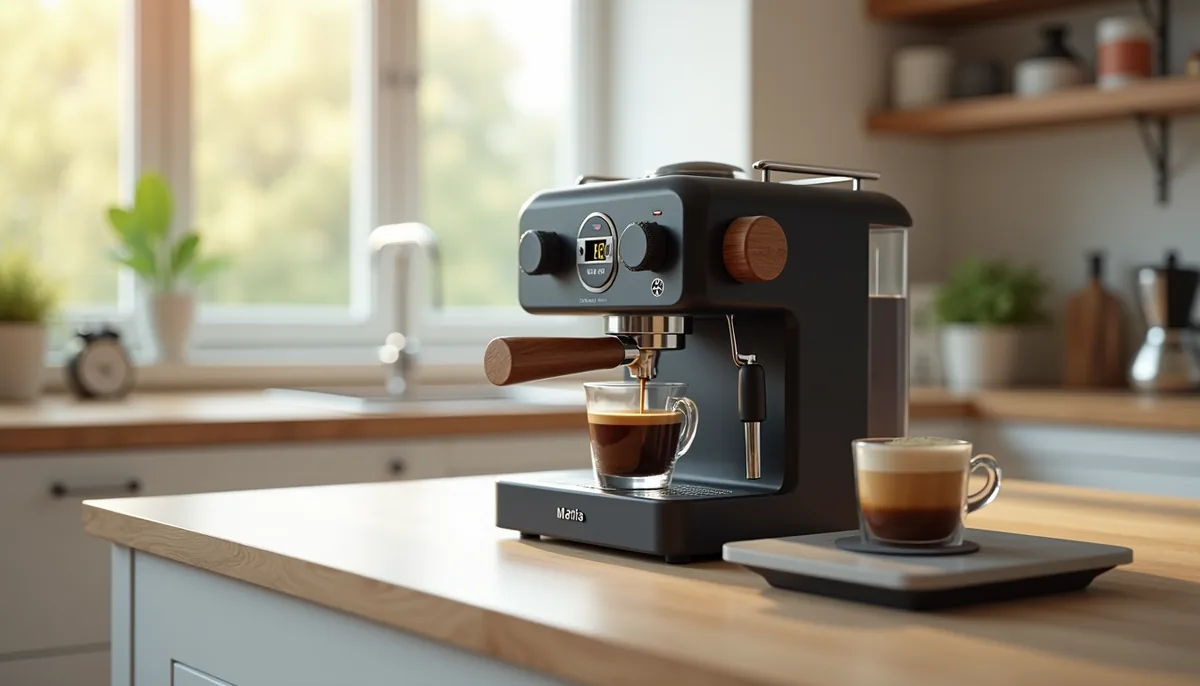
In short: The Ascaso Dream PID is a compact 58 mm espresso machine with one insulated thermoblock, brew temperature from 80 to 110 °C in 1 °C steps, adjustable steam temperature, two volumetric doses and 0–5 s pre-infusion. It suits espresso-first home baristas; it cannot brew and steam at the same time.



| Heating | Single insulated thermoblock with stainless steel ducts, PID control, stability ±1.5 °C (manufacturer) |
|---|---|
| Brew temperature | 80–110 °C in 1 °C steps (Dream ONE: 90–106 °C in 2 °C steps) |
| Steam temperature | 110–165 °C in 1 °C steps (Dream ONE: fixed 165 °C) |
| Shot control | 2 volumetric doses, pre-infusion 0–5 s, shot timer, shot counters |
| Pump and pressure | Vibration pump, 20 bar maximum, working pressure set by an external OPV (9–12 bar per the manual) |
| Power, size, weight | 1,100 W at 230 V, 245 × 345 × 280 mm (W × H × D), 10 kg |
What makes the Dream PID different from the Dream ONE
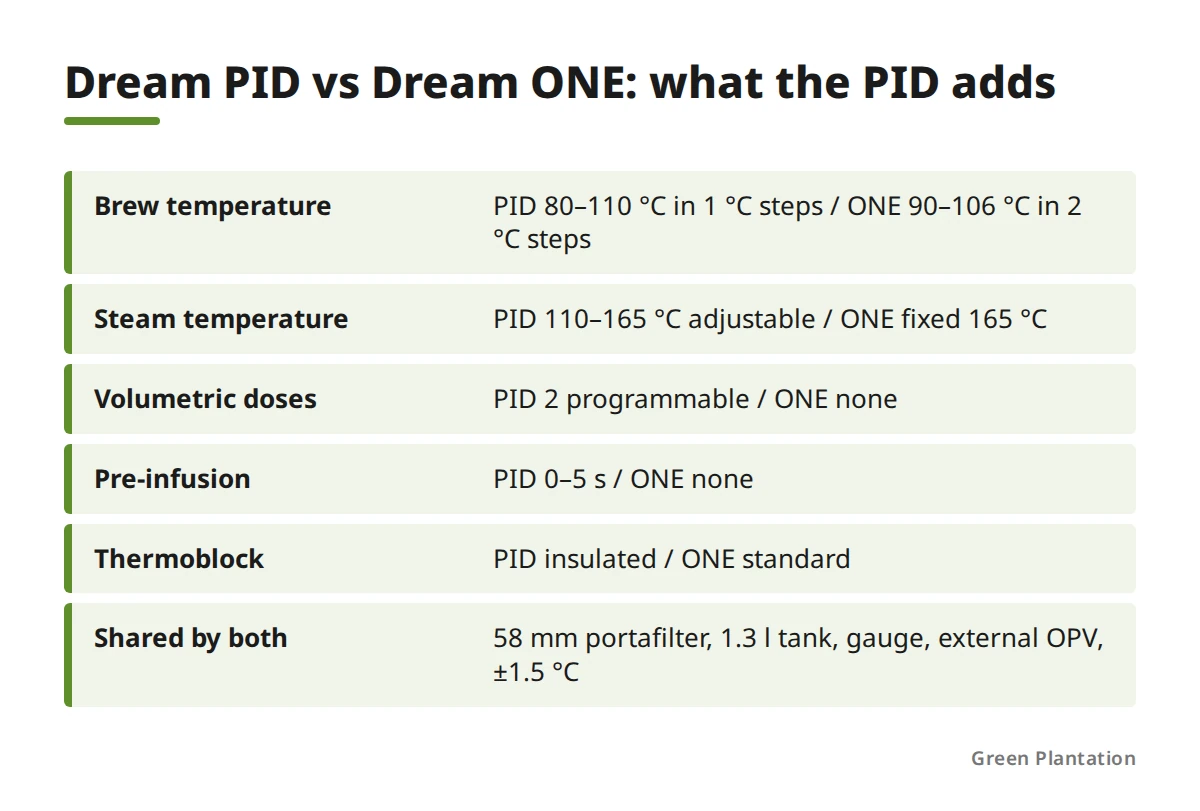
Ascaso currently builds two Dream models on the same retro aluminium body, designed by Marc Aranyó back in 2000: the Dream ONE and the Dream PID. From the outside they look almost identical. Same 58 mm portafilter, same 1.3 l side-loading tank, same pressure gauge and the same adjustable over-pressure valve (OPV). The money goes into the controls and the heating:
- Finer temperature control. The PID version lets you set brew water from 80 to 110 °C in 1 °C steps. The ONE runs from 90 to 106 °C in 2 °C steps. Ascaso quotes the same ±1.5 °C stability for both.
- Adjustable steam. On the PID you choose steam temperature between 110 and 165 °C. On the ONE it is fixed at 165 °C.
- Volumetric dosing. Two programmable doses, so the machine stops the shot for you once you have dialled in.
- Pre-infusion. Programmable from 0 to 5 seconds in 1 second steps.
- Insulated thermoblock. Only the PID has it, which helps with heat loss and standby consumption.
- Extras. Multifunction display, shot timer, coffee counters, programmable standby (0.5, 1 or 2 hours), an active cup warmer, an illuminated tank, walnut handles and a group shower brush.
Power draw is nearly the same: 1,100 W for the PID, 1,050 W for the ONE, both at 230 V. If none of the points above matters to you, the Dream ONE makes the same quality of espresso on a simpler control panel. If you want to understand what PID regulation does in any machine, our guide Need a home coffee machine with PID control? explains it without the jargon.
Who it suits, and who should look elsewhere
The Dream PID is built for someone who drinks mostly espresso or flat whites, owns (or plans to buy) a proper burr grinder and likes to experiment with roasts. Being able to drop to 88 °C for a dark Italian blend or push to 95 °C for a light Nordic roast is exactly where the 1 °C steps earn their keep.
It is less suitable if your household makes four cappuccinos in a row every morning. There is one heating circuit, so you cannot pull a shot and steam milk at the same time. You switch to steam mode, wait for the thermoblock to reach steam temperature, froth, then bring it back down for the next shot. If milk is the heart of your routine, a machine with two circuits, such as the Steel DUO in the comparison below, is the more relaxed choice.
Specifications from the manufacturer
Figures come from Ascaso's current product page and 2025 brochure; operating details are from the Dream PID/ONE manual (MAN.29 V10). Where sources disagree, we say so.
| Parameter | Ascaso Dream PID |
|---|---|
| Heating system | Insulated thermoblock, stainless steel ducts, PID |
| Brew temperature | 80–110 °C, 1 °C steps, ±1.5 °C stability |
| Steam temperature | 110–165 °C, 1 °C steps |
| Pump | Vibration, 20 bar maximum; working pressure 9–12 bar via OPV |
| Dosing | 2 programmable volumetric doses, shot timer |
| Pre-infusion | 0–5 s, adjustable in 1 s steps |
| Steam wand | 10 mm stainless steel, cool-touch, single-hole tip |
| Water tank | 1.3 l, removable from the side, illuminated |
| Portafilter and baskets | 58 mm; 7, 14 and 18 g baskets, pressurised 7 and 14 g baskets, ESE pod filter, blind basket |
| Power | 1,100 W, 230 V |
| Dimensions and weight | 245 × 345 × 280 mm, 10 kg |
| Colours | 9 finishes, including black, white, cream, blue, pistachio, red, yellow, anthracite and polished aluminium |
A few inconsistencies are worth knowing about. Ascaso's website calls the heater a "single thermoblock", while the 2025 brochure says "insulated dual thermoblock". In practice coffee and steam share one circuit, which the manual confirms. The 2022 manual also lists a 60 mm group, 1,090 W and 7–8 kg; the current product page states 58 mm, 1,100 W and 10 kg, and owners of current machines report 58 mm. Older Dream generations (Zero, UP, MF) used a 57 mm portafilter, which matters if you buy accessories second-hand.
The PID features in daily use
Volumetric dosing
Dial in manually first: for a medium roast, a good starting point is 18 g of coffee in, 36–40 g of espresso out in 25–30 seconds at around 93 °C. Weigh the result on a scale, adjust the grind, and once the shot tastes right, programme that volume as dose 2. The single and double buttons then repeat it shot after shot. Remember that volumetric dosing measures water through the flowmeter, not grams in the cup, so recheck it whenever you change beans or grind.
Pre-infusion
Pre-infusion wets the puck at low flow before full pressure arrives. It helps the bed settle evenly and reduces channelling, especially with fine grinds and light roasts. On the Dream PID you set it from 0 to 5 seconds. A sensible approach is to start at 0, then try 2–3 seconds if your shots spray or taste sharp and thin. Our article on espresso pre-infusion goes into the theory.
Temperature by roast
Because the thermoblock heats fresh water on demand, the PID setpoint is the main lever you have over extraction. Lower temperatures tame bitterness in dark roasts; higher ones open up acidity and sweetness in light roasts. Ascaso's ±1.5 °C figure is the same as on the ONE, so the PID's advantage is finer steps and a wider range rather than tighter stability.
Adjustable steam and milk
Steam temperature from 110 to 165 °C is the feature many buyers overlook. A lower setting gives slower, wetter steam, which is more forgiving when you are learning latte art in a small jug. Leave it at 165 °C for the strongest steam. The manual adds two practical limits: steam switches off after 3 minutes of continuous use, and after steaming you should either wait about 5 minutes or run water through the steam wand to bring the thermoblock back to brew temperature. Do not heat milk above 75 °C; our guide to the perfect milk temperature for cappuccino explains why. The manual's own cappuccino ratio is 25 ml espresso to 125 ml milk.
Pressure and the OPV
The vibration pump can deliver up to 20 bar, but the OPV limits brew pressure. You can adjust it from outside with a flat screwdriver and the blind basket while watching the gauge. One owner reports a factory setting of 11 bar; many home baristas prefer around 9 bar. Check it on day one.
Cleaning and descaling
The manual recommends a weekly backflush: blind basket in, 10 seconds of pump, twice. Clean the shower screen every 80–100 espressos. Baskets, drip tray and tank can go in the top rack of a dishwasher; the portafilter cannot.
Descaling depends on how much you drink: monthly at more than 10 coffees a day, every two months at 5–10, and every three months at 1–5 (Ascaso suggests its Coffee Washer V.666 product). Ascaso recommends water with low mineral content. Much of southern and eastern England has hard water, so if you live there, a filter jug or bottled water low in minerals will cut descaling and protect the thermoblock. Rinse the tank regularly so no biofilm builds up.
What owners report
There is little independent long-term testing of the Dream PID in the UK press, so we summarised an international sample instead: 79 Reddit threads about the Dream range from 2025 and 2026 (mostly r/espresso, owners in North America and Europe), plus shop reviews visible in search results. Counts are approximate and overlap.
- Praise: quick heat-up mentioned repeatedly; espresso clearly better than entry-level appliances when paired with the same grinder; the externally adjustable OPV; a heavy, solid 58 mm portafilter; the design and choice of colours.
- Steam and milk come up in around 38 threads. Opinions split: some find the steam adequate for one or two drinks, others call it weaker than boiler machines and the tip small. One owner who fitted a three-hole tip was happy with the result. Three threads describe moving on to a heat-exchanger or dual boiler machine for milk drinks.
- Repairs and leaks appear in around 30 threads, but a large share concern second-hand older generations (MF and UP machines from 2006 to 2015). Reported issues include steam fading after a few seconds (a stuck steam valve on a 2021 PID), clicking and steam from the group, pressure that will not adjust, and pumps failing after years of use.
- Everyday niggles: the 1.3 l tank and especially the drip tray are small. On the PID the OPV return tube has to be moved aside when you empty the tray (one detailed account).
- Support: experiences are mixed. Some owners praise service in Europe; others mention slower support.
Weak points and what to watch
- One circuit. No simultaneous brewing and steaming, and a short wait between milk and the next shot.
- Small drip tray. Empty it daily, more often if you flush a lot.
- Check the OPV when you set the machine up and adjust it to the pressure you want.
- Buying second-hand: tell the generations apart. A current Dream PID has the display and the dose buttons; Zero, UP and MF models do not and use 57 mm accessories. Check the steam valve, the pump and the group gasket.
- Water: match descaling to your water hardness and drink count, not to a fixed calendar.
Dream PID compared with the alternatives
| Model | Heating | Brew temperature | Volumetric | Portafilter | Tank | Best for |
|---|---|---|---|---|---|---|
| Ascaso Dream PID | 1 insulated thermoblock | 80–110 °C, 1 °C steps | Yes, 2 doses | 58 mm | 1.3 l | Espresso first, roast experiments |
| Ascaso Dream ONE | 1 thermoblock | 90–106 °C, 2 °C steps | No | 58 mm | 1.3 l | Same design, simpler controls |
| Ascaso Steel DUO | 2 independent thermoblocks | 2 °C steps (version in our listing) | No | 58 mm | 2 l | Milk drinks in a row |
| Lelit Anita PL042TEMD | 250 ml brass boiler, PID | PID (brew and steam) | No | 57 mm | 2.7 l | Machine with built-in grinder |
When the Dream ONE is enough: if you drink one or two shots of the same coffee every day and steam milk at full power anyway, the ONE gives you the same body, pump, portafilter and thermoblock concept for less. When the PID is worth it: you switch between light and dark roasts, want repeatable volumetric shots, plan to use pre-infusion, or want gentler steam while learning. When to skip both: if several milk drinks back to back are the norm, the Steel DUO's two thermoblocks let you brew and steam simultaneously. The Lelit Anita is the space-saving option, with a 38 mm conical grinder built in. For the wider brand line-up, see our overview of Ascaso coffee machines and their colours.
Verdict
The Ascaso Dream PID is one of very few compact machines that combines a full 58 mm portafilter, 1 °C temperature control, adjustable steam, an accessible OPV, pre-infusion and volumetric dosing in a body that looks like nothing else on the worktop. Its real compromise is the single thermoblock: great for espresso and fast warm-up, limiting if you make milk drinks in series. Pair it with a good flat-burr grinder, set the OPV and temperature on day one, adapt descaling to your water, and it is a machine you can grow into rather than out of.
Frequently asked questions
Does the Ascaso Dream PID have a boiler?
No. It heats water in an insulated thermoblock with stainless steel ducts. Water does not sit in a boiler, and warm-up is fast, but coffee and steam share the same circuit.
Can you brew and steam at the same time?
No. You switch to steam mode, froth, then wait about 5 minutes or flush water through the steam wand before the next shot, as the manual describes.
Is the Dream PID worth it over the Dream ONE?
Yes, if you will use the extras: 1 °C steps over a wider range, adjustable steam, pre-infusion and volumetric doses. If you always make the same drink and do not need them, the Dream ONE makes equally good espresso.
What size is the portafilter?
58 mm according to Ascaso's current product page and owners of current machines. The 2022 manual mentions 60 mm, and older Dream generations used 57 mm, so check the year before buying second-hand accessories.
Which grinder should I pair it with?
An electric espresso grinder with stepless or fine stepped adjustment. The Dream PID's precise temperature control only pays off if the grind is consistent. Our guide on how to choose an electric grinder for the home covers the options.
Recommended products
- Ascaso Dream PID Dark Black: the machine reviewed here, in the classic black finish.
- Ascaso Dream PID Cloud White: the same machine in white, if the kitchen calls for a lighter colour.
- Ascaso Dream ONE Dark Black: the simpler sibling with fixed steam and 2 °C steps, for one recipe every day.
- Ascaso Steel DUO: two thermoblocks for brewing and steaming at the same time.
- Lelit Anita PL042TEMD: a PID boiler machine with a built-in grinder, for a single footprint.
- Eureka Mignon Specialita 15BL black: a stepless flat-burr espresso grinder that suits the Dream PID's precision.
Sources
- Ascaso: Dream PID and Dream ONE product page and model comparison
- Ascaso: Dream PID / ONE manual (MAN.29 V10)
- Ascaso: Dream brochure 2025
- Ascaso: Steel range
- Lelit: Anita PL042TEMD
Updated: November 2026
Author: Petra Novotná, editorial name of the Green Plantation.
You might also like
 Eureka Atom Pro review: experience, tech and limits of the 75 mm filter grinder
The Eureka Atom Pro is a filter grinder with 75 mm brew burrs and a Blow-Up bellows. Who it is worth it for, how to set it up and why it is not an espresso… 26. 11. 2026
 Eureka Costanza Review: HX Machine with PID, Costanza R and Owner Experiences
The Eureka Costanza is a compact E61 heat exchanger machine with PID and a shot timer. We clear up the dual boiler myth, explain how it differs from the… 26. 11. 2026
 Grind-by-Weight Coffee Grinders: Eureka Atom W 65, Atom W 75 or Mahlkönig E65S GbW? 2026 Comparison
Comparison of the Eureka Atom W 65, Atom W 75 and Mahlkönig E65S GbW grind-by-weight grinders: dose accuracy, speed, step-by-step calibration and a calculation… 26. 11. 2026