
 Česky (CZK)
 Slovensky (EUR)
 Magyar (HUF)
 Polski (PLN)
 English (EUR)
 Deutsch (EUR)
 Français (EUR)
 Español (EUR)
 Português (EUR)
 Italiano (EUR)
 Svenska (SEK)
 Suomi (EUR)
 Nederlands (EUR)
 Dansk (EUR)
 Lëtzebuergesch (EUR)
 Eesti (EUR)
 Latviešu (EUR)
 Lietuvių (EUR)
 Slovenščina (EUR)
 Română (RON)
 Български (EUR)
 Hrvatski (EUR)
 Ελληνικά (EUR)
 Українська (EUR)
 Norsk (EUR)
 Srpski (EUR)
 Tiếng Việt (EUR)
Dr. Coffee C12 review: a fresh-milk bean-to-cup for small offices
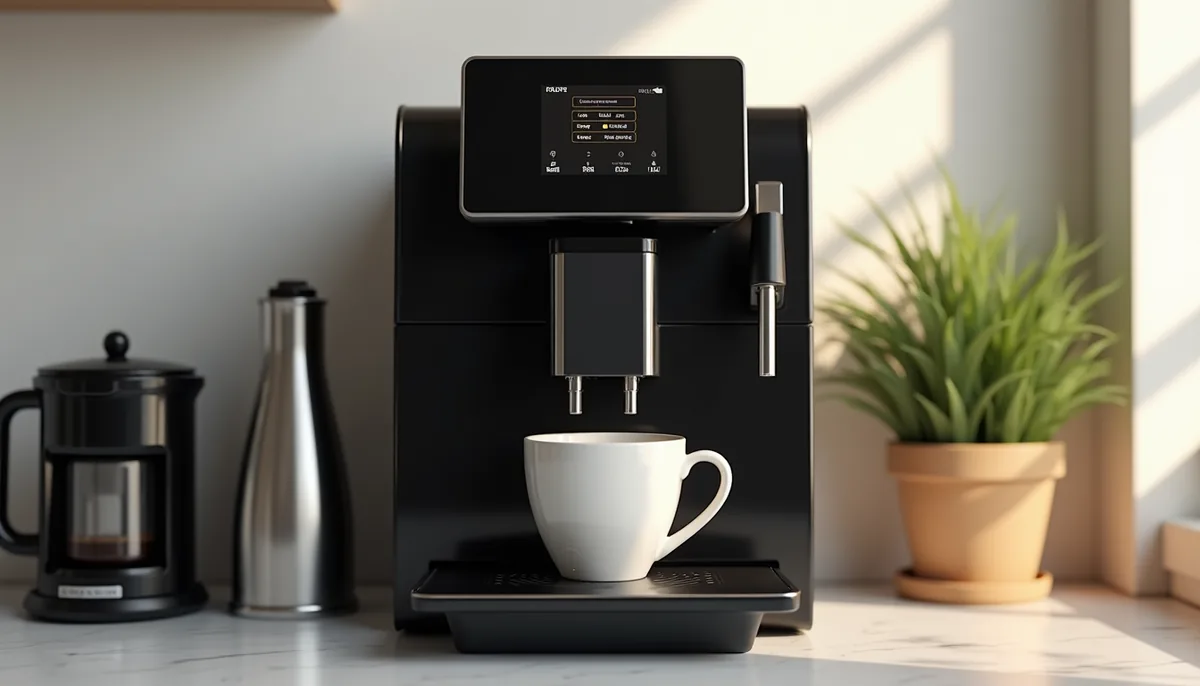
In short: the Dr. Coffee C12 is a compact bean-to-cup machine from the manufacturer's office range. It grinds fresh beans, makes one-touch milk drinks from fresh chilled milk and is rated for around 30 cups a day. It suits a small office or guesthouse, not a busy café.



| Rated output | 30 cups a day recommended; 70 espressos (50 ml) or 50 cappuccinos (180 ml) per hour |
|---|---|
| Capacities | 4 l water tank, 250–280 g bean hopper, grounds bin for about 15 pucks |
| Milk | fresh milk from a container, foamed at 60–70 °C, automatic rinse |
| Grinder | ceramic flat burrs, 9 grind settings, 16 g brewing unit |
| Power | 220–240 V, 1,450–1,500 W (website / manual) |
| Size and weight | 31 × 47 × 45 cm (W × D × H), 15 kg |
Search for “Dr Coffee C12” in the UK and you mostly land on dealer pages: catering suppliers selling the brand, often bundled with installation and an annual service contract, plus a handful of distributor videos. What is missing is a plain review that sets the spec sheet against the user manual and is honest about how little independent owner feedback exists. That is what this page tries to do. It is based on the manufacturer's website, the C12 user manual (revision 1.2) and a summary of the discussions we could actually find. Nobody on our side has run a C12 in an office for a year, and we say so where it matters.
Dr. Coffee is a Chinese maker of commercial bean-to-cup machines based in Suzhou, still less familiar in Britain than the Swiss and Italian names. The C12 sits in its OCS (office coffee solutions) range, aimed at small offices that want milk drinks without a barista.
Who the C12 is for, and who should look elsewhere
The figure that matters most is the recommended daily output of 30 cups. If everyone in the team has two or three coffees a day, that points to an office of roughly 10–15 people. Hourly output to DIN 18873-2 is higher (70 espressos or 50 cappuccinos), so the machine can cope with the 9 am rush or breakfast service in a small B&B. The daily figure is a recommendation for longevity, not a hard limit the machine enforces.
- Good fit: an office where most people drink flat whites, cappuccinos and lattes, a small guesthouse or serviced apartments serving breakfast, a meeting room or showroom where coffee should look better than a pod.
- Poor fit: a café pouring dozens of drinks an hour all day, a site where nobody will clean the milk line daily, a kitchen with no fridge for the milk.
- Worth knowing: the C12 has no mains water connection (it is not plumbed in) and no steam wand. You refill a 4 l tank by hand and milk can only be foamed automatically.
It is not designed as an unattended self-service machine either. The manual assumes there is a trained person on site to top up milk, empty the grounds bin and start the rinse cycles.
Key specifications from the manufacturer
The website and the manual disagree on a couple of numbers (bean hopper 280 g against “about 250 g”, power 1,450 W against 1,500 W). We give both, because the manufacturer does not say which applies to current production.
| Specification | Dr. Coffee C12 |
|---|---|
| Type | bean-to-cup machine with built-in grinder and fresh milk system |
| Recommended daily output | 30 cups |
| Hourly output (DIN 18873-2) | espresso 50 ml: 70; americano 240 ml: 50; cappuccino 180 ml: 50 |
| Hot water | 15 l per hour, from the main spout (no separate hot water outlet) |
| Water tank | 4 l, no plumbed-in option |
| Bean hopper | single hopper, 280 g (website) / about 250 g (manual) |
| Grounds bin | 150 g / about 15 pucks of 10 g |
| Grinder | ceramic flat burrs, 9 grind settings |
| Brewing unit | up to 16 g of coffee, adjustable pre-infusion, higher or lower brew temperature |
| Heating | separate thermoblocks for coffee and steam (according to the troubleshooting chapter of the manual) |
| Milk | foaming at 60–70 °C, 60 °C recommended, MC600A milk container as accessory |
| Controls | 7-inch capacitive touchscreen, custom recipes |
| Power | 220–240 V, 50 Hz, 1,450 W (website) / 1,500 W (manual) |
| Dimensions, weight | 31 × 47 × 45 cm, 15 kg net, 17 kg boxed |
Dr. Coffee does not publish a pump pressure for the C12. If you see 15 or 19 bar quoted in a listing, that figure comes from the seller, not from the manufacturer's website or manual.
Day-to-day use: coffee, milk and settings
Operation is what you would expect from a bean-to-cup: tap espresso, americano or cappuccino on the screen, and while the drink is being made you can nudge the volume with a slider for that cup only. Coffee dose, pre-infusion time and temperature can be saved permanently, so people can store their own recipe. In an office it pays to set up two or three default drinks and lock the rest, otherwise recipes get rewritten by whoever was last at the machine.
Grinding. The grind adjustment knob sits inside the hopper and a higher number means coarser. According to the manual you may only turn it while the grinder is running, otherwise you risk damage. After changing beans the manufacturer recommends a grinder calibration so the dose stays consistent. The machine also prompts for it: first at 2,000 cups, then at 7,000 and 17,000, and every 10,000 after that.
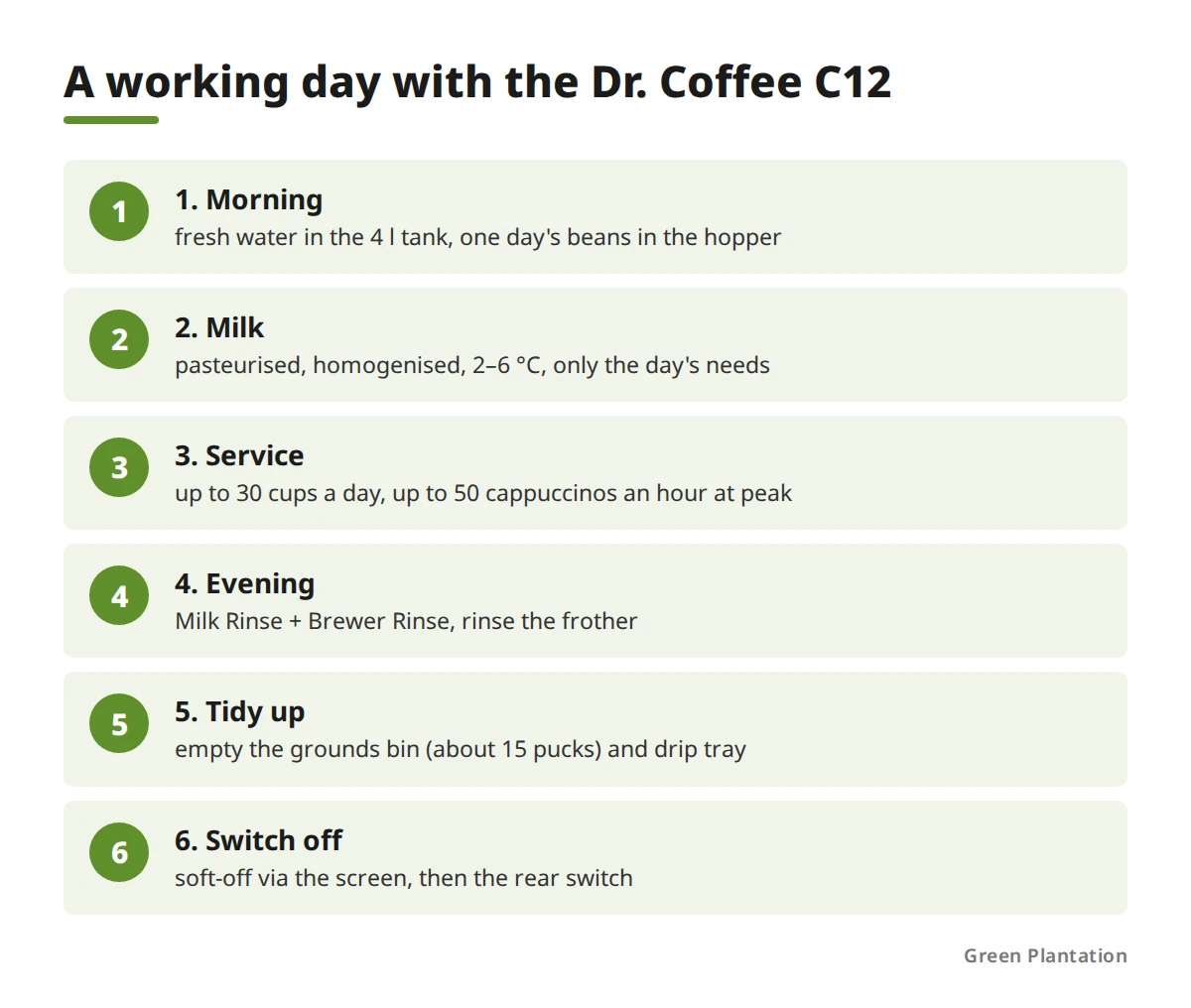
Beans. Dr. Coffee recommends medium to medium-dark roasts that are not oily. Very light roasts are not recommended, and neither are dark, oily blends that clog the hopper. Instant coffee must never go in. Fill the hopper with only a day's worth of beans so they do not go stale.
Milk. The machine draws milk through a tube from a container next to it. The manufacturer asks for pasteurised, homogenised milk at 2–6 °C and recommends whole milk. Pour in only what you will use that day and keep it cold between rounds, ideally in a small milk fridge, which Dr. Coffee explicitly recommends for its machines. Foam temperature is set with the frother knob; 60 °C is the suggested starting point, and our guide to the right milk temperature for a cappuccino explains why going much hotter costs you sweetness.
Siting. Plan for a firm, level surface, 20 cm of free space above, behind and beside the machine, and at least 5 cm from the wall for ventilation. The manufacturer advises against extension leads (if one is unavoidable, use a cable of at least 1.5 mm²). If the machine has been delivered in freezing weather, let it stand at room temperature for three hours before switching on.
Cleaning and maintenance: daily jobs and periodic ones
With any office bean-to-cup that uses fresh milk, cleaning discipline decides both the taste and the lifespan. The C12 manual splits maintenance into daily and periodic tasks, and most of them start from the Maintenance menu on the screen.
- On switch-on and switch-off: the machine rinses itself automatically, so water from the spout at these moments is normal.
- Every day: Brewer Rinse, Milk Rinse, remove the frother and spout and rinse them under running water, empty the grounds bin and drip tray, change the water in the tank.
- Periodically, when prompted: Brewer Deep Clean with a cleaning tablet, Milk Deep Clean and descaling. The interval is set by the service engineer and the machine reminds you with a message.
- Shutting down: always go to soft-off via the screen first, then use the rear switch. The manual explicitly says not to pull the plug while the machine is running.
As a general rule for bean-to-cup machines, milk lines need an alkaline cleaner and scale needs an acidic descaler, never both at once. We cover the full routine in our article on cleaning and descaling an automatic coffee machine.
Water quality and limescale in the UK
The manufacturer's water requirements are stricter than most people expect. Carbonate hardness should be between 5 and 6 °dKH (roughly 90–107 mg/l as calcium carbonate, the unit UK water companies tend to quote), chlorine no more than 100 mg/l and pH 6.5–7. In its FAQ Dr. Coffee also recommends treated water with TDS up to 80 ppm.
That matters in Britain, because hardness varies hugely by region: much of London, the South East and East Anglia has hard water, while Scotland, Wales and the North West are generally soft. Check the figure for your postcode on your water supplier's website and choose a filter jug or low-mineral bottled water accordingly. Thermoblocks suffer from hard water faster than a large boiler because their channels are narrow. If the office fills the tank straight from a hard-water tap and keeps dismissing the descale message, faults such as “no water” or overpressure will turn up sooner. Our article on how to tell if water is ruining your coffee machine lists the early warning signs.
What owners say (a small sample)
Independent owner feedback on the C12 is thin. We found no ratings on UK or Czech price comparison sites, and of the roughly ten YouTube videos about the model almost all come from distributors and dealers (product introductions, weekly cleaning, descaling), not from independent owners. So the summary below sticks to what actually exists and keeps comments about the brand separate from general experience with office machines.
- Brand discussion: in the Reddit archive (r/superautomatic) Dr. Coffee comes up in two threads. In the main one (23 comments, a small office of 8 people) most commenters had not heard of the brand, including one person who works in coffee machine sales, and advised going for an established name. The only first-hand experience (an unspecified Dr. Coffee model in a hotel) rated the coffee as “pretty decent” but mentioned that staff had to tweak the machines often.
- Sister model C11: on a Ukrainian retailer's site one owner, moving from a Saeco, mentions higher water use for rinsing; the retailer replies that a faulty thermoblock can be repaired. That is a different model and we only saw it in a search snippet.
- Advice that keeps coming up: for an office machine, local service and spare parts matter more than the badge. Buy from someone who can repair it, which is also why UK catering suppliers sell Dr. Coffee with installation and a service plan.
Common problems with fresh-milk office machines in general (not findings specific to the C12): milk left in the container overnight, nobody owning the cleaning rota, hard tap water, colleagues fiddling with grind and recipe settings. The C12 manual covers these situations with prompts and procedures, but somebody still has to do them.
Weak points and things to check before buying
- Little independent feedback. Nobody can yet vouch for long-term reliability, so ask about service cover before you order.
- Not plumbed in. 4 l roughly matches the daily output, but someone has to refill the tank and change the water every day.
- No steam wand or separate hot water outlet. Hot water for tea comes from the main spout and milk cannot be textured by hand.
- Inconsistent figures. Website and manual differ on power and hopper size, and no pump pressure is stated.
- Demanding about water and milk. Without filtered water and chilled milk the machine will not show what it can do, and milk line errors follow (for example, “warm milk only, no foam” points to a blocked air intake valve according to the manual).
- Single hopper. There is no second hopper for decaf.
Dr. Coffee C12 vs alternatives
The table only includes machines you can order from us, with figures taken from the manufacturers. The Dr. Coffee H2 is the C12's domestic sibling; the JURA W4 is a professional machine for black coffee only.
| Specification | Dr. Coffee C12 | Dr. Coffee H2 | JURA W4 |
|---|---|---|---|
| Intended use (manufacturer) | small office | home | professional, black coffee only |
| Recommended daily output | 30 cups | 20 cups | up to 50 black coffees |
| Milk drinks | yes, fresh milk | yes, with automatic milk system cleaning | no |
| Water tank | 4 l | 1.5 l | 3 l |
| Bean hopper | 250–280 g | 200 g | 500 g |
| Display | 7-inch touchscreen | 4-inch round touchscreen | operator controls |
| Power | 1,450–1,500 W | 1,450 W | 1,450 W |
| Dimensions (W × D × H) | 31 × 47 × 45 cm | 24 × 46 × 40 cm | 29.5 × 44.3 × 44.6 cm |
| Weight | 15 kg | 11 kg | 10.4 kg |
If the office drinks mostly black coffee and an established service network matters, the JURA W4 is the safer choice. Where cappuccinos and lattes dominate, the C12 makes sense. For two to four people at home or in a tiny office, the H2 is enough. If you are still weighing up the options, start with our guide on which coffee machine to choose for the office and the broader look at choosing a professional automatic coffee machine.
Verdict
On paper the Dr. Coffee C12 is a sensibly built office bean-to-cup: a large tank, ceramic flat burrs, a 16 g brewing unit, one-touch drinks from fresh milk and a detailed manual with a clear maintenance plan. It is honestly rated at 30 cups a day and does not pretend to be a café machine. The main weakness is the shortage of independent long-term experience, and with it the question of after-sales service. If your office or guesthouse has someone who will look after it every day and soft water in the tank, the C12 will deliver milk drinks without needing a barista.
FAQ
How many people can a Dr. Coffee C12 serve?
The manufacturer recommends 30 cups a day. At two or three coffees per person that works out at a team of roughly 10–15 people. For much higher consumption, look for a machine with a higher daily rating.
Can the Dr. Coffee C12 be plumbed in?
No. According to the manufacturer's specifications it has no mains water connection and cannot draw from a bottle. You refill the 4 l tank by hand, and the manufacturer recommends changing the water daily.
Does the C12 need a milk fridge?
Dr. Coffee wants milk at 2–6 °C and explicitly recommends a small milk fridge. In an office you can return the milk to the kitchen fridge between rounds, but a fridge next to the machine makes life much easier.
How often does the C12 need cleaning and descaling?
Brewer Rinse, Milk Rinse and a rinse of the frother every day. Deep cleaning of the brewing unit and milk system, plus descaling, run when the screen prompts you; the interval is set by the service engineer according to usage.
What coffee beans work best in the C12?
Medium to medium-dark roasted whole beans that are not oily. The manufacturer does not recommend very light roasts, and neither instant nor pre-ground coffee belongs in the hopper.
What is the difference between the Dr. Coffee C12 and C11?
The C11 is a separate model in the Dr. Coffee range and we do not have verified manufacturer data for it in this review, so check its own specification sheet. Within the range we stock, the closest comparison is the H2: a home machine with a 1.5 l tank, smaller hopper, 20 cups a day and automatic milk system cleaning, against the C12's 4 l tank, 7-inch screen and 30 cups a day.
Recommended products
- Dr. Coffee C12: office bean-to-cup with fresh milk for around 30 cups a day.
- Dr. Coffee H2: the smaller home sibling for 2–4 people where 20 cups a day is enough.
- JURA W4 Dark Inox: professional machine for black coffee where milk drinks are not needed.
- Cafetto MFC Blue Milk Cleaner 1 l: milk line cleaner for the Milk Deep Clean programme.
- Urnex Dezcal descaling liquid 1 l: descaler for the descaling programme; dose according to the label and the on-screen instructions.
Sources
- Dr. Coffee: C12 model overview
- Dr. Coffee: C12 technical specifications
- Dr. Coffee: C12 user manual (REV 1.2, PDF)
- Dr. Coffee: C12 support and FAQ
- JURA: W4 technical documentation
Updated: November 2026
Author: Petra Novotná, editorial name of the Green Plantation.
You might also like
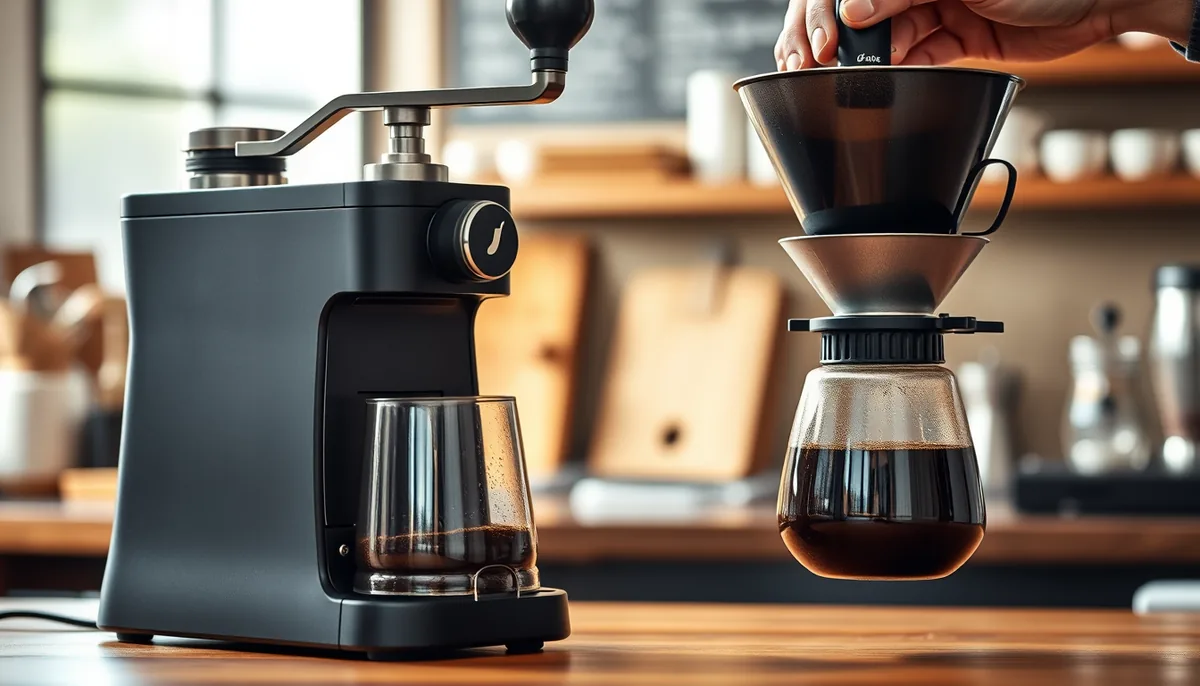 Eureka Atom Pro review: experience, tech and limits of the 75 mm filter grinder
The Eureka Atom Pro is a filter grinder with 75 mm brew burrs and a Blow-Up bellows. Who it is worth it for, how to set it up and why it is not an espresso… 26. 11. 2026
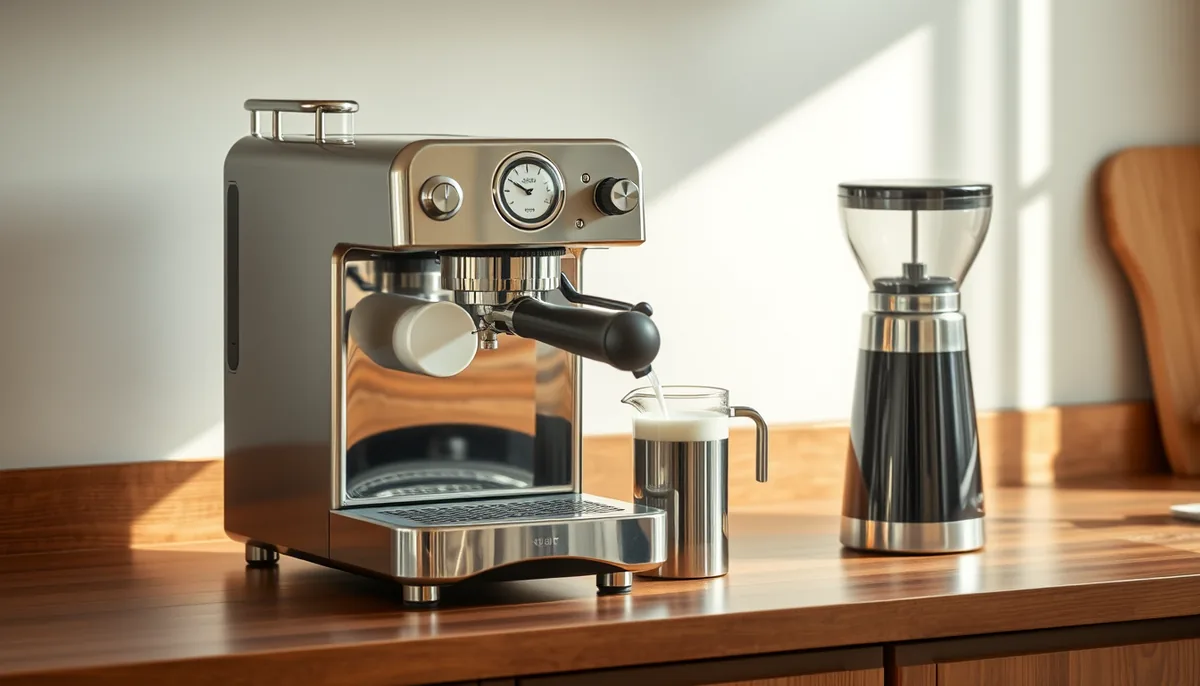 Eureka Costanza Review: HX Machine with PID, Costanza R and Owner Experiences
The Eureka Costanza is a compact E61 heat exchanger machine with PID and a shot timer. We clear up the dual boiler myth, explain how it differs from the… 26. 11. 2026
 Grind-by-Weight Coffee Grinders: Eureka Atom W 65, Atom W 75 or Mahlkönig E65S GbW? 2026 Comparison
Comparison of the Eureka Atom W 65, Atom W 75 and Mahlkönig E65S GbW grind-by-weight grinders: dose accuracy, speed, step-by-step calibration and a calculation… 26. 11. 2026