
 Česky (CZK)
 Slovensky (EUR)
 Magyar (HUF)
 Polski (PLN)
 English (EUR)
 Deutsch (EUR)
 Français (EUR)
 Español (EUR)
 Português (EUR)
 Italiano (EUR)
 Svenska (SEK)
 Suomi (EUR)
 Nederlands (EUR)
 Dansk (EUR)
 Lëtzebuergesch (EUR)
 Eesti (EUR)
 Latviešu (EUR)
 Lietuvių (EUR)
 Slovenščina (EUR)
 Română (RON)
 Български (EUR)
 Hrvatski (EUR)
 Ελληνικά (EUR)
 Українська (EUR)
 Norsk (EUR)
 Srpski (EUR)
 Tiếng Việt (EUR)
Eureka Nadir 65 Touch review: specs, dialling in and weak points of the espresso grinder
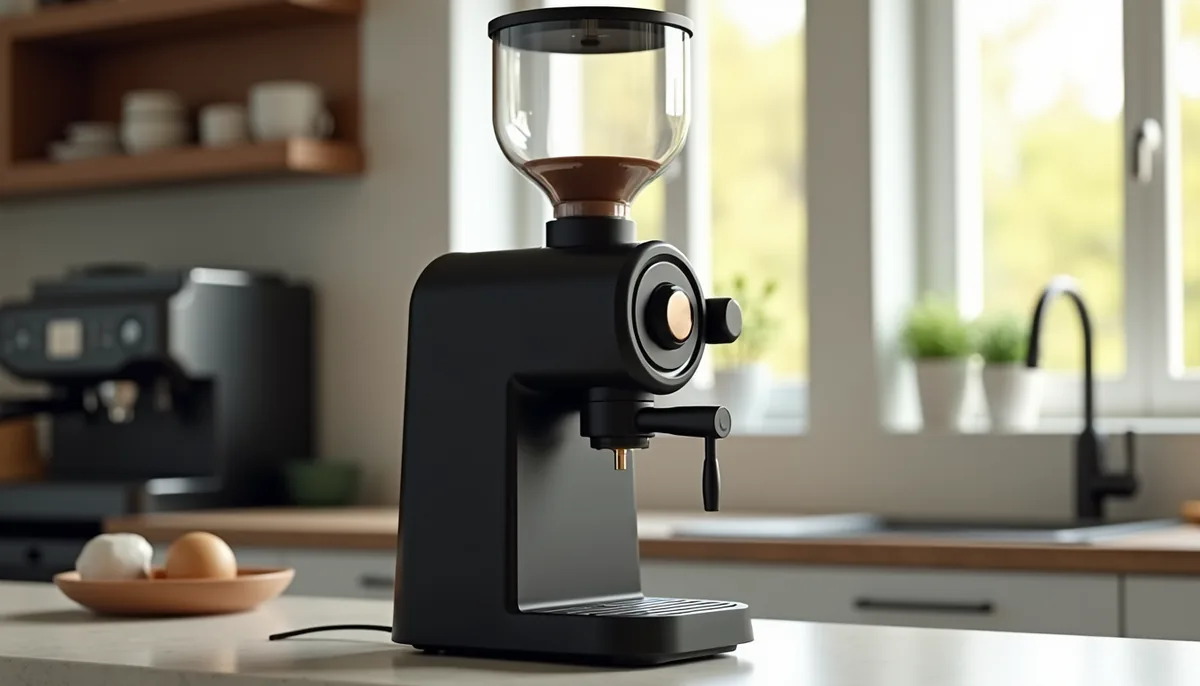
In short: The Eureka Nadir 65 Touch is the slowest, lightest-duty grinder in Eureka's commercial on-demand line-up: 65 mm flat burrs, 1,350 rpm, 1.5 to 2 g per second and timed dosing from a touchscreen. It suits serious home baristas and small cafés pulling a modest number of shots.



| Burrs | 65 mm flat, hardened steel |
|---|---|
| Motor | 320 W, 1,350 rpm, direct drive |
| Grind speed | 1.5 to 2.0 g/s (an 18 g double works out at roughly 9 to 12 s) |
| Dosing | timed, two programmable doses plus continuous grinding |
| Size and weight | 559 × 232 × 264 mm (H × W × D), 12 kg, 1.2 kg hopper |
| Best for | espresso at home, in the office or a quiet café |
Who is the Nadir 65 Touch for?
Eureka has been building grinders in Florence for over a century, and its range splits roughly in two: the compact Mignon family for the kitchen worktop and the commercial on-demand grinders (Atom, Zenith, Helios, Olympus) for the café bar. The Nadir 65 Touch sits right on the line between them. It has the body, burr set and hopper of a commercial grinder, yet Eureka deliberately rates it to grind more slowly than its siblings.
That makes it worth a look for three kinds of buyer:
- Home baristas with a proper espresso machine who pull several shots a day and want a grinder they won't outgrow in a couple of years.
- Offices and small teams drinking one house blend, where people just need to lock in the portafilter and press a button.
- Small cafés, bakeries and hotel breakfast bars where the espresso volume is steady but there is never a queue of twenty at once.
It is not built for single dosing with a different bean every morning, and it is not a filter grinder. Eureka's data sheet lists espresso as the only recommended use. If you want both, you are better off with a smaller single-dose grinder or a second grinder for brewed coffee. Our guide on choosing an electric grinder for the home walks through the options.
The tech, explained
Every figure below comes from Eureka's own product page, data sheet and user handbook. Nothing here is a measurement of ours.
Burrs and motor
The Nadir uses 65 mm flat burrs in hardened steel, driven directly by the motor without a belt. On 220 to 240 V at 50 Hz the burrs turn at 1,350 rpm and the motor draws 320 W. Eureka quotes an output of 1.5 to 2.0 g per second, adding that it depends on the bean, the roast and the grind setting. For context, the Zenith 65 Touch, which shares the same housing, is rated at 2.8 to 3.8 g/s. Eureka does not explain why the higher-wattage Nadir grinds more slowly, so we will not guess either; the published numbers are what they are.
Grind adjustment
Adjustment is Eureka's patented stepless micrometric system: a knob on top of the burr chamber. Clockwise is finer, anticlockwise coarser, and because there are no clicks you can land anywhere in between. The handbook recommends small moves and grinding a little coffee after every two marks at most.
Touchscreen and dosing
What separates the Touch from the older Nadir 65 is the touch display described in the 2023 data sheet. It carries two dose buttons, plus and minus keys and a central key for the menu and standby. Dosing is by time, not weight: you set seconds for dose 1 and dose 2, weigh the result and tweak. You can start a dose on the screen or by pushing the portafilter against the switch under the fork. Press both dose buttons together for continuous grinding, capped at 50 seconds.
Other features
- ACE System (Anti-Clumps & Electrostaticity), meant to cut clumping and static in the grounds.
- Hands-free fork, height-adjustable with a Phillips screw and designed to take bottomless portafilters too.
- Adjustable chute so the grounds land in the centre of the basket.
- “High Speed” maintenance: the burrs can be cleaned or swapped without losing your grind setting.
- Shot counters for single, double and continuous grinding, seven brightness levels, standby after one minute and a lock for the dose times.
- Die-cast aluminium body, stainless steel plate, a light over the portafilter, available in matt black only.
Duty cycle
Here is a figure most people never read: the handbook rates the Nadir 65 Touch at 60 seconds on to 1,200 seconds off. The Zenith 65 Touch is rated at 35 on to 360 off, the Olympus 75 Touch at 35 on to 240 off. For a few shots before work, it makes no difference. For a café with a morning rush, it tells you plainly what volume the Nadir was designed for.
Dialling in espresso on the Nadir 65
A practical route from unboxing to a decent first shot.
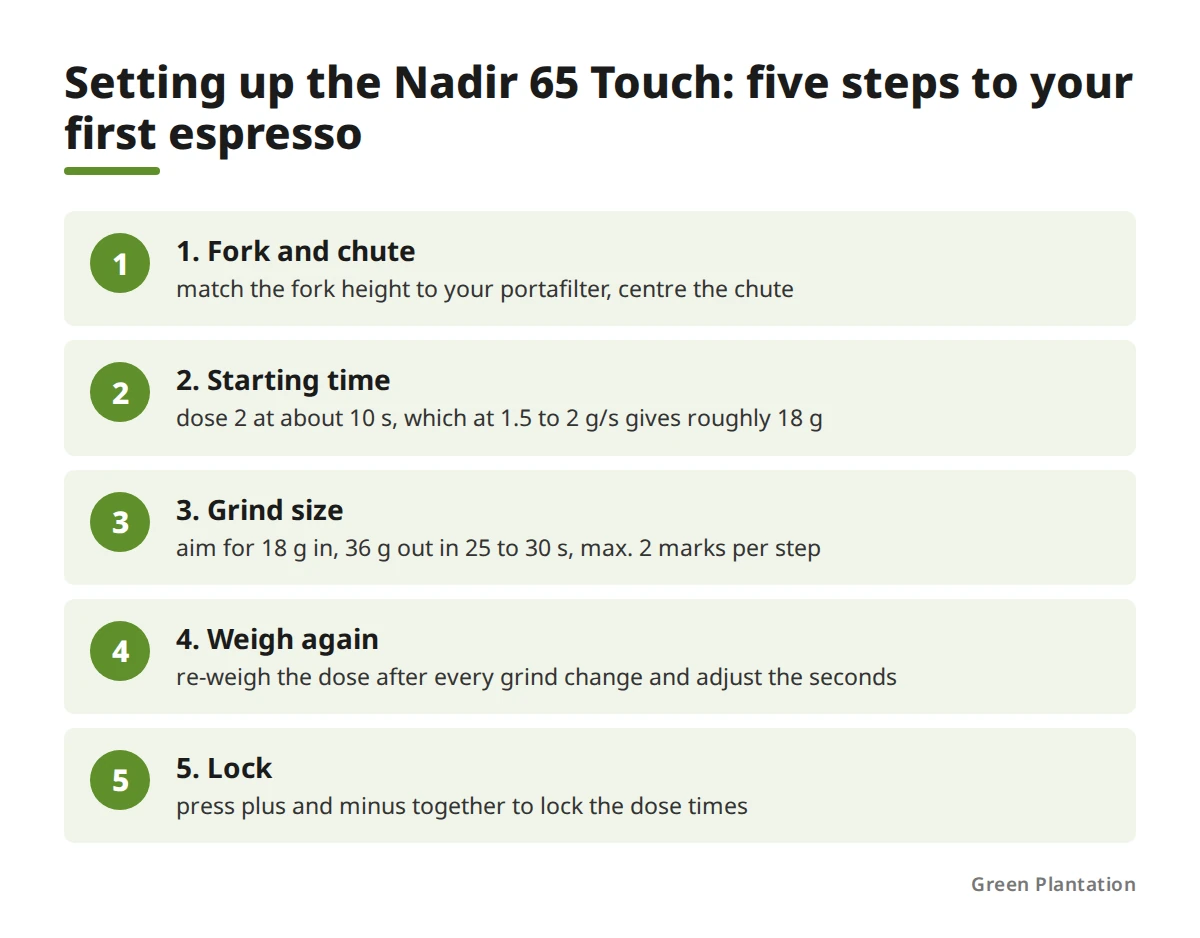
- Set the fork and chute. Adjust the fork height to your portafilter with a screwdriver and angle the chute so the grounds fall in the middle of the basket.
- Pick a starting time. At 1.5 to 2 g/s, 18 g takes roughly 9 to 12 seconds. Set dose 2 to about 10 seconds and weigh what comes out.
- Find the grind. A classic starting recipe: around 18 g in, 36 g out (a 1:2 brew ratio), 25 to 30 seconds at roughly 93 °C. Shot running fast? Go finer. Running slow? Go coarser.
- Re-check the dose. Changing the grind changes the output rate, and a finer grind needs more seconds for the same grams. Weigh again after every adjustment.
- Lock it. Once you're happy, press plus and minus together. Nobody in the office can then nudge the times by accident.
A coffee scale is non-negotiable with any timed grinder. Timed dosing stays repeatable as long as the bean, the hopper level and the grind stay the same; change any of those and you should weigh again. For a wider look at matching grind size to brew method, see our piece on the right grind size and how to adjust it.
What about filter? The stepless collar will go coarser, but Eureka recommends the Nadir for espresso only. With 1.2 kg of beans in the hopper, every switch between espresso and filter means purging the grind path and dialling in again. Day to day, that gets old quickly.
Cleaning and maintenance
The handbook is clear on this:
- Hopper at least once a week. Lift it off, wash away the oily film with water and a mild detergent, dry it well. Not in the dishwasher.
- Burr chamber. Unplug first, remove the lid and the upper burr carrier, then brush out or wipe with a dry cloth; a vacuum or compressed air helps.
- Grinder cleaning tablets or granules lift oil residue without opening the grinder. Use food-safe products only.
- Burrs should be checked and, if needed, replaced every 500 to 600 kg of coffee. At 20 g a day at home that is more than 60 years on paper; at 1 kg a day in a small café, about a year and a half.
Eureka states that servicing should be left to an authorised technician. Routine cleaning with a brush and granules is a job you can do yourself, and our guide on how to clean your coffee machine and grinder covers it step by step.
One warning from the handbook worth knowing: turning the grind knob through a full rotation with the motor stopped can jam the grinder. Make big changes in small steps, or with the burrs running.
What owners say (and why there is so little)
Let's be upfront: there are almost no owner reviews of the Nadir 65 Touch online. In November 2026 we searched the Reddit archives (r/espresso, r/Coffee, r/Kaffee, r/EspressoEcke), Home-Barista, the German forum kaffee-netz.de and, through search engines, Amazon and price-comparison listings. The result was a single Reddit post from 2022 listing the Nadir 65 as one of four grinders under consideration. None of the 19 replies actually commented on the Nadir. The one forum thread Google surfaces for the model on the Australian CoffeeSnobs forum is, tellingly, a request for information. As far as we can tell, no independent review with measured retention, noise or dose consistency exists.
What does exist is plenty of feedback on related Eureka hopper grinders with timed dosing, above all the Atom 65. Treat the points below as experience with a different model. The design is similar, but none of it has been confirmed for the Nadir:
- Praised: build quality, consistent day-to-day results with a single bean, and the fine stepless adjustment.
- Criticised: clumping with dark, oily roasts, grounds left in the grind path that get in the way of single dosing, variation in timed doses, and the odd spray of grounds missing the basket.
If reliable reports on the Nadir 65 Touch turn up, we will add them here.
Weak points and what to watch for
- Slower than its siblings. At 1.5 to 2 g/s, a double takes roughly twice as long as on the Zenith 65 Touch or Helios 65. In a busy café, those seconds add up.
- Short duty cycle. 60 s on, 1,200 s off according to Eureka. It is not built for nonstop commercial use.
- No built-in scale. Dosing is by time. If you want grind by weight, look at the Atom W 65.
- Matt black only, and at 559 mm tall it is a big unit. Measure the gap under your wall cupboards, and remember you still need room to lift the hopper lid.
- 12 kg. Great for stability, less great when you want to tip it over for a deep clean.
- Very little owner feedback. There is no long-term picture yet of how it ages or what typically fails.
Nadir 65 Touch vs the alternatives
We stock every grinder in this table; figures are the manufacturer's.
| Model | Burrs | rpm | Watts | Grind speed | Dosing | Weight |
|---|---|---|---|---|---|---|
| Eureka Nadir 65 Touch | 65 mm flat | 1,350 | 320 | 1.5–2.0 g/s | timed, touchscreen | 12 kg |
| Eureka Zenith 65 Touch | 65 mm flat | 1,370 | 280 | 2.8–3.8 g/s | timed, touchscreen | 12 kg |
| Eureka Helios 65 | 65 mm flat | 1,370 | 280 | 3.5–5.0 g/s | timed | 12 kg |
| Eureka Atom Specialty 65 | 65 mm flat | 1,310 | 280 | 2.0–3.5 g/s | timed, Silent Technology | 9.5 kg |
| Eureka Atom W 65 | 65 mm flat | 1,370 | 280 | 2.3–3.8 g/s | by weight, 0.2 g | 11.5 kg |
The Zenith 65 Touch is the Nadir's twin: same housing, same dimensions, same handbook, but almost twice as fast and with a longer duty cycle. If you are kitting out a café with real footfall, it is the obvious step up. The Helios 65 is faster still and aimed at busy bars. The Atom Specialty 65 is more compact and built to run quieter, while the Atom W 65 doses by weight rather than time. Within this group, the Nadir is the low-volume option. For a broader view of what matters in a commercial grinder, read how to choose a professional espresso grinder, and if a smaller home grinder would do, our comparison of Eureka Mignon grinders will help.
Verdict
The Eureka Nadir 65 Touch is a commercial grinder running at home-grinder pace. You get 65 mm flat burrs, a heavy aluminium body, Eureka's stepless adjustment and a modern touchscreen, but a slower output and a shorter duty cycle than the Zenith, Helios or Olympus. For home espresso, an office or a small café on one house blend, that balance makes sense. For single dosing, regular switching to filter or a bar with a proper rush, another grinder will serve you better. Independent long-term experience is still missing, but the underlying engineering is the same Eureka has used across its commercial grinders for years.
Eureka Nadir 65: frequently asked questions
Is the Eureka Nadir 65 Touch any good for home use?
Yes, if you have room for a 559 mm tall, 12 kg grinder and mostly drink espresso from one bean. Eureka sells it as a commercial grinder, but its modest output and short duty cycle fit a handful of shots a day well.
How fast does the Nadir 65 grind?
Eureka rates it at 1.5 to 2.0 g per second. An 18 g double therefore takes roughly 9 to 12 seconds, depending on the bean and grind setting.
What is the difference between the Nadir 65 Touch and the Zenith 65 Touch?
Housing, dimensions, burr size and display are the same. The Zenith grinds at 2.8 to 3.8 g/s, almost twice as fast, and its handbook allows more frequent use: 35 s on, 360 s off, against 60 s on, 1,200 s off for the Nadir.
Does the Nadir 65 grind by weight?
No. It doses by time, with two programmable doses. You check the weight on a scale and adjust the seconds. If you want a Eureka with a built-in scale, the Atom W 65 is one example.
Can I use the Nadir 65 for filter coffee?
Eureka recommends it for espresso only. It will adjust coarser, but on a grinder with a large hopper, constantly switching between espresso and filter is impractical.
How often do the burrs need replacing?
Eureka advises checking the burrs every 500 to 600 kg of coffee and replacing them if needed. At home you will practically never get there; in a café, depending on volume, it might be one to two years.
Recommended products
- Eureka Nadir 65 Touch, black: the grinder covered in this article, in stock now.
- Eureka Zenith 65 Touch, black: same body, nearly twice the speed, for cafés with more trade.
- Eureka Helios 65, black: the quickest 65 mm grinder in the comparison, for busy bars.
- Felicita Parallel digital scale, black: a slim 0.1 g scale for keeping timed doses honest.
- Urnex Grindz grinder cleaner, 430 g: granules that clear oil residue from the burrs without taking the grinder apart.
- Eureka grounds tray for Zenith, Nadir, Helios and Olympus: catches stray grounds under the fork.
Sources
- Eureka: Nadir 65 Touch, technical data (eureka.co.it)
- Eureka: Olympus, Zenith & Nadir Touch, User Handbook (PDF)
- Eureka: Nadir Touch 65, data sheet 2023 (PDF)
- Eureka: Zenith 65 Touch and Helios 65, technical data (eureka.co.it)
Updated: November 2026
Author: Petra Novotná, editorial name of the Green Plantation.
You might also like
 Eureka Atom Pro review: experience, tech and limits of the 75 mm filter grinder
The Eureka Atom Pro is a filter grinder with 75 mm brew burrs and a Blow-Up bellows. Who it is worth it for, how to set it up and why it is not an espresso… 26. 11. 2026
 Eureka Costanza Review: HX Machine with PID, Costanza R and Owner Experiences
The Eureka Costanza is a compact E61 heat exchanger machine with PID and a shot timer. We clear up the dual boiler myth, explain how it differs from the… 26. 11. 2026
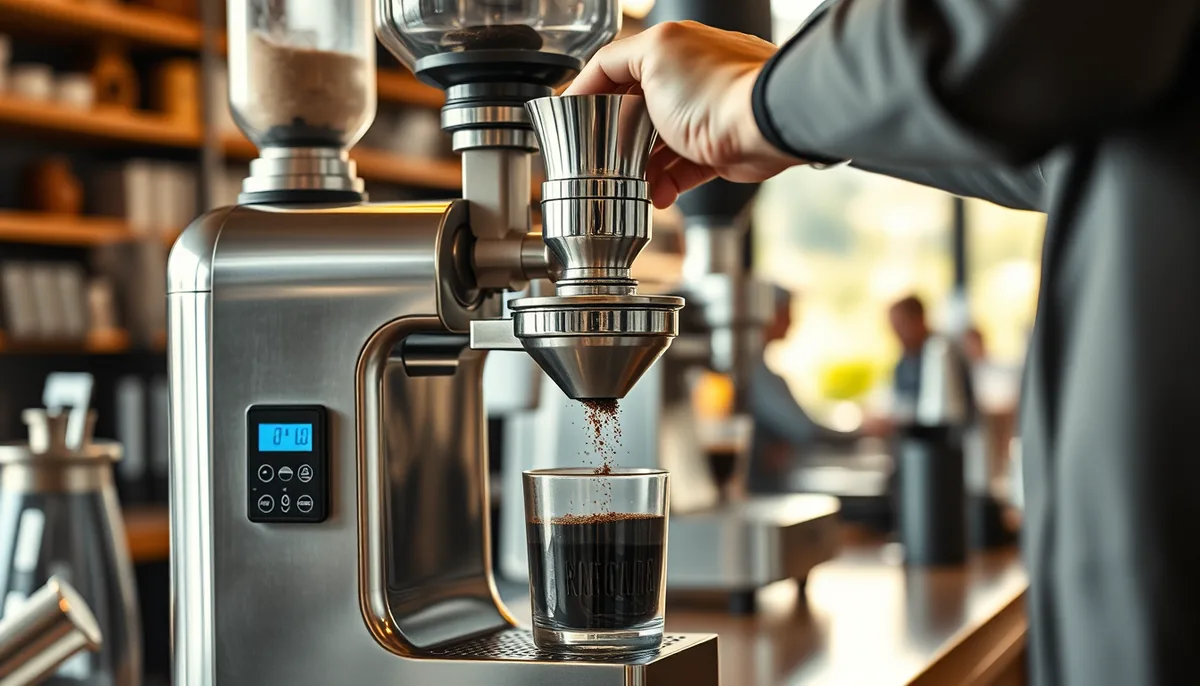 Grind-by-Weight Coffee Grinders: Eureka Atom W 65, Atom W 75 or Mahlkönig E65S GbW? 2026 Comparison
Comparison of the Eureka Atom W 65, Atom W 75 and Mahlkönig E65S GbW grind-by-weight grinders: dose accuracy, speed, step-by-step calibration and a calculation… 26. 11. 2026