
 Česky (CZK)
 Slovensky (EUR)
 Magyar (HUF)
 Polski (PLN)
 English (EUR)
 Deutsch (EUR)
 Français (EUR)
 Español (EUR)
 Português (EUR)
 Italiano (EUR)
 Svenska (SEK)
 Suomi (EUR)
 Nederlands (EUR)
 Dansk (EUR)
 Lëtzebuergesch (EUR)
 Eesti (EUR)
 Latviešu (EUR)
 Lietuvių (EUR)
 Slovenščina (EUR)
 Română (RON)
 Български (EUR)
 Hrvatski (EUR)
 Ελληνικά (EUR)
 Українська (EUR)
 Norsk (EUR)
 Srpski (EUR)
 Tiếng Việt (EUR)
Flair 58 review: a manual lever espresso maker for home baristas
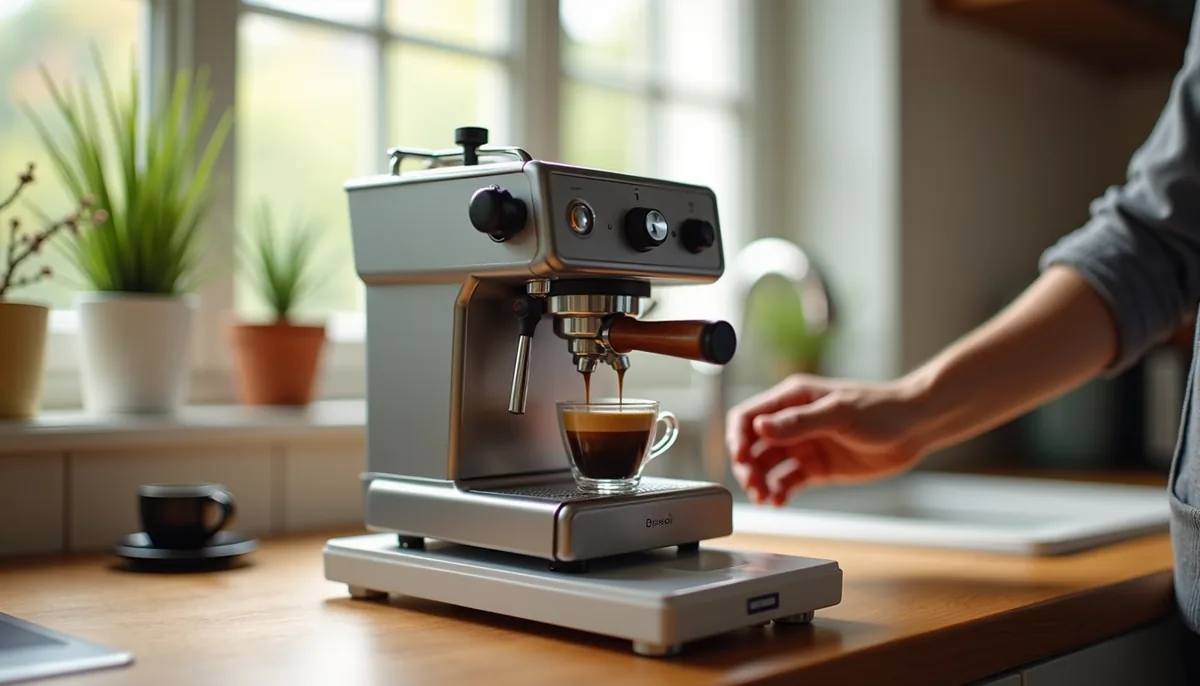
In short: The Flair 58 is a manual lever espresso maker with no pump and no boiler. You make the pressure with your own arm, while the brew cylinder is electrically preheated to roughly 85, 90 or 95 °C. Paired with a capable grinder it pulls café-level espresso, but it cannot steam milk.



| Type | Direct lever espresso maker, no pump, no boiler |
|---|---|
| Portafilter | 58 mm, the commercial standard |
| Dose | Around 18 g; 18 g low-flow basket in the box |
| Brew pressure | 6–9 bar on the gauge, 30–35 seconds |
| Preheat | 3 settings, ~85 / ~90 / ~95 °C; separate controller with detachable cable on our version |
| Best for | Espresso drinkers who want full control over every shot |
What the Flair 58 is, and who it suits
The Flair 58 belongs to a small family of direct lever machines. There is no pump, no water tank and no boiler. You pour hot water from the kettle into the brew cylinder, pull the lever down and push the water through the coffee with your arm. A pressure gauge above the group tells you exactly how many bar you are applying. In other words, you are the pump.
That is the real difference from a pump machine of the kind we cover in our guide on how to choose a home lever coffee machine. With the Flair you control pressure throughout the whole shot: a gentle pre-infusion, a ramp up, and a decline towards the end. On pump machines that sort of pressure profiling is usually reserved for far more expensive kit. The trade-off is convenience. Every shot means boiling the kettle, preheating the cylinder and a few minutes of hands-on work.
The Flair 58 makes sense if you:
- drink mostly espresso or ristretto rather than four lattes a day;
- want to understand how grind, dose and pressure change the flavour in the cup;
- have a small kitchen or simply do not want a machine sitting on the worktop, switched on and scaling up;
- own, or are prepared to buy, a grinder that can grind finely and consistently for espresso.
It is the wrong choice if you need two milky coffees in three minutes before the school run, or you have no interest in dialling in. A pump machine with a steam wand will frustrate you far less.
Flair 58, 58+, 58x or 58 Plus 2? Untangling the versions
Most UK readers searching for a Flair 58 review run into the same confusion: Flair has revised the line several times, and reviews written in 2021 and 2025 describe different hardware. Here is what can be confirmed from the manufacturer:
- Flair 58 (our code 1411): the manufacturer’s manual that comes with our listing lists the base, the arm with brew head, the pressure gauge, a separate preheat controller, a detachable preheat cable, the power supply, a connector cap, the 58 mm portafilter with an 18 g low-flow basket, a tamper, a puck screen and a drip tray. This is the version the rest of this review describes.
- Flair 58 Plus 2: the current flagship. The preheat controller is built into the base, and Flair quotes a 16–20 g dose, a 90 ml cylinder, up to 55 ml of beverage and three baskets in the box (high dose, low dose and pressurised).
- Flair 58x: Flair’s 2024 trade product guide describes it as the fully manual brew head, without the three-tier preheat system. On the manufacturer’s website the 58+ and 58x product pages now redirect to the Plus 2, so we do not describe their full specification here.
The lever principle, the 58 mm portafilter and the three preheat temperatures (85 / 90 / 95 °C) are shared by the Flair 58 and the Plus 2. The differences are mainly in the electronics, the accessories in the box and the finish. If you need certainty about the exact variant we will ship, drop us a message before ordering.
Key specifications in plain English
The figures below come from the Flair 58 manual, which you can download from the product page, and for the Plus 2 from the manufacturer’s website.
| Parameter | Flair 58 (code 1411) | What it means day to day |
|---|---|---|
| Portafilter | 58 mm, wooden handle | Standard 58 mm tampers, distributors, baskets and puck screens fit |
| Basket supplied | Low-flow, 18 g | More forgiving of grind; the 18 g high-flow basket is more demanding |
| Preheat | Controller with 3 settings, ~85 / ~90 / ~95 °C | Lower for dark roasts, higher for light roasts |
| Pressure | Manual, 6–9 bar recommended, gauge included | Pre-infuse at 1–2 bar, then steer by taste |
| Water | From a kettle, poured into the cylinder | Water just off the boil |
| Milk steaming | No | You need a separate milk frother |
| Use without mains power | Yes, with the cable unplugged | Preheat the cylinder with boiling water, piston down |
Pulling a shot: step by step
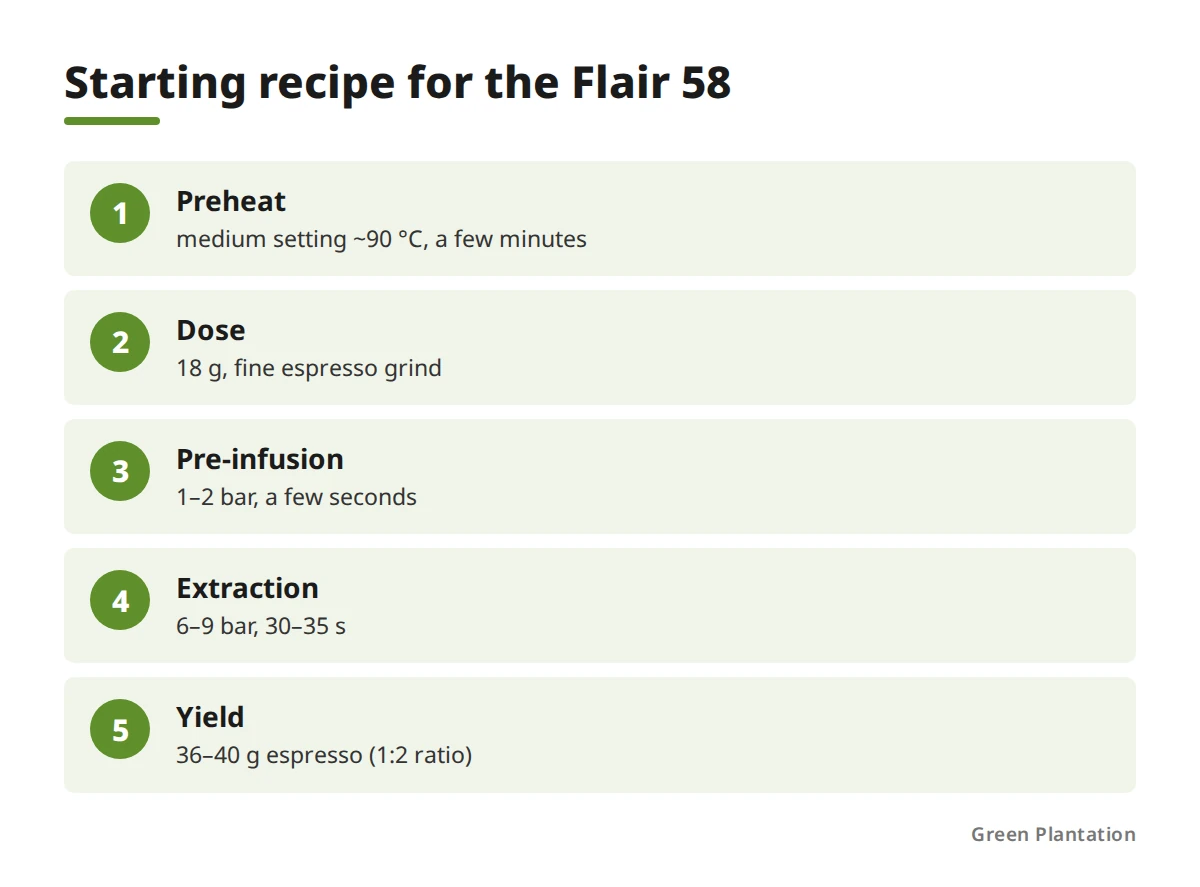
- Switch on the preheat. Raise the lever, hold the controller button for 3 seconds and choose a level: one blink is low, press again for medium, twice more for high. After a few minutes the lights stop blinking and stay on.
- Boil the kettle and grind about 18 g of freshly roasted coffee fine enough for espresso.
- Prepare the portafilter: distribute the grounds (a WDT tool helps), tamp, place the puck screen on top and lock the portafilter in by turning it anticlockwise.
- Fill the cylinder through the piston valve: pour water to the rim, lift the lever slowly so the water flows beneath the piston, then top up.
- Pull the lever down slowly. Hold 1–2 bar for a few seconds of pre-infusion, move up to 6–9 bar and aim for a 30–35 second shot. Stop when your scale shows the target yield, usually 36–40 g from 18 g of coffee.
- Purge the system: raise the lever, press it all the way down again to push out any remaining water, then remove the portafilter.
A sensible starting recipe: 18 g in, 36 g out (a 1:2 ratio), around 30 seconds, medium preheat for a medium roast. If the gauge will not climb above 4–5 bar and the coffee gushes, grind finer. If the lever barely moves and the needle jumps past 10 bar, grind coarser. Our article on getting the pressure right on a Flair goes deeper into reading the gauge.
What the marketing does not tell you: the first week takes patience. You will pour a few shots down the sink before you find the right grind. Once the routine settles, a shot takes roughly 3–5 minutes, most of it spent waiting for the kettle and the preheat. For the Plus 2, Flair quotes under 3 minutes including preheating.
The grinder is half the result
The Flair 58 manual is blunt about it: this is a professional-grade espresso maker that needs a quality burr grinder capable of espresso fineness. A lever reacts to every grind change instantly, so without consistent grounds you cannot control pressure. Blade grinders and filter-only burr grinders will not cut it.
There are two sensible routes:
- A hand grinder built for espresso with fine adjustment steps. It suits the mains-free Flair philosophy. From our range, the Timemore Chestnut ESP or the Kinu M47 Classic with conical steel burrs.
- An electric espresso grinder if you make several coffees a day and do not fancy cranking a handle each time.
We cover burrs, adjustment and retention in detail in choosing a grinder and portafilter for the Flair 58.
Cleaning and maintenance
With no boiler, the Flair 58 does not need descaling the way a conventional espresso machine does. No water stays inside it, so limescale builds up in your kettle instead. If you live in a hard-water area, that is a genuine advantage: you descale the kettle, not the machine.
- After every shot: empty the cylinder by pressing the lever all the way down, then rinse the portafilter and puck screen.
- Regularly: switch off the preheat, let the head cool, unlatch the lever, remove the piston with the rod and wipe the inside of the cylinder and the piston with a damp cloth. Flair advises against detergent, asks you to keep the outer surfaces and cables dry, and warns never to submerge the head because it contains electrical parts.
- The puck screen clogs fastest. Clean it thoroughly or the flow rate will drift.
The piston seal is a wear part. The manual specifically notes that the piston can rotate over time, and if the tab on the rod lines up with the groove in the piston, the two can come apart. The procedure for removing and refitting the piston is in the cleaning section of the manual.
What owners say
There are very few British owner reviews of the Flair 58 in one place, so we looked at an international sample instead: 100 threads in the r/FlairEspresso community with “58” in the title, posted between January and November 2026 (via the Arctic Shift archive), plus the detailed CoffeeGeek review. We sorted the threads by title, and the categories overlap. 62 of the 100 threads concern the newer 58 Plus 2, the rest the original Flair 58.
- Dialling in grind and pressure is by far the most common topic, around 30 of 100 threads. Typically: “I can only reach 6–7 bar” or “the coffee runs far too easily”. The community answer is almost always the same: grind finer or use the low-flow basket.
- Parts, assembly and faults: about 18 threads. A rotated piston, a gauge misaligned after cleaning, a cylinder seated crooked, a handful of broken parts and one warranty dispute. Problems with the controller electronics come up rarely.
- Which machine to buy: about 14 threads compare the Flair 58 with the Flair 49 Pro, smaller Flairs or a dual boiler. Several owners moved up from a budget pump machine; they value the control but admit the learning curve takes a while.
- Grinders: roughly 10 threads, from hand grinders to electric single-dose models.
- Temperature: about 9 threads, mostly on getting a hotter shot and how to use the preheat levels.
- Milk: only 2 threads about separate frothers. Most owners drink espresso.
CoffeeGeek scored the machine 9.1 out of 10, praising the 58 mm portafilter, temperature stability thanks to the preheat and the freedom to profile pressure. Its criticisms were a bulky power brick, a puck screen that needs careful cleaning and the lack of any temperature readout.
On the effort required: the long lever helps, but if the grind is too fine it becomes hard work. Owners generally report that with the right grind the effort is moderate.
Weaknesses and what to watch out for
- No steam. For a cappuccino or flat white you need a separate frother.
- A longer routine than a pump machine: kettle, preheat, filling the cylinder. Fine for one espresso, tedious for four in a row.
- Grinder dependence. Budget for a proper espresso grinder, or the Flair 58 will never show what it can do.
- External controller and power supply take up worktop space on our version. The Plus 2 has the controller in the base.
- One shot at a time, never two cups at once.
- Moving parts (piston, lever latch, rod) need reassembling correctly after cleaning. Read the manual properly once.
Flair 58 compared with the alternatives
Every machine in the table is in our range: the 9Barista and the Ascaso Dream ONE. If you are weighing the Flair 58 against its smaller sibling, see our Flair 58 vs Flair Pro 2 comparison.
| Flair 58 | 9Barista | Ascaso Dream ONE | |
|---|---|---|---|
| Type | Manual lever, electric preheat | Stovetop espresso, pressure from steam | Electric pump machine |
| Who makes the pressure | You, via the lever | The machine, no mains power | The pump |
| Pressure control | Full, throughout the shot | Limited | Limited |
| Milk steaming | No | No | Yes |
| Mains power | Preheat only (optional) | No, gas or induction hob | Yes |
| Best for | Espresso enthusiasts | Espresso without electricity, home or away | Daily cappuccino drinkers |
Verdict
The Flair 58 is the most serious manual lever espresso maker in its class: a standard 58 mm portafilter, controlled preheat and a gauge that shows precisely what you are doing. If you drink espresso and enjoy learning, it gives you a level of control normally found only on much larger machines. If you want a quick milky coffee in the morning, you will be happier with a pump machine. Either way, budget for a good espresso grinder from the start.
Frequently asked questions
Can the Flair 58 make a cappuccino?
Not on its own. It makes espresso only; for a cappuccino you need a separate milk frother or a machine with a steam wand.
Does the Flair 58 work without electricity?
Yes. Unplug the preheat cable, cover the cylinder contacts with the supplied cap and preheat the cylinder with water just off the boil, piston down. Temperature will be less stable than with the electric preheat.
What pressure should the gauge show?
Flair recommends 6–9 bar for 30–35 seconds. Many owners start with a short pre-infusion at 1–2 bar and ease off the pressure towards the end of the shot.
What is the difference between the Flair 58 and the 58 Plus 2?
The Plus 2 has the preheat controller built into the base rather than as a separate unit and, according to Flair, ships with three baskets including a pressurised one. The 58 mm portafilter, preheat temperatures and lever principle are the same.
Which grinder should I pair with the Flair 58?
Any burr grinder that grinds consistently fine for espresso. Hand grinders such as the Timemore Chestnut ESP or Kinu M47 are a natural match; electric single-dose grinders are more convenient if you make several coffees a day.
Does the Flair 58 need descaling?
Not like a boiler machine, because no water stays inside. Descale your kettle and wipe the cylinder and piston regularly.
Recommended products
- Flair 58: the machine reviewed here, the version with a separate preheat controller.
- Timemore Chestnut ESP: a hand grinder designed for espresso, the natural partner for mains-free brewing.
- Flair 58 Puck Screen: a spare screen, as it is the part that wears and clogs first.
- Flair 58 High-Flow Basket 18 g: for light roasts and faster shots once you have mastered the low-flow basket.
- Flair 58 High-Uniformity Precision Basket: a precision basket for owners who want to push extraction further.
- Flair 58 Power Supply Complete: a complete replacement power supply for the preheat if yours goes missing or gets damaged.
New to the Flair workflow? Our step-by-step guide to making espresso on a Flair covers the basics from the first shot.
Sources
- Flair Espresso: Flair 58 user manual (PDF)
- Flair Espresso: Flair 58 Plus 2, manufacturer specifications
- Flair Espresso: Wholesale Product Guide, November 2024 (PDF)
- CoffeeGeek: Flair 58 Lever Espresso Machine, full review
- r/FlairEspresso: 100 threads with “58” in the title, January to November 2026 (Arctic Shift archive)
Updated: November 2026
Author: Petra Novotná, editorial name of the Green Plantation.
You might also like
 Eureka Atom Pro review: experience, tech and limits of the 75 mm filter grinder
The Eureka Atom Pro is a filter grinder with 75 mm brew burrs and a Blow-Up bellows. Who it is worth it for, how to set it up and why it is not an espresso… 26. 11. 2026
 Eureka Costanza Review: HX Machine with PID, Costanza R and Owner Experiences
The Eureka Costanza is a compact E61 heat exchanger machine with PID and a shot timer. We clear up the dual boiler myth, explain how it differs from the… 26. 11. 2026
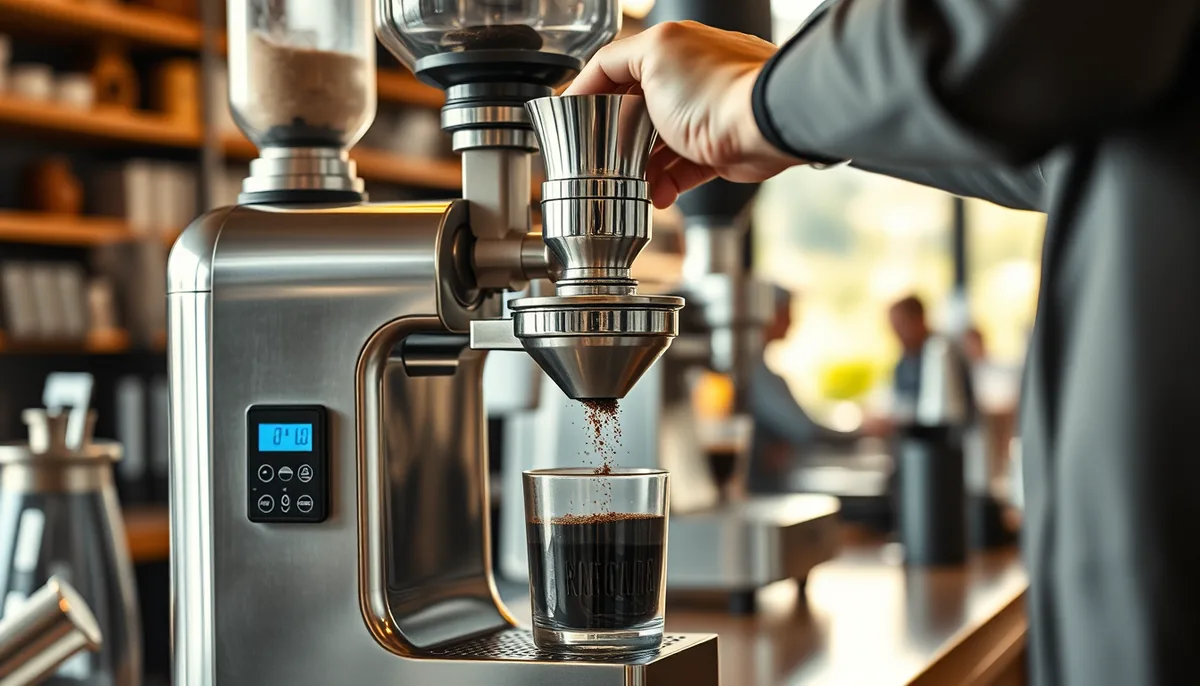 Grind-by-Weight Coffee Grinders: Eureka Atom W 65, Atom W 75 or Mahlkönig E65S GbW? 2026 Comparison
Comparison of the Eureka Atom W 65, Atom W 75 and Mahlkönig E65S GbW grind-by-weight grinders: dose accuracy, speed, step-by-step calibration and a calculation… 26. 11. 2026