
 Česky (CZK)
 Slovensky (EUR)
 Magyar (HUF)
 Polski (PLN)
 English (EUR)
 Deutsch (EUR)
 Français (EUR)
 Español (EUR)
 Português (EUR)
 Italiano (EUR)
 Svenska (SEK)
 Suomi (EUR)
 Nederlands (EUR)
 Dansk (EUR)
 Lëtzebuergesch (EUR)
 Eesti (EUR)
 Latviešu (EUR)
 Lietuvių (EUR)
 Slovenščina (EUR)
 Română (RON)
 Български (EUR)
 Hrvatski (EUR)
 Ελληνικά (EUR)
 Українська (EUR)
 Norsk (EUR)
 Srpski (EUR)
 Tiếng Việt (EUR)
Saeco Magic M1 review: a compact bean to cup machine with fresh milk for the office
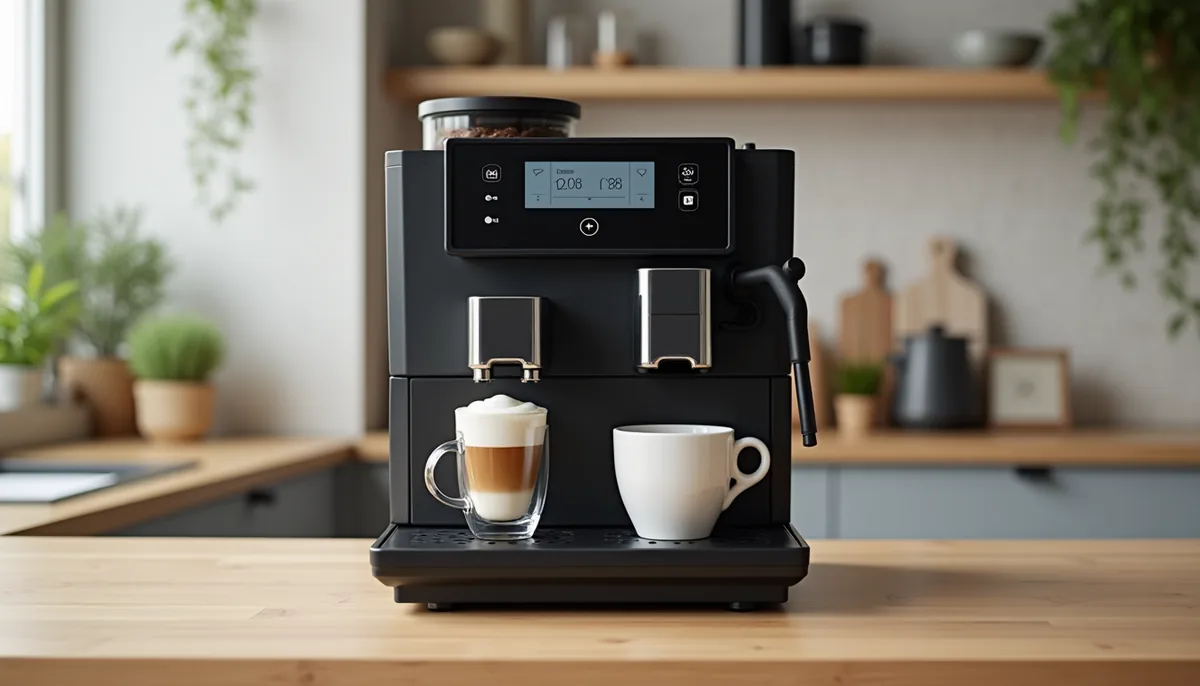
In short: The Saeco Magic M1 is a compact bean to cup machine for small offices, with a fresh milk cappuccinatore, a 7-inch touchscreen and two drinks at once. It runs from a 2.5-litre tank only, so it suits teams of up to about ten people. Bigger teams with a water supply are better served by the M2+.



| Type | Bean to cup machine with fresh milk cappuccinatore, double circuit, 1,900 W |
|---|---|
| Brew unit | Variable chamber, 8.5 to 15 g, removable |
| Grinder | Steel conical burrs, 8 settings, 600 g bean hopper |
| Water | 2.5-litre tank, no mains water connection, pump up to 15 bar |
| Controls | 7-inch colour touchscreen, user profiles, MDB interface for payment systems |
| Best for | Small offices, surgeries, studios and reception areas with moderate demand |
What is the Saeco Magic M1 and who is it for?
The Magic M1 (part number 9J0450) is made by Saeco Professional, the commercial brand of the Italian Evoca Group. It has little in common with the Philips Saeco machines sold for the kitchen at home, and it shares only a name with the old Saeco Magic De Luxe and Magic Comfort from the 1990s and 2000s. The current Magic range has been on sale since 2022/2023. When a dealer advertises the "New Magic M1", it is the same machine.
There are four models in the range. The M1 and M2 have a milk system; the B1 and B2 make coffee and hot water only. The "1" stands for the compact body with a 2.5-litre tank and 600 g of beans. The "2" is taller, with a 4-litre tank, a 1.2 kg hopper and, in the "+" version, a mains water connection. There is also an M1S with a separate steam wand.
The M1 is a good fit if you:
- run a small office, practice, studio or agency and want proper coffee for the team,
- want cappuccino and latte from fresh milk at the touch of a button,
- have no plumbed water supply in the kitchen area, or do not want to install one,
- need an office coffee machine that colleagues can use without any training.
It is less suited to open plan floors with dozens of staff, canteens or breakfast service. There the small tank quickly becomes the bottleneck, and a plumbed M2+ or B2+ is the more sensible choice. If you are still weighing up the options, our guide on which coffee machine to choose for the office covers the basics, from capsules to bean to cup.
Specification, according to the manufacturer
At the heart of the machine is a removable brew unit with a variable chamber that takes 8.5 to 15 g of ground coffee depending on the setting. Strength is set electronically in four steps; grind size is adjusted on the steel conical burrs in eight steps. There are no ceramic burrs here, unlike some domestic machines.
Saeco describes the M models as double circuit at 1,900 W and the B models as single circuit at 1,300 W. The pump delivers up to 15 bar. The manufacturer does not state the heating type or boiler volume; the manual simply lists a boiler pressure safety valve and a safety thermostat.
The spout adjusts from 75 to 160 mm, so everything from an espresso cup to a tall latte glass fits underneath, and LED lighting illuminates the dispensing area. The grounds drawer holds 30 pucks and the drip tray 2 litres.
| Parameter | Saeco Magic M1 |
|---|---|
| Dimensions (W × H × D) | 280 × 435 × 481 mm |
| Weight | 14.3 kg per the data sheet (manual: approx. 12 kg) |
| Power | 230 V / 50 Hz, 1,900 W, cable approx. 1.2 m |
| Water tank | 2.5 litres, no mains connection |
| Bean hopper | 600 g |
| Grounds drawer | 30 pucks |
| Brew chamber | 8.5 to 15 g |
| Spout height | 75 to 160 mm |
| Display | 7-inch colour touchscreen, 1,024 × 600 pixels |
| Noise level | below 70 dB(A) |
| Operating conditions | 2 to 32 °C, humidity below 80 % |
Day to day: coffee, milk and the touchscreen
The cappuccinatore draws milk through a tube straight from the carton or a jug, and the foam comes out of the same spout as the coffee. Saeco calls this "High Speed Cappuccino": two cappuccinos or lattes are made at the same time without anyone having to move cups around. Warm milk is also available at the touch of a button. The system is designed for fresh milk, not milk powder.
For consistent foam the manual recommends milk at around 5 °C with at least 3 % protein. Do not shorten the milk tube or remove the small metal reducer, otherwise the amount of milk drawn up will be wrong. If you do not want staff running to the fridge all day, the optional Saeco milk cooler (FR7L-N) sits next to the machine. For the wider picture on automatic milk systems, see our piece on the advantages of an automatic milk frother.
On the touchscreen you can create your own recipes and set up password-protected user profiles, so colleagues cannot change the basic settings. The MDB interface lets you connect a coin mechanism or cashless payment system and set drink prices, which is useful in co-working spaces, workshops with a customer area or small hotels. Saeco Pro.Up allows remote monitoring of the machine. The M1 also keeps drink statistics and has a USB port for backing up its configuration.
An energy saving mode can be programmed with time slots for each day of the week, so the machine does not need to stay hot over the weekend.
How many cups a day can the M1 handle?
Saeco does not quote a daily output in the data sheet or the manual, and dealer figures vary widely. It is more useful to look at the containers. After 30 drinks the grounds drawer needs emptying, and a 2.5-litre tank works out at very roughly 15 to 20 cups of coffee before rinse cycles are counted. In practice, water and grounds limit the throughput, not the grinder or heating. For a team of around five to ten people that is manageable, provided someone tops up the tank and empties the drawer in the morning and after lunch.
Cleaning, descaling and the water filter
With an office coffee machine, maintenance decides both the flavour in the cup and how long the machine lasts. The Magic manual sets out a clear schedule, and it is worth assigning it to one person or a weekly rota.
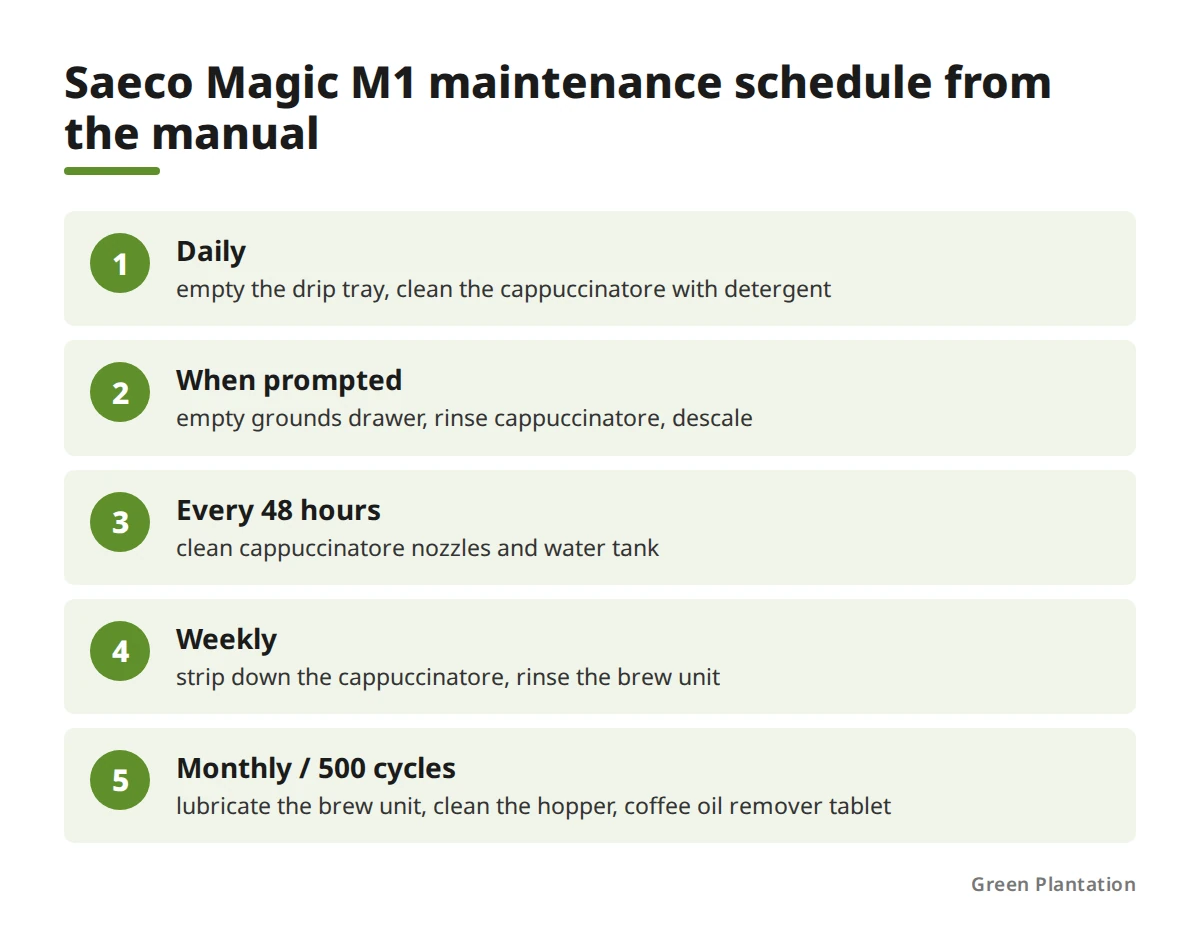
- Daily: empty the drip tray and clean the cappuccinatore thoroughly with detergent.
- When prompted: empty the grounds drawer, give the cappuccinatore a quick rinse, descale.
- Every 48 hours: clean the cappuccinatore nozzles and the water tank.
- Weekly: strip the cappuccinatore down completely, remove the brew unit and rinse it under the tap.
- Monthly or every 500 cycles: lubricate the brew unit and clean the bean hopper; use coffee oil remover tablets roughly every 200 cups or once a month.
After every milk drink the machine rinses the milk circuit automatically. For the full clean there is a milk circuit cleaning powder, and the M1 can track when it is due and display a cleaning warning. No part goes in the dishwasher.
Descaling the Saeco Magic M1
Start by setting the water hardness: a test strip gives one of four levels, which you enter in the menu. The machine then asks for descaling by itself. Remove the water filter from the tank before running the descaling programme. In hard water areas the prompt will simply come round sooner, so do not ignore it.
Saeco specifies the Intenza+ filter, not AquaClean. In the menu it appears as the "Intenza Aroma System" with settings A, B or C (factory setting B). Replace it when the icon turns red (below 10 % remaining) or after three months at the latest. After eight filters in a row the machine will still ask for a descale. Our guide to cleaning and descaling a bean to cup machine goes through the process in more detail.
What owners report
To be upfront: we found no independent editorial review of the Magic M1 in English or German. The number of owner reports is also small, because the machine is sold mainly through trade dealers to businesses. We looked at around ten mentions of the current Magic range:
- Reddit (r/superautomatic): 6 posts on the new range since 2021, all about the M2 or M2+, none about the M1. Topics: a "drip tray full" error with an empty tray, an error after switching a refurbished unit from tank to mains water, factory recipes too small for larger mugs (adjustable in the recipe settings) and questions about whether milk works without a cooler.
- Galaxus: one rating for the M1, one star (faulty again after a year); seven ratings for the M2, averaging 4.0 stars. One complaint from a small catering business criticises the coffee quality and slow replies from Saeco support.
- Saeco support forum: a thread on the M1 describes milk that heats up but does not foam; after cleaning and descaling, the air inlet valve was suspected.
The trend, on this thin evidence: the design, large touchscreen and quiet milk system go down well. Recurring problems involve sensors and error messages, milk foaming and the response time of manufacturer support. Owners of the old Magic De Luxe report very long service lives of over 20,000 cups, but that cannot be carried over to the new electronics.
Weaknesses and what to watch out for
- No mains water connection: the M1 runs from the tank only. With heavy use, someone refills it several times a day.
- Only 30 pucks: in a busy office the grounds drawer needs emptying more often than on larger catering machines.
- Daily milk care: the cappuccinatore needs cleaning every day. Without a named person in charge, the milk foam is the first thing to suffer.
- No locks: lockable lids for the tank and hopper are only on the M2 and B2, not the M1 and B1.
- Service: spare parts and repairs go through authorised Evoca service partners, not Philips. Before you buy, find out who covers servicing in your area.
- Weight and space: at roughly 12 to 14 kg and 48 cm deep, it needs a solid worktop with room for the milk container.
- Power supply: the machine is specified for 230 V / 50 Hz. Check with the seller which plug is supplied before installation.
Saeco Magic M1 vs M2, B1, B2+ and Royal OTC
The most common question after looking at the M1 is "or should we get the Magic M2?". The table shows the differences according to the manufacturer.
| Feature | Magic M1 | Magic M2 / M2+ | Magic B1 | Magic B2+ | Royal OTC |
|---|---|---|---|---|---|
| Milk | Cappuccinatore, 2 milk drinks at once | Cappuccinatore, 2 milk drinks at once | no | no | Automatic cappuccinatore, one touch |
| Circuit / power | Double, 1,900 W | Double, 1,900 W | Single, 1,300 W | Single, 1,300 W | Single, 1,400 W |
| Water | 2.5-litre tank | 4-litre tank, M2+ with mains connection | 2.5-litre tank | 4-litre tank and mains connection | 2.5-litre tank |
| Bean hopper | 600 g | 1.2 kg | 600 g | 1.2 kg | 600 g |
| Grounds drawer | 30 pucks | n/a | 30 pucks | n/a | 18 pucks |
| Brew chamber | 8.5 to 15 g | 8.5 to 15 g | 8.5 to 15 g | 8.5 to 15 g | 6 to 10 g |
| Height | 435 mm | 470 mm | 435 mm | 470 mm | 398 mm |
| Display | 7" touch | 7" touch | 7" touch | 7" touch | Graphic display with icons |
| Payment systems (MDB) | yes | yes | yes | yes | no |
| Locks | no | yes | no | yes | n/a |
In summary: the M1 is the compact option with milk for small teams. The M2+ makes sense once you have a water supply and far more drinks are made. The B1 is the M1 without the milk system and with less cleaning, ideal if the team drinks mostly espresso and black coffee. The B2+ is its larger, plumbed counterpart. The Royal OTC is the older, simpler Saeco office machine: smaller brew chamber, only 18 pucks, no touchscreen and no MDB, but still a cappuccino at the touch of a button.
For a look beyond one brand, read our comparison of automatic coffee machines for the office: Nivona vs Saeco.
Verdict: who should buy the Magic M1?
The Saeco Magic M1 is a well thought out bean to cup machine for the office: a large variable brew chamber, fresh milk for two cups at once, a touchscreen anyone can use and professional features such as user profiles, statistics and MDB. Its limits are the tank-only water supply and the small grounds drawer, not the coffee hardware. If you are serving a team of up to about ten people and can organise the daily milk cleaning, it is a solid choice with no plumbing required. For larger teams, or if nobody will look after the milk system, the M2+ or B1 respectively are the better alternatives. Why a cheap domestic machine rarely pays off at work is explained in our case study on cheap office coffee machines.
Saeco Magic M1: frequently asked questions
What is the difference between the Saeco Magic M1 and M2?
Both have the same milk system and brew unit. The M2 is taller (470 mm instead of 435 mm) and has a 4-litre tank instead of 2.5 litres, a 1.2 kg bean hopper instead of 600 g, and lockable lids. As the M2+ it can also be connected to the mains water supply.
Can the Magic M1 be plumbed in?
No. The M1 and B1 work with the tank only. A mains water connection (3/4 inch, 1.5 to 8 bar) is available on the M2+ and B2+.
Is the Magic M1 a coffee machine with a milk steamer?
The standard M1 froths milk automatically through its cappuccinatore rather than a steam wand. If you want a separate steam wand as well, Saeco offers the M1S variant.
Where can I find the Saeco Magic M1 manual?
Saeco Professional publishes one manual for the whole Magic range (M1, M1S, M2, B1, B2). The English version we used runs to 108 pages and is linked in the sources below. It covers the maintenance schedule, menu structure, filter and descaling instructions.
How do I descale the Saeco Magic M1?
Test the water hardness with a strip and enter it in the menu. When the machine asks for descaling, remove the Intenza+ filter from the tank and start the descaling programme on the display. The machine guides you through each step.
How loud is the Saeco Magic M1?
Saeco quotes below 70 dB(A) and describes the cappuccinatore as particularly quiet. We are not aware of an independent measurement.
Recommended products
- Saeco Magic M1: the machine reviewed here, for small teams who want cappuccino from fresh milk.
- Saeco Magic B1: the same technology without the milk system, less cleaning for teams who drink black coffee.
- Saeco Magic B2+ tank-mounted: larger 4-litre tank and 1.2 kg of beans; according to the product page this unit runs from the tank, without a direct water connection.
- Saeco Royal OTC: the simpler office machine with one-touch cappuccino, if you do not need the touchscreen and MDB.
- Brita Intenza+ water filter: the filter type named in the Magic manual, fits in the water tank and slows down limescale build-up.
- Saeco coffee machine descaler, 250 ml: for the descaling programme the machine prompts you to run.
Sources
- Saeco Professional: Magic M1, technical data (as of November 2026)
- Evoca: Saeco Magic user manual M1/M1S/M2/B1/B2 (PDF)
- Saeco Professional: Magic range brochure 2023 (PDF)
- Saeco Professional: Royal brochure (PDF)
- Arctic Shift: r/superautomatic archive, search "saeco magic"
Updated: November 2026
Author: Petra Novotná, editorial name of the Green Plantation.
You might also like
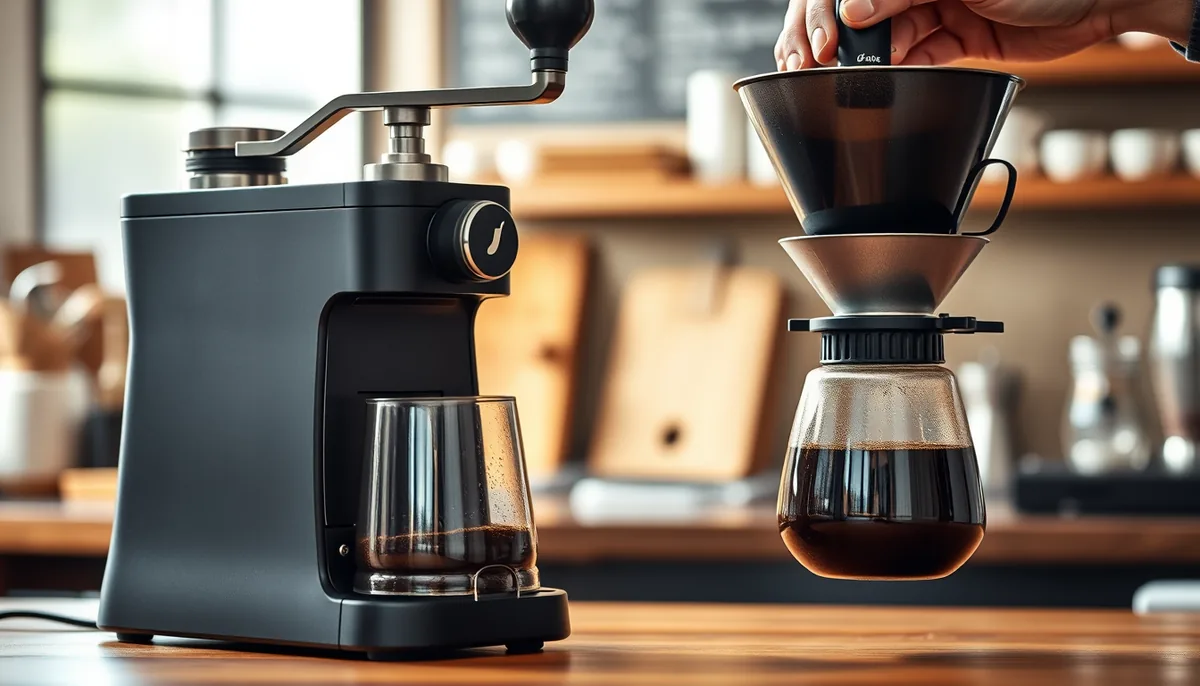 Eureka Atom Pro review: experience, tech and limits of the 75 mm filter grinder
The Eureka Atom Pro is a filter grinder with 75 mm brew burrs and a Blow-Up bellows. Who it is worth it for, how to set it up and why it is not an espresso… 26. 11. 2026
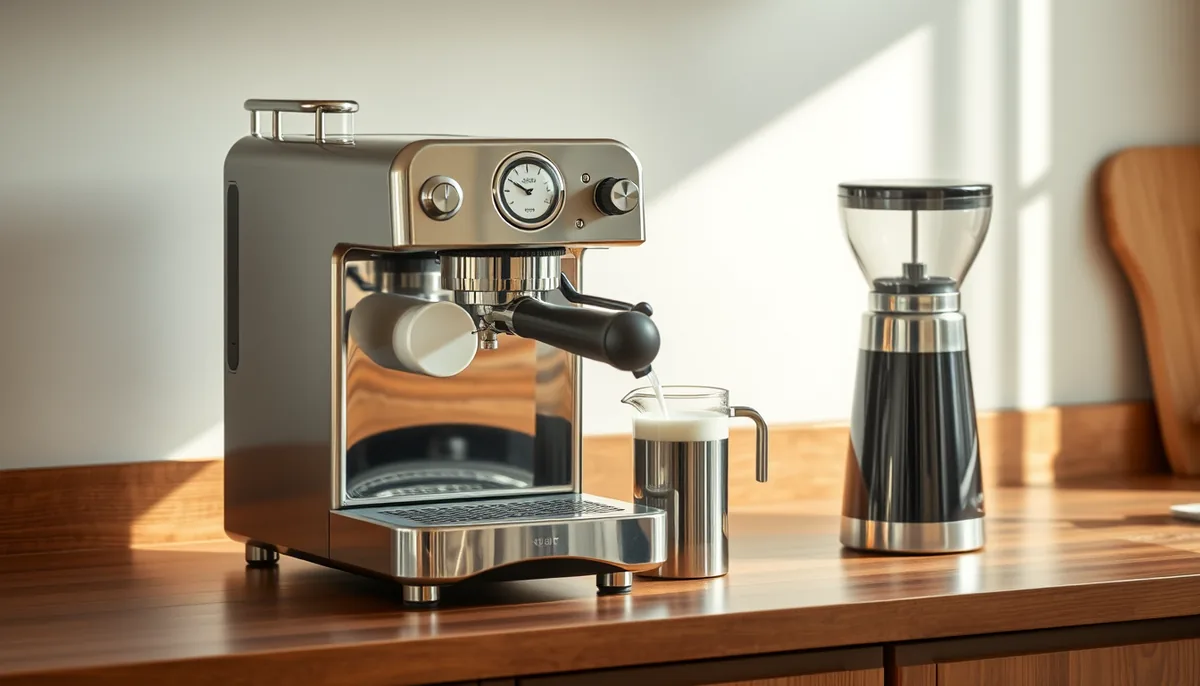 Eureka Costanza Review: HX Machine with PID, Costanza R and Owner Experiences
The Eureka Costanza is a compact E61 heat exchanger machine with PID and a shot timer. We clear up the dual boiler myth, explain how it differs from the… 26. 11. 2026
 Grind-by-Weight Coffee Grinders: Eureka Atom W 65, Atom W 75 or Mahlkönig E65S GbW? 2026 Comparison
Comparison of the Eureka Atom W 65, Atom W 75 and Mahlkönig E65S GbW grind-by-weight grinders: dose accuracy, speed, step-by-step calibration and a calculation… 26. 11. 2026