
 Česky (CZK)
 Slovensky (EUR)
 Magyar (HUF)
 Polski (PLN)
 English (EUR)
 Deutsch (EUR)
 Français (EUR)
 Español (EUR)
 Português (EUR)
 Italiano (EUR)
 Svenska (SEK)
 Suomi (EUR)
 Nederlands (EUR)
 Dansk (EUR)
 Lëtzebuergesch (EUR)
 Eesti (EUR)
 Latviešu (EUR)
 Lietuvių (EUR)
 Slovenščina (EUR)
 Română (RON)
 Български (EUR)
 Hrvatski (EUR)
 Ελληνικά (EUR)
 Українська (EUR)
 Norsk (EUR)
 Srpski (EUR)
 Tiếng Việt (EUR)
Best Coffee for Your Coffee Machine: Beans for Bean-to-Cup, Espresso, Moka and Filter
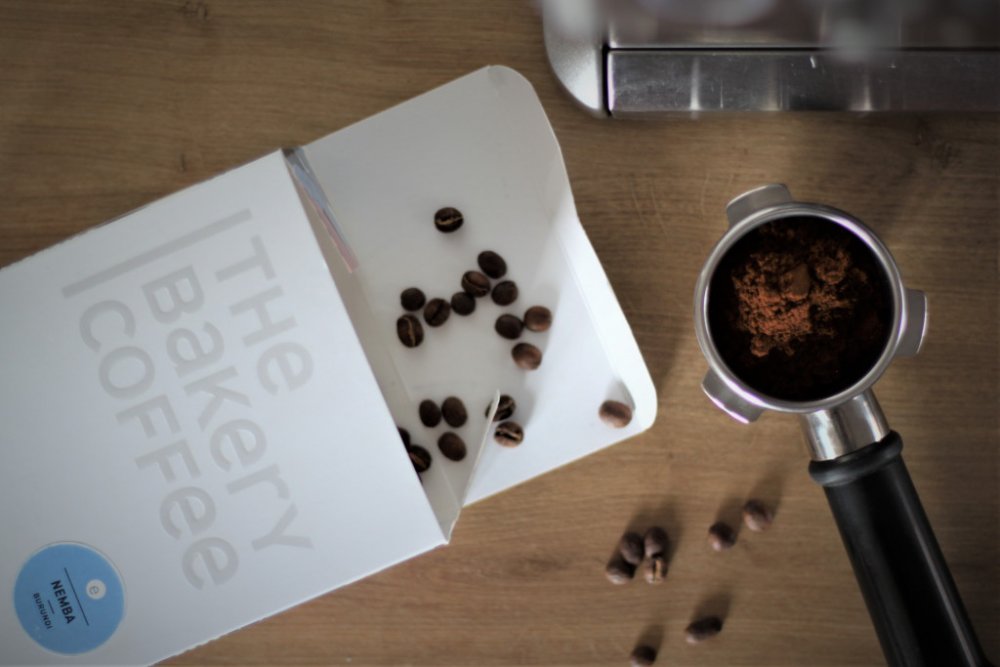
In short: Match the beans to the machine. Bean-to-cup machines want medium to medium-dark beans that look matt, not oily. Portafilter espresso machines forgive medium-dark blends best. Filter, AeroPress and French press suit lighter roasts. Buy whole beans with a roast date and rest espresso roasts 7 to 21 days.

| Bean-to-cup | Medium to medium-dark, dry and matt surface, blends work well |
|---|---|
| Portafilter espresso | Medium-dark espresso roast; light roasts need a capable grinder and temperature control |
| Moka pot | Medium to medium-dark, fine filter grind, not espresso-fine |
| Filter and French press | Light to medium roast, single origins show their character |
| Freshness | Roast date on the bag; espresso roasts are usually at their best 7 to 21 days after roasting |
| Arabica or robusta | Robusta carries roughly 2.7% caffeine against about 1.5% in arabica; 10 to 30% robusta adds body and crema |
Start with the machine, not the bag
There is no such thing as an "espresso bean" in botanical terms. Any coffee can be pushed through any brewer. What differs is how forgiving a roast is on a given machine, and how much damage it can do to the grinder.
Three things decide whether a coffee will work for you:
- Brew pressure and contact time. Espresso runs at around 9 bar for 25 to 30 seconds. A moka pot brews at roughly 1 to 2 bar. A French press steeps for four minutes with no pressure at all.
- The grinder. A built-in bean-to-cup grinder has a handful of settings and burrs you cannot remove. A dedicated espresso grinder has stepless or very fine adjustment and can be cleaned properly.
- What you drink. If most of your cups are flat whites and cappuccinos, you want chocolate, caramel and body that cut through milk. If you drink espresso neat or filter coffee black, brighter acidity becomes a pleasure rather than a fault.
If you are still deciding on the machine itself, our guide to choosing beans by flavour covers the taste side in more depth. This article focuses on matching coffee to the equipment.
Coffee for bean-to-cup machines: avoid oily beans
This is the one rule that protects your machine. De'Longhi's own support pages for its fully automatic machines ask owners to avoid beans that are too oily, caramelised or coated, because they can stick to the grinder and cause permanent damage. Other manufacturers give similar advice in their manuals.
Very dark roasts push oils to the surface of the bean. In a bean-to-cup machine those oils coat the hopper, stop beans from sliding into the burrs and build a sticky layer inside a grinder you cannot take apart. Flavoured beans (vanilla, hazelnut) do the same thing with added syrup.
Owners in the r/superautomatic community raise this constantly: in 100 recent threads about beans, 19 mention oily beans and 6 describe a jammed or clogged grinder. Several report that support lines blamed oily beans for a failure.
The napkin test: press a few beans onto a paper towel. If they leave a greasy mark or look shiny like varnish, keep them for a separate grinder or a French press. A good bean-to-cup coffee is dark brown, evenly coloured and dry to the touch.
What works best:
- Medium to medium-dark espresso blends, often with 10 to 30% robusta for crema and body.
- Natural or pulped natural coffees from Brazil, Peru or Colombia with chocolate and nut notes.
- Decaf processed with CO₂ or water, if you want an evening flat white.
Very light filter roasts are less of a risk to the machine but often taste sour, because a bean-to-cup brew unit cannot grind fine enough or run hot enough to extract them fully.
Coffee for portafilter espresso machines
With a traditional espresso machine and a separate grinder you have far more freedom, but a medium-dark espresso roast is still the easiest place to start. It extracts readily at normal brew temperatures, tolerates small dosing errors and gives the classic chocolate and caramel profile that works in milk.
Light roasts are denser and less soluble. On entry-level grinders they can be hard to grind fine enough, and they usually need higher brew temperatures and longer ratios to avoid sourness. Single boiler machines and thermoblocks without temperature control struggle here. If you want to explore lighter espresso, budget for a grinder with fine, repeatable adjustment first. Our article on common grinding errors for espresso explains what goes wrong.
A sensible starting recipe for a medium-dark roast is 18 g of coffee in, 36 g of espresso out, in 25 to 30 seconds at 92 to 94 °C. Lighter roasts often taste better at 94 to 96 °C and a slightly longer ratio of 1:2.5.
Moka pot, filter and French press
A moka pot is not an espresso machine. At 1 to 2 bar it extracts more slowly and more aggressively at high temperature, so very dark roasts turn harsh and bitter. A medium or medium-dark roast with chocolate and nut notes is the safe choice. Grind fine, like table salt, but not as fine as espresso, or the pot will choke. More on picking the pot itself in how to choose a moka pot.
Filter methods (V60, Chemex, batch brewers) and the AeroPress reward lighter roasts. Washed Ethiopian and Kenyan coffees show citrus, jasmine and black tea notes that disappear in a dark roast. Look for the word "filter" on the bag; roasters develop these profiles specifically for gentle extraction.
The French press is the most forgiving brewer of all. Coarse grind, four minutes of steeping and a metal mesh filter mean that body matters more than clarity, so medium roasts from Brazil, Guatemala or Colombia shine. It is also the best home for oily dark beans you do not want in your bean-to-cup. See what kind of coffee to use in a French press for more detail.
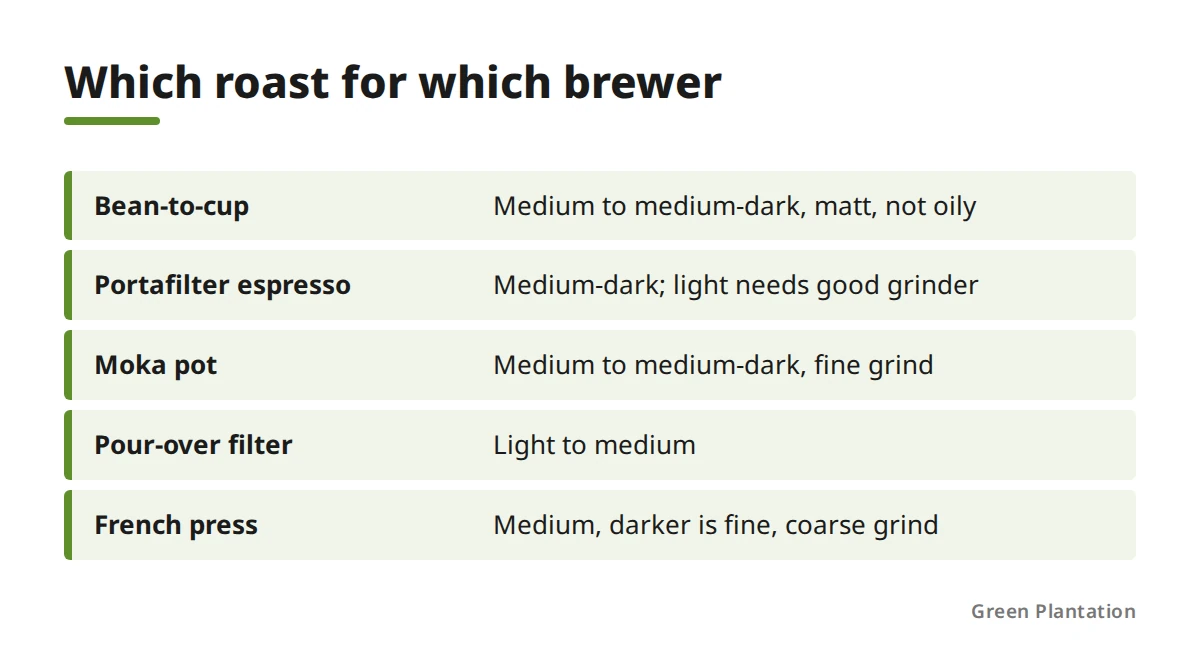
| Brewer | Pressure | Contact time | Best roast | Grind |
|---|---|---|---|---|
| Bean-to-cup | about 9 bar | 20 to 30 s | Medium to medium-dark, matt | Built-in, middle settings first |
| Portafilter espresso | about 9 bar | 25 to 30 s | Medium-dark (light with good gear) | Fine, adjusted per bag |
| Moka pot | 1 to 2 bar | 3 to 5 min | Medium to medium-dark | Fine, like table salt |
| Pour-over filter | none | 2.5 to 4 min | Light to medium | Medium, like sea salt |
| French press | none | 4 min | Medium, darker is fine | Coarse |
Arabica, robusta or a blend?
Arabica dominates speciality coffee because of its sweetness and aromatic range. Robusta (Coffea canephora) contains roughly 2.7% caffeine against about 1.5% in arabica, and less sugar (around 3 to 7% compared with 6 to 9%). In the cup that means more bitterness, more body and a thicker, longer-lasting crema.
That is why classic Italian espresso blends often include 10 to 30% robusta. A small share makes milk drinks taste stronger and more traditional; much more than 30% and the cup becomes rubbery and harsh. For neat espresso and filter coffee, 100% arabica is usually the better choice. We cover the differences in detail in arabica vs robusta.
Origin gives a rough guide to flavour, but altitude, variety and processing matter more:
- Brazil: chocolate, nuts, dried fruit; a reliable base for milk drinks.
- Colombia and Peru: caramel, red fruit, balanced acidity; good all-rounders.
- Ethiopia: florals, citrus and berries; outstanding as filter, lively as espresso.
- Kenya: blackcurrant and bright acidity; almost always washed, best as filter.
Roast date and resting: when coffee is at its best
Supermarket beans usually carry a best-before date 12 to 24 months ahead and no roast date. By the time you open the bag, much of the aroma has gone and crema is thin. Speciality roasters print the roast date, and that is the number to look for.
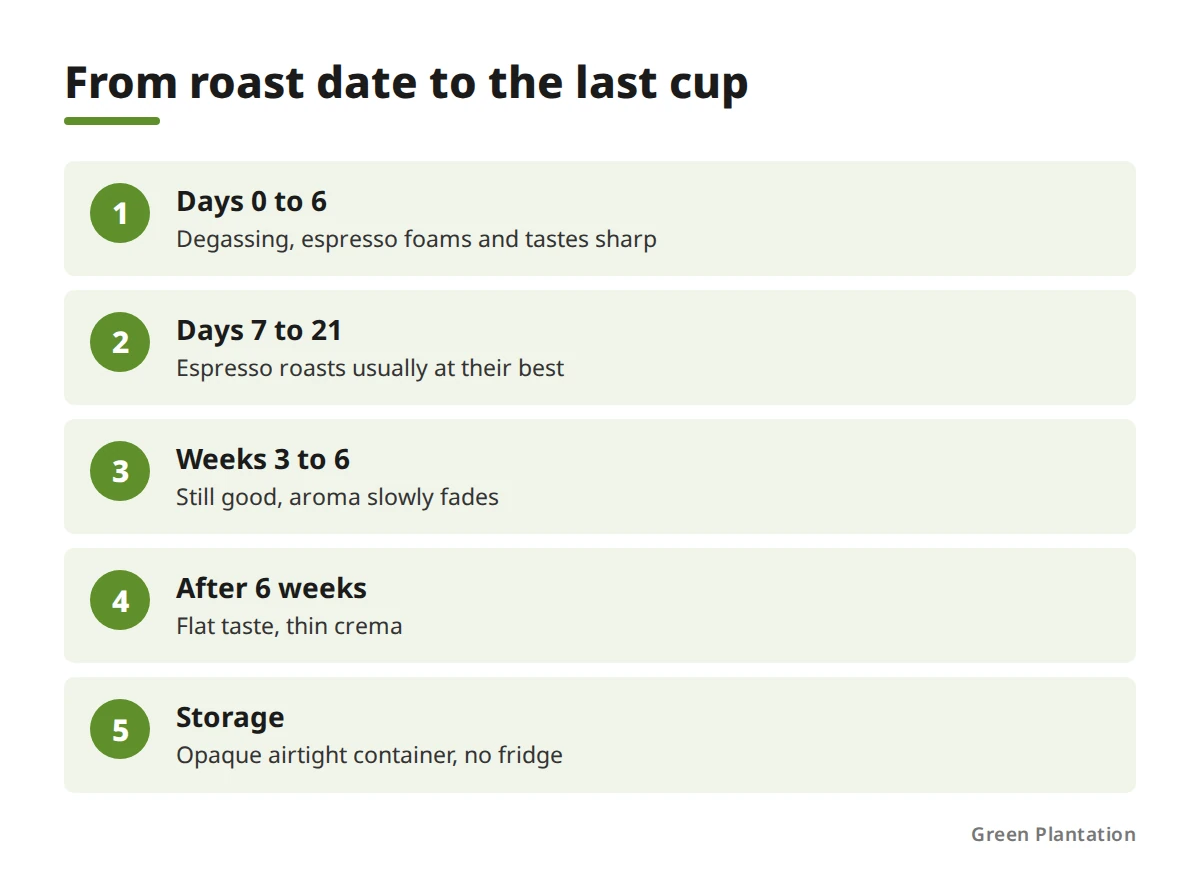
Freshly roasted coffee releases carbon dioxide for days. Brewed too early, espresso foams wildly, extracts unevenly and can taste sharp. Many roasters therefore suggest resting espresso roasts for roughly 7 to 21 days after roasting, and filter roasts for about 5 to 14 days. After four to six weeks from the roast date most coffees start to taste flat, even in a sealed bag.
Practical rule: buy only what you will use in two to four weeks. For one person drinking two cups a day, a 250 g bag lasts around two weeks; a 1 kg bag makes sense for a household or an office bean-to-cup.
Storing beans at home
Oxygen, light, heat and moisture are the enemies. Keep beans in the original valve bag or an opaque airtight canister, in a cupboard away from the hob. Do not store them in the fridge: they pick up moisture and odours every time the container is opened.
Freezing works for longer storage if you divide the coffee into airtight portions, freeze it once and let each portion come to room temperature before opening, so condensation does not form on the beans. In a bean-to-cup machine, fill the hopper with no more than a few days' worth; the hopper is not airtight. Our guide on how to store roasted coffee goes further.
Frequently asked questions
Which type of coffee is best for a coffee machine?
For bean-to-cup and portafilter espresso machines, a medium to medium-dark espresso roast in whole beans with a recent roast date. Avoid shiny, oily or flavoured beans in any machine with a built-in grinder.
What are the best coffee beans for a bean-to-cup machine?
Dry, matt, medium-dark blends, often arabica with 10 to 30% robusta, or natural Brazilian and Peruvian coffees. They give body in milk drinks without clogging the grinder.
Can I use dark roast beans in a bean-to-cup machine?
Only if they are not oily. Do the napkin test: a greasy mark means the beans belong in a French press or a separate grinder, not in the hopper.
Can I use pre-ground coffee in an espresso machine?
You can, but pre-ground coffee loses aroma within days and you cannot adjust the grind to the bag, so shots run too fast or too slow. A burr grinder is the biggest single upgrade for any portafilter machine.
Is filter coffee suitable for espresso?
Light filter roasts can make excellent espresso on machines with temperature control and a capable grinder. On entry-level machines and bean-to-cup units they usually taste sour; choose an espresso roast instead.
How long do coffee beans stay fresh after opening?
Two to four weeks in an airtight container away from light and heat. Flavour fades gradually; the coffee will not go off, but it becomes flat.
Recommended coffee and equipment
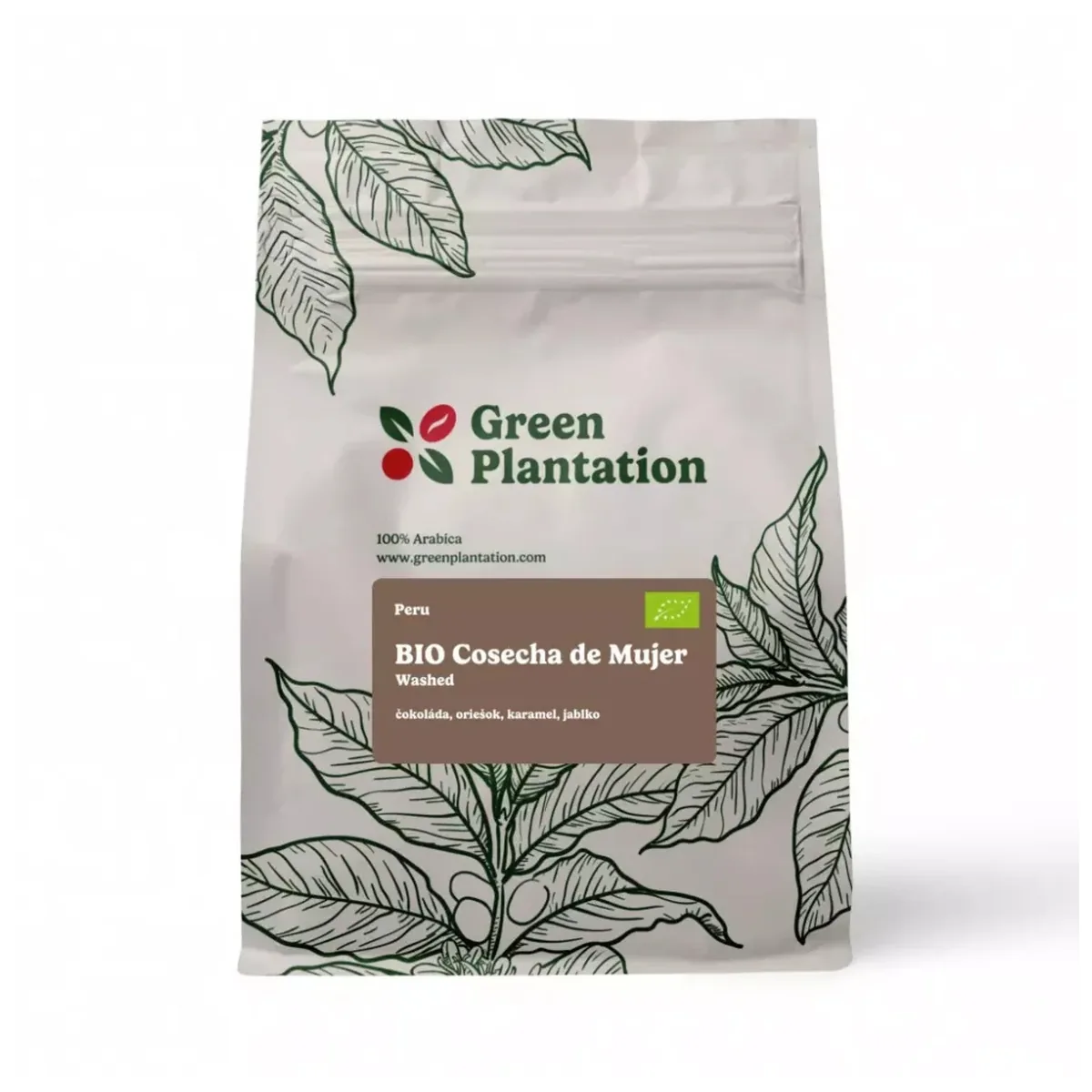
- BIO Peru Cosecha de Mujer | Espresso: our own medium-dark espresso roast with caramel and chocolate, a safe choice for both bean-to-cup and portafilter machines.
- Ethiopia Guji Mancity | Espresso: for portafilter owners who want fruitier espresso without moving to a full filter roast.
- Guatemala Finca El Hato decaffeinated coffee CO₂ | Espresso: CO₂ decaf roasted for espresso, for evening cups and lower caffeine intake.
- Tupinamba SUPREMO 70% arabica, 30% robusta: a classic Italian-style blend in a 1 kg bag for households and offices that drink mainly milk coffees.
- Eureka Mignon Specialita: a quiet stepless espresso grinder with 55 mm flat burrs; the upgrade that lets a portafilter machine handle any bag, including lighter roasts. More options in how to choose an electric grinder for the home.
- Gaggia Magenta Plus: a bean-to-cup machine with a ceramic grinder for those who want fresh beans at the touch of a button.
Sources
- De'Longhi: Common issues, fully automatic coffee machine (FAQ)
- Coffea canephora (robusta): caffeine and sugar content
- Moka pot: brewing pressure compared with espresso
- Coffee Blog: best coffee beans for espresso and bean-to-cup machines
Updated: November 2026
Author: Petra Novotná, editorial name of the Green Plantation.
You might also like
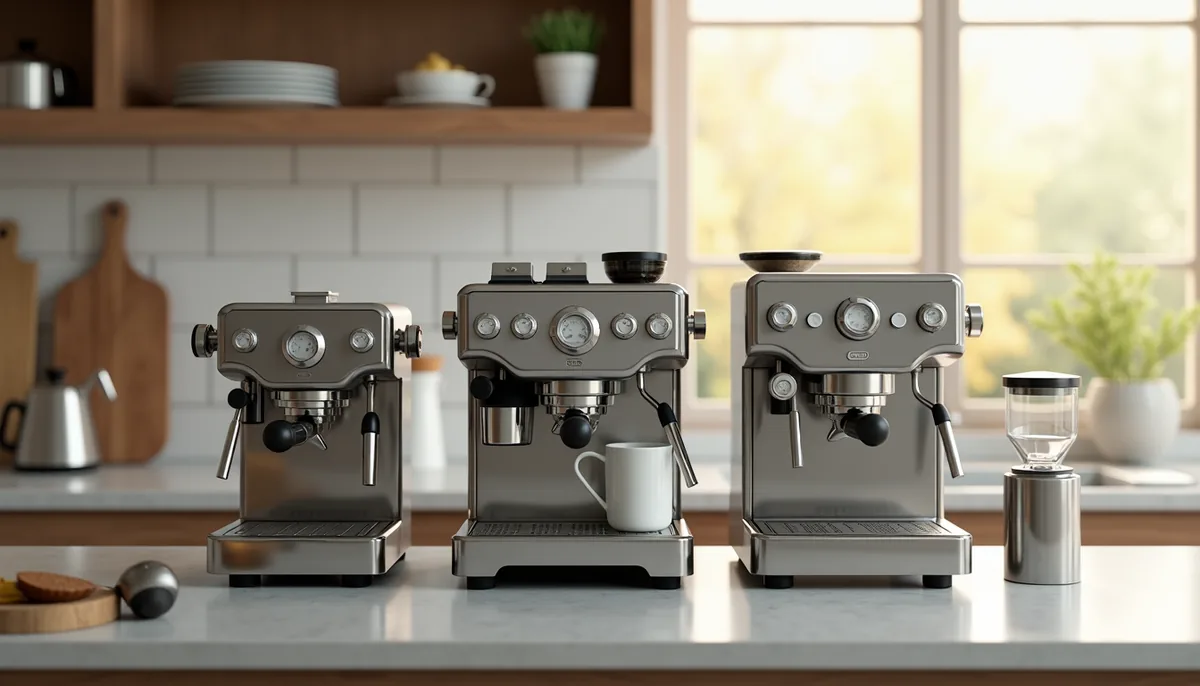 Best Espresso Machine Under €1,500: Single Boiler, HX or Dual Boiler?
Single boiler, thermoblock, heat exchanger or dual boiler: which design under €1,500 suits the way you drink coffee, with figures for boilers, warm-up and… 24. 11. 2026
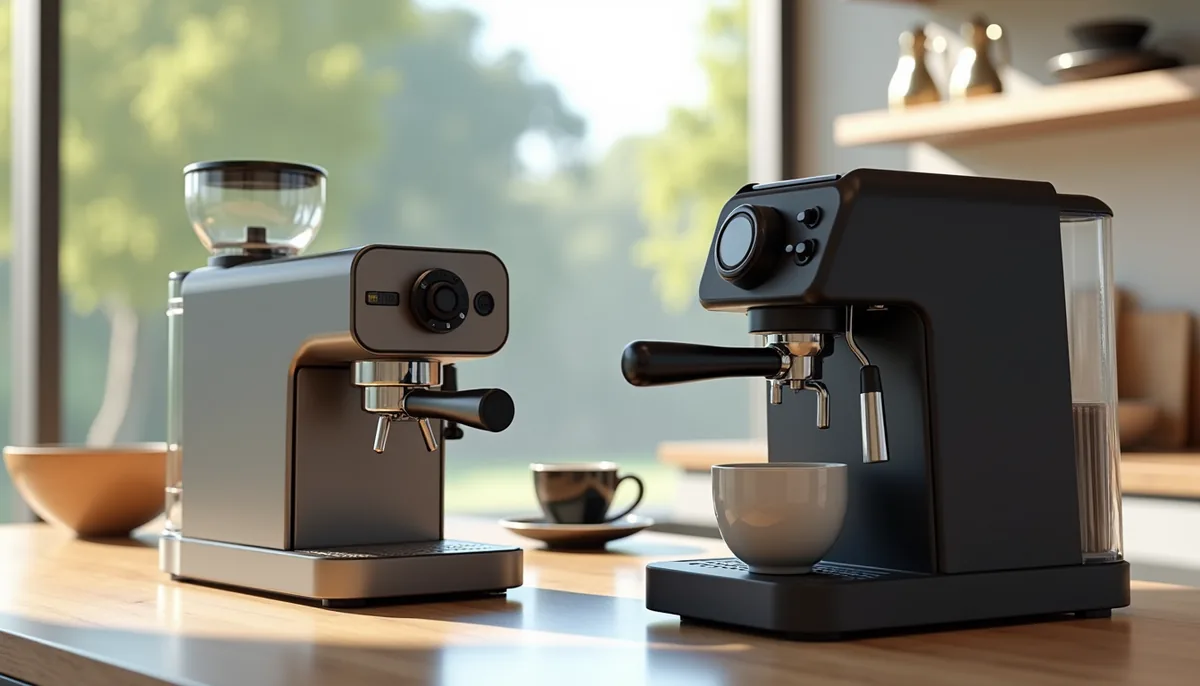 Bean-to-cup vs espresso machine: which suits your daily routine?
Bean-to-cup or a traditional espresso machine with a portafilter? A practical decision guide based on your daily routine, time per cup, coffee dose and the… 24. 11. 2026
 Manual Espresso Maker: Flair 58 vs 9Barista (plus La Pavoni and Picopresso)
Hand lever with kettle water or steam on the hob: the Flair 58 and 9Barista compared, with the La Pavoni Europiccola and Wacaco Picopresso as alternatives and… 24. 11. 2026